 By
By How the Longmen Grottoes Reveal Centuries of Chinese Buddhist History
Viewing the thousands of statues at the Longmen Grottoes can be overwhelming. The sheer scale of the site, with its countless niches carved into limestone cliffs, presents a challenge: how do you move beyond simple appreciation to truly understand what you are seeing? The cliff face is not a random collection of art but a detailed historical document, recording centuries of shifting faith, power, and artistic expression. The key is knowing how to read the stone itself.
This guide explains how to decode the visual language of this incredible UNESCO World Heritage Site. By analyzing where a cave is located, its size, and the density of the carvings around it, you can uncover the story of its patrons—from powerful emperors to humble merchants. Understanding these factors transforms a visit to the longmen grotto from a sightseeing tour into a deep engagement with Chinese history.
Reading the Cliffs: How Patronage Shaped the Longmen Grottoes
The layout of the grottoes is a direct reflection of the society that created it. The location, size, and density of the caves and niches were not accidental; they were deliberate choices that reveal the status and intent of the patrons who funded them. This is most evident when comparing the grand, imperial projects of the Northern Wei Dynasty with the more diverse and widespread patronage of the Tang Dynasty.
By understanding three key variables—cliff position, cave scale, and carving density—you can begin to identify who sponsored a particular carving and why. This framework helps explain the visual rhythm of the site, from monumental, singular caves to cliff faces covered in a dense tapestry of tiny niches.
The following table breaks down how these factors indicate different models of Buddhism and patronage between the two primary eras of construction at Longmen.
| Feature | Early Period (Northern Wei Dynasty) | Later Period (Tang Dynasty) |
|---|---|---|
| Cliff Position | Caves are often in prime, central, and highly visible locations on the cliff face. This reflects state-sponsored, imperial projects designed to project power and legitimize rule through faith. | Niches and smaller caves fill in the gaps, often located lower on the cliffs or in less prominent areas. This indicates patronage from a wider social spectrum, including officials, aristocrats, and commoners. |
| Cave Scale | Characterized by massive, singular caves (e.g., the Binyang Caves) that required immense state resources and centralized planning. The scale was meant to inspire awe and demonstrate the emperor’s piety and power. | Features a mix of large imperial projects (like Fengxian Temple) and a vast number of small, private niches. The proliferation of smaller carvings shows that Buddhism had become more accessible and personal. |
| Carving Density | Lower density, with large, well-spaced caves. The focus was on a few monumental projects rather than filling every available space. Each major cave was a singular, significant undertaking. | Extremely high density in some areas, with thousands of tiny niches packed together. This “honeycomb” effect signifies widespread popular devotion and smaller, individual donations from a prosperous society. |
Identifying Dynastic Styles: A Visitor’s Checklist for Wei and Tang Art
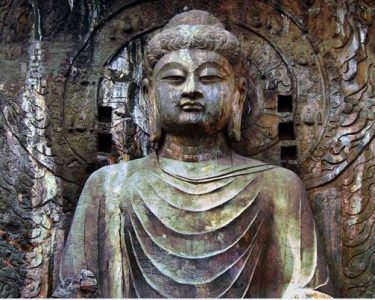
Beyond the physical placement of the caves, the artistic style of the statues offers the clearest clues to their origin. The art of the Northern Wei and Tang dynasties is distinctly different, reflecting changes in aesthetics, religious interpretation, and cultural influences. The transition from the earlier, more linear and abstract forms to the later, more realistic and full-bodied figures tells a story of a faith becoming more integrated into Chinese culture.
When you are at the Longmen Grottoes, it is easy to get lost in the details. Use this checklist to actively look for the specific stylistic traits that distinguish the two major periods. This practice can help you confidently identify the era of a carving, even in smaller, less-famous niches.

Visitor’s Observation Checklist
-
Face Shape and Expression:
- Northern Wei: Are the faces elongated and slender? Do the figures have a subtle, archaic smile and a sense of otherworldly detachment? This reflects an earlier, more spiritual and abstract representation.
- Tang: Are the faces round, full, and fleshy? Do the expressions convey a more human-like compassion, grace, and confidence? This indicates the mature, naturalistic Tang style.
-
Body Proportions and Stance:
- Northern Wei: Do the bodies seem flattened or compressed, with less emphasis on realistic anatomy? Is the stance stiff and formal? Look for figures that appear more symbolic than lifelike.
- Tang: Do the figures have naturalistic, full-bodied proportions with a gentle S-shaped curve (contrapposto) to their stance? This dynamism and realism is a hallmark of the confident Tang era.
-
Drapery and Clothing:
- Northern Wei: Are the robe’s folds depicted as sharp, linear, and stylized, often in a “waterfall” or layered pattern? This style shows strong influence from Central Asian and Indian prototypes.
- Tang: Do the robes drape softly and cling to the body, revealing the form underneath? The fabric should appear thin and light, conveying a sense of movement and realism.
-
Attendant Figures (Bodhisattvas):
- Northern Wei: Are the attendant bodhisattvas and guardians more rigid and formal in their poses?
- Tang: Do the attendant figures, such as bodhisattvas and heavenly kings, display more dynamic poses and individualized, emotional expressions? Look for the powerful, muscular guardians at Fengxian Temple as a prime example.
Beyond the Main Buddhas: Common Oversights and Misinterpretations
Most visitors focus on the largest and most famous statues, like the Vairocana Buddha at Fengxian Temple. While these are masterpieces, some of the most fascinating stories at the longmen grotto are found in the smaller, often overlooked details. Paying attention to these elements provides a richer, more complete understanding of the site’s history and purpose.
Here are some common details that visitors miss and what they actually signify. Avoiding these oversights will deepen your appreciation for the complexity of the art and the lives of the people who created it.
What to Look For Beyond the Obvious
- Mistake 1: Ignoring the Inscriptions. Many niches, large and small, have inscriptions carved beside them. These are not just decorations. They often name the donor, the date of dedication, and the reason for the carving—such as praying for the health of a family member or for success in an official career. These texts are primary historical sources that bring the personal stories of the patrons to life.
- Mistake 2: Overlooking the Ceilings and Floors. In the larger caves, look up. Many ceilings are carved with intricate lotus flowers, apsaras (celestial beings), and other decorative motifs. These are not merely ornamental; they represent the heavenly paradise awaiting the faithful. The floor may also contain carvings, such as lotus pedestals where statues once stood.
- Mistake 3: Not Noticing Vandalism and Damage. The empty pedestals and missing heads on many statues are a crucial part of the site’s modern history. Much of this damage occurred in the early 20th century, when heads and entire sculptures were chiseled off and sold to international collectors. Recognizing this damage is a reminder of the site’s vulnerability and the importance of ongoing preservation efforts. The empty spaces tell a story of loss and cultural heritage trafficking.
- Mistake 4: Disregarding the Smallest Niches. The cliffs are covered in thousands of tiny niches, some only a few inches high. It is easy to dismiss them in favor of the grander caves. However, their sheer number is evidence of the widespread popularization of Buddhist iconography during the Tang Dynasty. These small, private acts of devotion are just as important to the site’s history as the massive imperial commissions.
By consciously seeking out these details, you can gain a more nuanced perspective on the grottoes. This level of cultural heritage analysis reveals a dynamic site that was shaped by emperors, aristocrats, monks, and common families over hundreds of years, making your experience of visiting historical sites much more meaningful.
Our team specializes in providing detailed analysis of historical and cultural sites. For inquiries about specific research or interpretive guides, please contact our technical team for more information.