
Blog
Comparing Lo Yang China Eastern Zhou and Han Wei Capitals

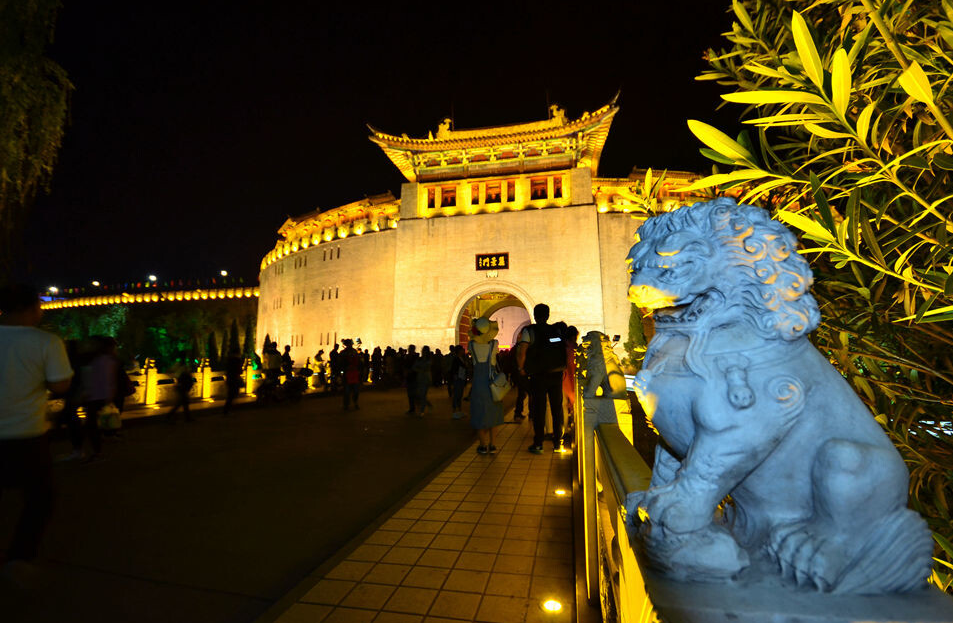
Comparing the Eastern Zhou Wangcheng and Han-Wei Luoyang Capitals in Lo Yang China
Which archaeological site corresponds to which dynasty? That is the central question for researchers and history-focused travelers planning a visit to lo yang china. The city served as a capital for multiple regimes across more than a millennium, but the physical remains are scattered. Two sites dominate the conversation: the Eastern Zhou Wangcheng and the Han-Wei Luoyang capital. They represent different eras, different urban philosophies, and different preservation challenges.
Mixing them up is easy. Both sit near the modern city. Both appear in older travel guides under vague labels like “ancient Luoyang.” But they are not interchangeable. A researcher looking for Eastern Zhou material will waste a full day at the wrong location. A traveler tracing Han dynasty urbanism needs the later site. This guide breaks down the practical differences.
Locating the Two Capitals: A Field Orientation
Modern Luoyang sits on the northern bank of the Luo River in Henan Province. The two ancient capitals occupy distinct positions relative to this modern core. Understanding the geography prevents a common planning mistake: assuming all “old city” references point to one place.
The Eastern Zhou Wangcheng lies largely beneath and immediately adjacent to the modern city center. Its remains are interwoven with contemporary streets, parks, and construction. The Han-Wei Luoyang capital sits further east, roughly 15 kilometers from the modern urban core, near the junction of the Luo and Yi rivers. This eastern location is more open, with visible rammed-earth walls and agricultural land between the ruins.
Here is what that separation means in practice:
- Wangcheng: Access is easy from any central hotel. You can walk to portions of the site. But surface visibility is low. Most evidence is buried or displayed in the Luoyang Museum.
- Han-Wei Luoyang: Requires a dedicated taxi or bus trip. The site is large and exposed. You see city walls, gate foundations, and palace platforms directly in the landscape.
If your priority is convenience and museum context, Wangcheng works. If your priority is walking through standing archaeological features, the Han-Wei site delivers more.
Site-by-Site Comparison: Eastern Zhou Wangcheng vs. Han-Wei Luoyang
This section provides the direct comparison readers request most often. The table below outlines the core parameters. The bullet points that follow explain what each difference actually affects for a visitor or researcher.
| Parameter | Eastern Zhou Wangcheng | Han-Wei Luoyang |
|---|---|---|
| Primary Period | Eastern Zhou dynasty (c. 770–256 BCE), especially the Warring States phase | Eastern Han (25–220 CE), Cao Wei, and Western Jin dynasties (3rd century CE) |
| Location | Beneath and around modern Luoyang’s central districts | Approximately 15 km east of modern Luoyang, near the Luo-Yi river confluence |
| Layout | Irregular plan adapted to terrain; palace area in the southwest; less rigid grid | Strict rectangular plan; clear north-south axis; palace in the north-center; grid-like street system |
| Surviving Evidence | Buried foundations, tombs, and artifacts; limited visible surface walls | Visible rammed-earth walls, gate remains, palace platforms, and the White Horse Temple nearby |
| Best For | Understanding early Chinese urban formation and Zhou material culture | Understanding imperial planning, Han dynasty scale, and later Buddhist influence |
What the location difference actually affects: For Wangcheng, you will spend most of your time in the Luoyang Museum or looking at small excavation pits. The city is under the modern one. You cannot grasp the full footprint by walking. For Han-Wei Luoyang, you can stand on the remains of the outer wall and see the scale. The location difference changes your entire field strategy.
What the layout difference actually affects: Wangcheng’s irregular plan reflects an earlier, less centralized approach to capital building. The palace was not always the strict focal point. Han-Wei Luoyang shows a mature imperial grid. The north-south axis and palace placement became the template for later capitals like Chang’an and Beijing. If you are studying the evolution of Chinese urban planning, this contrast is the core lesson.
What the evidence difference actually affects: Wangcheng yields more artifacts but less architecture. You will see bronzes, jades, and pottery in museum cases. Han-Wei Luoyang yields more architecture but fewer small finds on the surface. You will see walls and foundations. One site answers “what did they make?” The other answers “how did they build?”
A common mistake is visiting only Wangcheng because it is close to the hotel and concluding that “ancient Luoyang is invisible.” That conclusion is wrong. You simply visited the buried site. The exposed site is the Han-Wei capital. Plan for both if your research spans multiple periods.
Understanding the Eastern Zhou Wangcheng Site
The Eastern Zhou kings moved their capital to Luoyang after the Zhou court fled west from the Quanrong invasion in 771 BCE. Wangcheng became the royal center. The name translates to “King’s City.” Excavations since the 1950s have revealed a city of significant size, but one that remains difficult to visualize at ground level.
The palace area occupied the southwestern portion of the walled enclosure. Workshops, residential quarters, and burial areas surrounded it. Unlike later capitals, the street grid was not perfectly orthogonal. The terrain near the Jian River and Luo River shaped the city’s edges.
For a researcher, the key resources are:
- Luoyang Museum: Holds the majority of excavated Zhou bronzes, ceramics, and jades from Wangcheng. Start here before attempting any field visit.
- Wangcheng Park: A modern park built over part of the site. Some excavation pits are visible, but signage varies. Expect limited interpretation.
- Published excavation reports: Essential. Many critical details exist only in Chinese archaeological journals. Bring translations or a guide familiar with the literature.
Do not expect a reconstructed ancient city. That is not the nature of this site. The value lies in the artifact record and the buried stratigraphy. If you need standing walls, this is not your primary destination.
Understanding the Han-Wei Luoyang Capital
The Han-Wei Luoyang site served as the capital for the Eastern Han, Cao Wei, and Western Jin dynasties. It represents one of the largest and most influential cities of the ancient world. The site covers roughly 100 square kilometers including the outer walls and associated features.
Unlike Wangcheng, the layout is rigorously planned. A central north-south axis ran from the palace in the north to the southern gate. Streets formed a grid. The palace complex occupied the northern center, a pattern that later capitals copied. The White Horse Temple, established in 68 CE, sits just outside the eastern wall and remains an active religious site today.
The visible remains include:
- Rammed-earth walls: Sections of the eastern and northern walls still stand several meters high in places. You can walk along portions of the wall line.
- Palace platform: The raised foundation of the main palace hall is visible. Standing on it gives a clear sense of the building’s scale.
- Gate foundations: Several city gates have been excavated. The remains show the width of the main thoroughfares.
This site rewards walking. Bring water, sun protection, and a map. The distances between features are significant. A full exploration takes half a day or more. The site is less developed for tourism than some Chinese heritage sites, which means fewer crowds but also fewer interpretive signs. A knowledgeable guide or detailed research notes improve the experience considerably.
Common Mistakes When Planning a Visit to Lo Yang China
Researchers and travelers make predictable errors when first planning a trip to lo yang china. Avoiding these saves time and prevents misinterpretation.
- Mistake 1: Assuming one site covers all periods. Wangcheng is Eastern Zhou. Han-Wei Luoyang is later. They are separate locations. Visiting one does not cover the other.
- Mistake 2: Relying on outdated maps. Older maps sometimes label the Han-Wei site as “Ancient Luoyang” and omit Wangcheng entirely. Cross-reference with recent archaeological publications.
- Mistake 3: Underestimating travel time. The Han-Wei site is not walkable from central Luoyang. Budget at least 30-40 minutes each way by car, plus time to move between features within the site.
- Mistake 4: Expecting reconstructed buildings. Neither site has extensive reconstruction like some tourist-focused parks. You are visiting archaeological remains, not a theme park.
- Mistake 5: Skipping the museum first. The Luoyang Museum provides the artifact context that makes the bare field sites meaningful. Visit it before heading to the Han-Wei walls.
Each of these mistakes has a simple fix. Identify your period of interest first. Then choose the site. Then check current access conditions. Then go.
A Practical Step-by-Step Research Itinerary
For a researcher with two full days in lo yang china, this sequence maximizes information density while minimizing wasted movement.
- Day 1 Morning: Luoyang Museum. Spend 2-3 hours studying the Eastern Zhou and Han dynasty exhibits. Note the excavation locations listed on labels. This establishes the artifact baseline for both sites.
- Day 1 Afternoon: Wangcheng area. Walk the Wangcheng Park area and any accessible excavation points near the city center. Understand that most of the site is buried. Focus on spatial relationships visible on maps.
- Day 2 Morning: Han-Wei Luoyang site. Arrive early. Start at the palace platform, then walk to the eastern wall, then the White Horse Temple outside the wall. This follows the historical axis from power center to religious periphery.
- Day 2 Afternoon: Return to the museum or a local research library. Re-examine artifacts with the field context fresh in mind. The spatial memory of the Han-Wei walls changes how you read the Zhou material.
This itinerary works for researchers focused on urban evolution. If your interest is purely Zhou bronzes, skip Day 2 and spend more time with museum collections and published reports. If your interest is Han dynasty planning, compress Day 1 afternoon and allocate more time to the Han-Wei site.
The limits of this approach: it assumes good weather and normal access. Construction or excavation closures can disrupt field visits. Check locally before committing to a tight schedule. Also, this itinerary is not designed for casual tourists seeking entertainment. It is a research-oriented plan.
Deciding Which Site Fits Your Research Question
The choice between Wangcheng and Han-Wei Luoyang depends entirely on what question you are trying to answer.
Choose Wangcheng if your question involves: early Chinese urbanization, Eastern Zhou political history, bronze and jade material culture, or the transition from Western Zhou to Eastern Zhou. The site answers questions about how a royal capital functioned before the imperial system fully matured.
Choose Han-Wei Luoyang if your question involves: imperial city planning, the Han dynasty state, the development of the north-south axis, Buddhist introduction to China, or the template for later capitals. The site answers questions about scale, order, and centralized power.
Many researchers need both. The contrast between the irregular Zhou city and the rigid Han grid is itself a research finding. You cannot see that contrast by visiting only one site.
One final note on evidence quality. Wangcheng’s buried remains mean that new discoveries continue to emerge from construction projects and targeted excavations. The published record evolves. Han-Wei Luoyang’s exposed remains are more stable but also more affected by erosion and agricultural activity. Neither site offers a complete picture. Both require engagement with the archaeological literature to interpret correctly.
For researchers planning a focused visit to lo yang china, the distinction between these two capitals is the foundation of any serious itinerary. Get the locations right, understand the layout differences, and match the site to your period of interest. That preparation turns a confusing landscape into a coherent research opportunity.
If you are preparing a detailed research itinerary or need current access information for either capital site, contact a local archaeological guide or the Luoyang cultural heritage office before finalizing your plans. A short consultation can confirm which excavation areas are open and whether any temporary closures affect your visit.
