 By
By How China Luoyang Became a Nine-Dynasty Capital
Why did several imperial courts choose one city repeatedly instead of building entirely new capitals? The answer begins with location, but it also depends on military access, food supply, political symbolism, and the changing map of northern China. For travelers and researchers, china luoyang is not simply an old city with famous monuments. It is a place where successive governments tested whether central geography could support imperial rule.
The phrase “nine-dynasty capital” is useful, but it needs careful reading. Different historical summaries count Luoyang’s capital periods in different ways. Some include courts that made the city their principal capital; others include periods when it operated as an eastern, secondary, or ceremonial capital. The broader historical record often associates Luoyang with more than nine ruling houses or regimes. The central point remains clear: china luoyang returned again and again as a political center because its landscape and transport position solved problems that rulers repeatedly faced.

River geography, transport corridors, and dynastic choices made Luoyang recur as a capital
The strongest explanation for Luoyang’s repeated importance is not one palace, one emperor, or one battle. It is the relationship between rivers, mountain passes, cultivated plains, and routes connecting regions of China. China luoyang stands near the Luo River and within reach of the Yellow River basin, a region that supported agriculture, movement, and communication across northern China.
| Strategic factor | What it affected in practice | Why rulers valued it | When the advantage became weaker |
|---|---|---|---|
| River valleys | Water access, farming, local transport, and settlement patterns | Courts needed dependable food-producing hinterlands and access to major population centers. | Flooding, disrupted waterways, or damaged irrigation could turn a river advantage into a logistical burden. |
| Central position | Travel time between the North China Plain, western passes, and central regions | A court based here could communicate with several strategic zones without ruling from the far edge of the empire. | When political power shifted strongly toward the northwest, southeast, or lower Yangtze region, another capital could be more practical. |
| East-west corridors | Movement of officials, tribute, grain, armies, and information | Control of routes mattered as much as control of walls. A capital had to receive resources continuously. | Corridors could also give invaders direct approaches if frontier defenses failed. |
| Mountain approaches | Defense and access through passes | Nearby terrain could channel movement and help define defensible approaches to the city. | Passes were only useful when a regime had enough troops and administration to hold them. |
| Established urban base | Palaces, markets, roads, ritual spaces, and administrative knowledge | Reusing an existing capital reduced the political and material cost of starting from nothing. | War damage or a desire to break with the previous regime could make inherited infrastructure politically unacceptable. |
The practical lesson for a visitor is straightforward: do not study china luoyang as an isolated city center. Read it as a corridor landscape. The Luo River valley, the wider Yellow River zone, western routes toward Chang’an, and eastern routes toward the plains all help explain why imperial planners kept returning.
This interpretation fits travelers visiting historical sites across more than one day. It is less useful if the goal is only a short visit to one monument, because the geographic pattern is difficult to see from a single gate, museum room, or temple courtyard.
What “nine dynasties” means and why the count can vary
A common mistake is to treat “nine dynasties” as a fixed list accepted in exactly the same form by every source. It is better understood as a traditional shorthand for Luoyang’s unusually long history of imperial use. China luoyang was selected, reused, restored, renamed, and administered differently by different courts.
The major capital traditions commonly connected with the city include the Eastern Zhou, Eastern Han, Cao Wei, Western Jin, Northern Wei, Sui, Tang-era eastern capital arrangements, Wu Zhou, Later Liang, Later Tang, and Later Jin. Earlier traditions and later counting methods can expand or adjust the list. The distinction matters because “capital” could mean several different things:
- Primary capital: the main seat of the emperor and central government.
- Eastern or secondary capital: a formally important city that supported rule from another principal capital.
- Temporary court center: a city used during political transition, military emergency, or relocation.
- Ceremonial and administrative center: a city that retained imperial institutions even when day-to-day rule was concentrated elsewhere.
For a research itinerary, the conclusion is clear: identify what role Luoyang had during the period you are studying before deciding which site best represents it. A visitor focused on the Eastern Han should prioritize evidence of urban planning and tomb culture. A visitor studying Northern Wei should connect Luoyang’s court relocation with Buddhist patronage and the nearby Longmen landscape. A visitor looking at the Sui and Tang periods should distinguish between a principal capital and an eastern capital function.
This approach does not apply when a guidebook uses “nine dynasties” only as a tourism label. In that case, use the phrase as an entry point, then verify the exact dynasty-city relationship through museum interpretation, academic publications, or site-specific material.
How each political transition changed the city’s role
Luoyang was not repeatedly chosen because it was permanently secure. It was chosen because its advantages could be activated under certain political conditions. When a dynasty controlled northern transport routes, cultivated plains, and nearby passes, china luoyang could support a court at the center of a large realm. When those conditions weakened, the same centrality could expose the city to conflict.
Eastern Zhou made the city a durable political reference point
The move eastward in the Zhou period gave Luoyang lasting ritual and political significance. Even when royal authority weakened, the city remained associated with legitimate kingship, inherited institutions, and the central plains. This was a symbolic asset for later regimes. A ruler did not need to create the city’s political meaning from scratch.
Eastern Han, Cao Wei, and Western Jin used its northern-central position
These successive regimes benefited from Luoyang’s relationship to major northern population and agricultural zones. The city could serve an administration governing the central plains while maintaining routes toward other regions. The limitation was obvious: northern political competition could place the capital close to major military threats.
Northern Wei turned relocation into a statement of rule
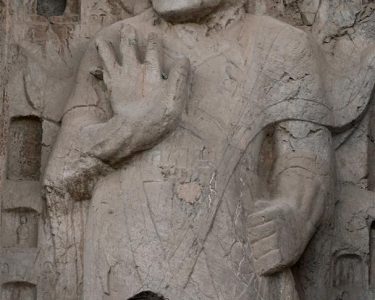
Northern Wei’s move to Luoyang showed that choosing a capital could be both strategic and cultural. The city offered access to established administrative traditions and a setting associated with Chinese imperial legitimacy. For travelers, this is one reason the Longmen Grottoes deserve to be studied alongside the urban history rather than as an isolated art destination.
Sui, Tang, and Wu Zhou preserved the city’s high status
Even when another city held greater day-to-day political weight, Luoyang could remain an eastern capital, a logistical node, or a court residence. Wu Zhou’s association with Luoyang demonstrates that the city could again become central to imperial authority under the right ruler and political program. China luoyang therefore represents continuity, but not sameness. Its function changed with each regime.
Use a site sequence that connects political history to physical evidence
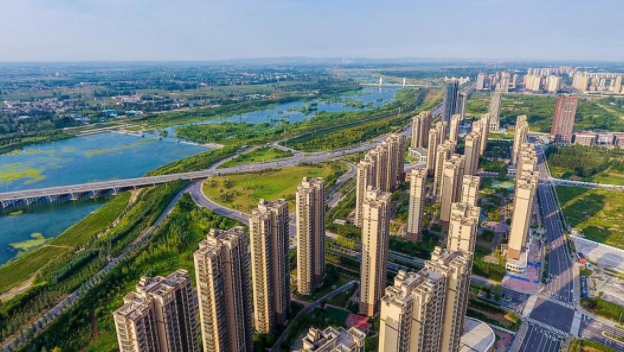
For awareness-stage travelers, the best visit is not a checklist of famous attractions. It is a sequence that moves from landscape to city planning, then to religious and funerary evidence. This method helps explain why china luoyang became an imperial center instead of presenting its history as unrelated dynastic episodes.
- Start with a historical map. Mark the Luo River, the Yellow River region, western routes, and eastern plains. The goal is to understand the city’s position before entering individual sites.
- Visit urban-history interpretation first. Look for material on city walls, palace areas, market zones, and road layouts. Ask which dynasty built, expanded, or reused each feature.
- Compare capital periods rather than memorizing names. Separate primary-capital periods from eastern-capital or secondary-capital periods.
- Place Longmen in its political context. Examine how court patronage, Buddhism, elite culture, and capital relocation interacted.
- Use tombs and museums to study administration and society. A capital was supported by officials, artisans, merchants, soldiers, and religious communities, not only emperors.
- End with the geography question. After each site, ask what resource, route, or political claim made the location useful to a ruling house.
This sequence suits travelers who have enough time to compare several locations and researchers building a foundation for deeper study. It does not suit visitors seeking a single iconic photo stop; in that case, select one site and focus on its own period instead of trying to cover every dynasty.
Avoid these mistakes when interpreting Luoyang’s capital history
- Mistake: Assuming every dynasty used the same city boundaries.
City plans, palace districts, and defended areas changed. Compare the relevant period before locating a site on a modern map. - Mistake: Treating “capital” as one uniform status.
Check whether Luoyang was a principal capital, eastern capital, secondary center, or temporary court location. - Mistake: Ignoring transport when studying politics.
Imperial decisions depended on food, officials, military movement, and communication. A palace alone cannot explain a capital choice. - Mistake: Viewing Buddhist sites separately from state history.
Religious patronage often reflects court priorities, elite networks, and the political standing of the city. - Mistake: Repeating the nine-dynasty label without checking the source.
Use the phrase carefully, because historical lists differ according to how capital status is counted.
The enduring importance of china luoyang came from a combination of geography and political memory. Its river setting supported settlement and regional movement. Its corridors connected major zones of rule. Its inherited prestige gave later dynasties a ready-made language of legitimacy. Yet none of these advantages guaranteed permanent dominance. When military pressure, economic gravity, or court strategy shifted, another city could become more suitable.
For travelers and researchers, the most useful conclusion is to treat china luoyang as a changing imperial system rather than a single ancient capital. Compare the river landscape, transport routes, palace traditions, religious sites, and dynastic decisions together.
Request selection advice for a Luoyang-focused historical itinerary before choosing which sites to visit.