 By
By How Imperial Patronage Shaped China Longmen Grottoes
Why does one cave at the site dwarf its neighbor by several times, while the carving style inside shifts almost as sharply as the size does? Visitors standing along the Yi River cliffs ask this constantly, and the answer isn’t really about stone-cutting technique. It’s about who paid for what, and when. Reading china longmen grottoes through the lens of imperial patronage turns a wall of niches into a readable timeline of court politics, family devotion, and shifting religious fashion across roughly four centuries of continuous carving.
This matters for anyone planning a site visit rather than just buying a ticket. Guidebooks tend to list caves by name and date, but they rarely explain the mechanism — how a donor’s rank, their relationship to the throne, and the political moment they carved in determined the physical outcome you see on the rock face today.
Why Patronage Records Explain What Guidebooks Don’t
Most cave groups at the site carry inscriptions — sometimes carved directly beside the niche, sometimes recorded in stelae nearby — naming the sponsor and stating the occasion. Some were commissioned by emperors and empresses. Others came from generals, monks, or wealthy merchant guilds pooling resources. The gap between these two categories is not subtle. An imperial commission typically meant unrestricted access to court sculptors, a central or highly visible cliff location, and iconography aligned with state Buddhist doctrine at that moment. A private donor’s cave, by contrast, tends to be smaller, tucked into secondary rock faces, and shaped by more localized devotional preferences.
This is the interpretive gap that trips up first-time visitors. They see two caves of wildly different scale a few meters apart and assume it reflects available rock, or carving difficulty. In fact it almost always reflects available political capital.
How to Connect Donor Records to Cave Scale, Location, and Iconography
Reading a cave group this way follows a repeatable process. Below is the sequence we’d recommend working through on site, or with photographs and site maps beforehand.
- Locate the inscription first, not the statue. Before analyzing the carving itself, find the dedicatory text — either inside the niche, on a nearby stele, or in published site records. This tells you who commissioned the work and often why.
Common failure: visitors admire the Buddha’s face and posture before checking who paid for it, then build an interpretation that ignores the actual sponsor. - Identify the donor’s rank or title. Was this an emperor, empress, crown prince, monastic official, or lay association? Rank correlates directly with scale and material quality.
Common failure: assuming all elaborate carving implies imperial funding — some guild-sponsored caves are highly refined despite modest size, because the donors compensated for lower rank with concentrated resources on a single small niche. - Cross-reference the date with the ruling dynasty’s religious policy. Patronage patterns shifted between the Northern Wei period and the later Tang dynasty phase of carving, as state-favored Buddhist schools and iconographic emphasis changed. A cave commissioned under one dynasty’s dominant doctrinal preference will show different deity groupings than one from a later phase.
Common failure: reading iconography as purely artistic evolution, without checking whether a change in ruling house or doctrine explains the shift better than aesthetics alone. - Check the cave’s physical position on the cliff face. Central, eye-level, south-facing locations were reserved for the highest-status commissions; smaller or peripheral niches usually belonged to donors further down the social ladder.
Common failure: treating location as random or purely a function of available rock — site records show placement was frequently negotiated and hierarchical. - Compare iconographic choices against known imperial associations. Certain Buddha and bodhisattva groupings recur in caves linked to court sponsorship, reflecting doctrinal statements the ruling family wanted publicly displayed. Private donor caves often show more varied or eclectic figure groupings, reflecting personal or regional devotional habits rather than state messaging.
Common failure: assuming iconographic variety is inconsistent carving quality, rather than a marker of who commissioned the work.
Quick Reference: Patronage Signals and What They Usually Mean
| Signal on Site | Likely Patronage Level | What to Look For Next |
|---|---|---|
| Large central niche, prominent cliff position | Imperial or high court sponsor | Check inscription for named emperor, empress, or crown prince |
| Small, clustered niches off the main path | Private or guild donors | Look for group dedication texts naming multiple individuals |
| Consistent doctrinal figure groupings across several caves | State-directed religious program | Cross-check dynasty-wide policy shifts around that carving period |
| Mixed or unusual iconography in one small cave | Local or family devotion | Read inscription for personal vows or ancestor dedications |
Common Misreadings Visitors Make on Site
Interpreting a cave wall correctly takes more than admiring the carving. These are the recurring mistakes that lead visitors to draw the wrong conclusions:
- Assuming size equals age. Large caves are not necessarily the oldest; imperial commissions could appear at any point in the carving timeline whenever court attention and funding aligned.
- Skipping the inscription entirely. Many visitors photograph the statue and move on, missing the one text element that actually confirms the sponsor.
- Treating erosion damage as a stylistic feature. Weathering and past damage can obscure fine iconographic details, leading to misidentification of figures or misreading of composition intent.
- Assuming uniform imperial style across the whole site. Patronage patterns changed across dynasties, so applying one period’s iconographic rules to a cave from a different era produces incorrect readings.
Comparing Well-Documented Cave Groups by Patron Type
A practical way to build interpretive confidence before a visit is to study a few well-documented cave groups side by side. This is not an exhaustive list, but it illustrates the pattern reliably enough to apply elsewhere on the cliff face.
| Cave Group | Associated Patronage | Notable Interpretive Clue |
|---|---|---|
| Guyang Cave | Early Northern Wei court and aristocratic donors | Dense clustering of smaller dedicatory niches from multiple sponsors within one larger cave |
| Binyang Caves | Imperial family commission | Commissioned as a memorial project, reflecting filial and dynastic motives rather than purely doctrinal ones |
| Fengxian Temple | Tang-era imperial sponsorship | Scale and central cliff placement consistent with the highest tier of court patronage |
Working through this comparison before a visit trains the eye to ask the right first question at every cave: not “how old is this,” but “who commissioned it, and what did that mean for its size and imagery.”
A Practical Checklist for Site Visits
Bring this short list along, whether reading from published site guides, a museum audio tour, or on-the-ground signage:
- Note the cave’s cliff position before reading anything else — central and elevated usually signals higher-status patronage.
- Locate the dedicatory inscription and identify the donor’s name or title, if legible or recorded in site literature.
- Match the carving period to the ruling dynasty’s known religious priorities at that time.
- Compare the figure grouping against a known imperial-sponsored cave from the same era, if one is nearby.
- Record uncertainty honestly — weathering has erased many inscriptions, and some attributions rest on later scholarly reconstruction rather than surviving text.
The site sits within a broader context of Buddhist rock-carving traditions across China, and its status as a UNESCO World Heritage Site reflects the density and continuity of that patronage record across dynasties. That continuity is exactly what makes china longmen grottoes such a useful case study for anyone learning to read donor-driven religious art rather than treating it as anonymous craftsmanship.
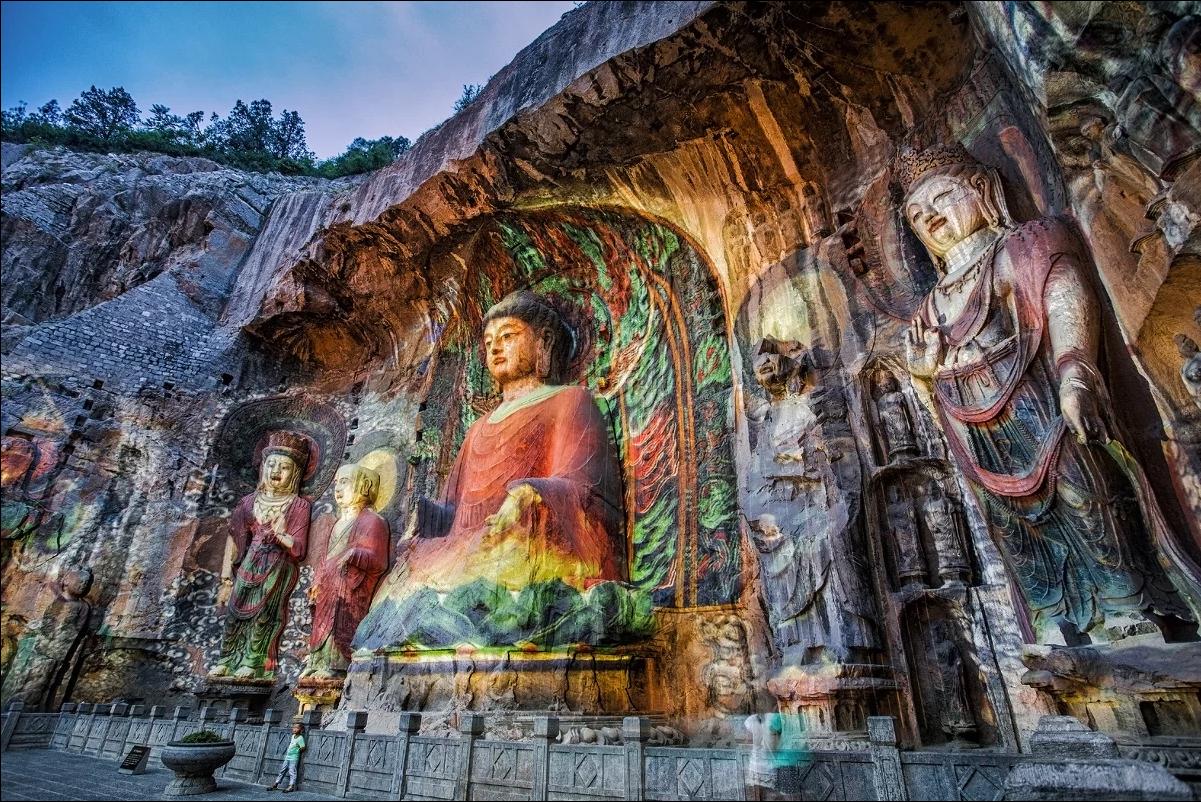
None of this replaces standing in front of the cliff face itself. But arriving with a method — inscription first, rank second, dynasty policy third, location fourth, iconography last — turns a two-hour walk along the Yi River into a structured reading exercise instead of a scenic stroll. Applied consistently, it also explains why china longmen grottoes rewards a second and third visit: each pass through the cave groups surfaces patronage relationships that are easy to miss the first time, especially in smaller niches overshadowed by the site’s largest imperial commissions.

Where This Reading Method Has Limits
This approach works best where inscriptions survive or where scholarly attribution is well established. It applies poorly to caves with heavily eroded or missing dedicatory text, where patronage can only be inferred from stylistic comparison — a weaker form of evidence. It also should not be stretched into assuming every large niche is imperial; some sizable caves resulted from pooled donations by wealthy lay associations rather than the court itself. Treat scale as a strong clue, not a guarantee, and always look for the inscription before drawing a conclusion.
For visitors preparing a research-based itinerary, requesting a curated reading list or site map annotated with known patronage attributions ahead of travel makes the on-site time far more productive than working it out cold in front of the cliff.