 By
By Fengxian Temple Offers the Clearest Window Into Tang Dynasty Sculpture at Longmen Grotto
Visitors planning a day at the Longmen Grotto often ask the same question before they even reach Luoyang: which cave actually shows Tang-era sculptural style at its best, rather than the older Northern Wei conventions that dominate the site’s earliest niches? The short answer is Fengxian Temple, the open-air shrine carved into the cliff face during the mid-Tang period. Its scale, its softer facial modeling, and its more naturalistic drapery mark a clear break from the angular, formal carvings produced two centuries earlier under Northern Wei patronage. Anyone comparing Buddhist-art periods at the Longmen Grotto should treat Fengxian Temple as the reference point for what “Tang style” actually looks like in stone.
Which Cave at Longmen Grotto Best Shows Tang Dynasty Sculpture, and Why?
Fengxian Temple is the largest open-air complex at Longmen Grotto and the most frequently cited example of Tang sculptural achievement. The reasoning behind this recommendation rests on three observable traits, not just tradition:
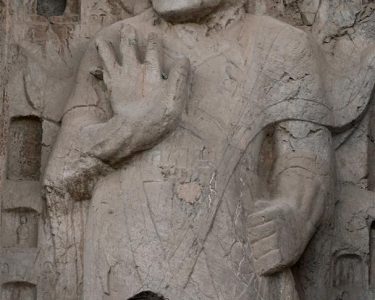
- Facial modeling: the central Vairocana Buddha shows a rounded, fuller face with softened cheeks and a calm, almost personal expression — a departure from the elongated, austere faces typical of earlier work at the Longmen Grottoes.
- Drapery treatment: robes fall in flowing, naturalistic folds rather than the stiff, symmetrical pleats seen in fifth-century niches, suggesting a shift toward more lifelike figural rendering.
- Scale and composition: the group arrangement — Buddha flanked by disciples, bodhisattvas, and guardian figures — is monumental and theatrical, designed to be viewed from a distance across the river valley, unlike the smaller, more intimate Northern Wei niches carved for close devotional viewing.
This recommendation fits students and visitors who want one clear anchor point for “Tang style” before comparing other caves. It does not apply if you are researching Tang-period small votive niches or donor inscriptions elsewhere on the site — those follow different conventions and are scattered across smaller, less prominent caves rather than concentrated in one showcase.
Comparison: How Does Fengxian Temple Differ From Key Northern Wei Caves at Longmen Grotto?
The clearest way to see the stylistic shift is side by side. The table below contrasts Fengxian Temple with two of the most-studied Northern Wei caves at the site, Guyang Cave and Binyang Central Cave.
| Feature | Fengxian Temple (Tang) | Binyang Central Cave (Northern Wei) | Guyang Cave (Northern Wei) |
|---|---|---|---|
| Scale | Large open-air group, meant for distant viewing | Enclosed cave, moderate interior scale | Enclosed cave, one of the earliest and smaller-format spaces |
| Facial modeling | Rounded, fuller cheeks, calmer expression | Elongated face, more formal and symmetrical | Angular, austere features, minimal softening |
| Iconography | Vairocana-centered group with disciples and guardians in dynamic poses | Shakyamuni-centered arrangement, more static composition | Dense donor niches, strong emphasis on inscriptions and votive imagery |
| Dynasty / period | Tang, mid-period construction under imperial patronage | Northern Wei, among the earliest major projects at the site | Northern Wei, one of the very first caves opened at Longmen Grotto |
The practical takeaway: if your goal is to trace the evolution from formal, linear Northern Wei carving toward the fuller, more humanized Tang aesthetic, walk Guyang Cave first, then Binyang Central Cave, then finish at Fengxian Temple. Walking them in this order lets the stylistic progression register visually rather than just conceptually.
What Is the Best Order to View Tang and Northern Wei Sculpture in One Visit?
Longmen Grotto stretches along the cliffs on both banks of the Yi River, so route planning matters more than most visitors expect. A workable sequence for a single-day visit focused on stylistic comparison:
- Start at the northern cluster of early caves, including Guyang Cave, while light and energy are fresh — these interiors are dim and reward slower, close viewing.
- Move to Binyang Central Cave next; note the transitional relief carvings along its walls, which show the Northern Wei workshop tradition at its most refined.
- Continue south toward Fengxian Temple, ideally arriving in early-to-mid afternoon when sunlight hits the open-air group directly and the facial modeling is easiest to photograph.
- If time allows, cross to the western bank caves for smaller Tang-period niches that supplement the Fengxian Temple comparison with donor inscriptions and secondary figures.
This order works well for a half-day to full-day visit focused specifically on sculptural comparison. It is less useful if your priority is calligraphy or inscriptions, which are concentrated in different clusters and require a separate route entirely.
What Mistakes Do Visitors and Students Make When Comparing These Two Periods?
A few recurring errors weaken otherwise solid comparative essays or site visits:
- Treating “Longmen” as a single uniform style. The site spans multiple dynasties and workshop traditions; generalizing from one cave misrepresents the whole complex.
- Skipping the smaller Northern Wei niches. Focusing only on Binyang Central Cave and ignoring Guyang Cave misses the earliest, most linear phase of carving that Tang sculptors later moved away from.
- Assuming scale alone indicates period. Some later additions and repairs were made to earlier caves, so size is not always a reliable dating clue without checking iconographic and stylistic detail.
- Photographing at the wrong time of day. Fengxian Temple’s open-air figures depend heavily on natural light; midday overhead sun or overcast conditions flatten the facial modeling that makes the Tang style distinctive.
- Overlooking guardian and attendant figures. Comparative essays often focus only on the central Buddha, but the flanking disciples and guardian kings at Fengxian Temple show the Tang shift toward dynamic, almost sculptural drama even more clearly than the main image does.
A Quick Checklist Before You Study or Photograph Longmen Grotto Sculpture
Use this before finalizing a research outline or a photography itinerary:
- Have you identified at least one Northern Wei cave and one Tang cave to compare directly, rather than describing the site in general terms?
- Do you have a note on facial modeling differences (elongated vs. rounded) for each example you plan to cite?
- Have you checked lighting conditions for open-air groups like Fengxian Temple if photography is part of the goal?
- Are you distinguishing original carving from later repair or restoration work where visible, rather than assuming uniform condition across the site?
- Have you allotted enough time to walk both riverbanks, since some Tang-period supplementary niches sit apart from the main Fengxian Temple group?
For structured research, museum programs, or group tours planning a comparative itinerary across Longmen Grotto’s Tang and Northern Wei sections, our team can share a route outline or discuss specific caves worth prioritizing for your visit — feel free to reach out with your itinerary questions or study focus.