 By
By Three Different Hangu Pass Sites Explain Most of the Confusion in Historical Maps and Kingdom Games
If you’ve cross-checked a map from a Three Kingdoms strategy title against a modern gazetteer entry for Hangu Pass and gotten two different coordinates, you’re not misreading the source. You’re looking at two separate physical locations that both carry the name Hangu Pass. This mix-up shows up constantly in early-stage research — student papers, game wikis, and translated classical texts all cite “Hangu Pass” as if it were a single fixed point, when the name was actually reused and relocated across several centuries.

Why the Name Hangu Pass Appears in Three Separate Locations
This isn’t a translation error. It’s a documented fact: the checkpoint was physically moved. The original site, built during the Qin dynasty, sat in a narrow gorge near present-day Lingbao in western Henan province, controlling the corridor between the Qin heartland (modern Shaanxi) and the central plains. This is the location referenced in most Warring States and early Han narratives, including the well-known accounts of Liu Bang’s entry into the Qin capital region.
By the early Han dynasty, a new checkpoint was constructed roughly 150 kilometers east, near Xin’an county, closer to Luoyang. This installation also took the name Hangu Pass, and it’s the site most often meant when Han-era administrative records or Three Kingdoms narratives mention the pass. Later Wei-period texts, written after Han rule folded into the Three Kingdoms period, generally point to this same relocated Xin’an-area site rather than the older Qin gorge — but because Wei sources borrow Han place names without always flagging the change, readers assume there’s a third, distinct location. There isn’t a separate Wei installation; the confusion is administrative, not geographic.
Step-by-Step Method to Identify Which Hangu Pass a Source Refers To
Treat this like a sourcing verification task, not a trivia question. Here’s the sequence worth running through when a map, game asset, or text doesn’t specify which site it means:
- Identify the era of the source first. Pre-Han material — Warring States chronicles, early Qin records — almost always points to the Lingbao-area site. Checkpoint: look for a date or dynasty label before anything else. Failure reason: skipping this step is the single biggest cause of misidentification, since most modern maps only mark one pin for the pass.
- Cross-reference the county name attached to the passage. “Lingbao” or “Hongnong” points to the Qin-era site; “Xin’an” points to the Han-era relocation. Checkpoint: if no county name is given, check surrounding place names in the same paragraph — river names and neighboring cities usually narrow it down. Failure reason: translated texts frequently drop the county qualifier, leaving only the bare name with no locator.
- Match the reference to the historical event described. Events tied to the fall of Qin or the Chu-Han contention almost always point to the original gorge; events tied to Later Han court politics or Three Kingdoms campaigns point to the Xin’an relocation. Checkpoint: verify the event’s date against known dynasty timelines before finalizing your identification. Failure reason: game adaptations often compress multiple eras onto one map, so a Han-period plotline can sit next to Qin-era terrain art and create a false impression that both describe the same coordinates.
- Verify against a modern coordinate reference. Once you have a tentative era and county match, confirm it against a current administrative map rather than a game wiki, since fan-made wikis frequently copy one another’s errors. Checkpoint: the two candidate sites sit roughly 150 kilometers apart — if two sources disagree by about that distance, you’ve likely found the Qin/Han split, not a data error.

Location-and-Era Comparison of the Qin, Wei, and Han Hangu Pass Sites
The table below separates the name references by period, approximate location, and the source of confusion tied to each.
| Reference | Active Period | Approximate Location | Strategic Role | Common Confusion |
|---|---|---|---|---|
| Qin Hangu Pass | Warring States through early Han | Near Lingbao, western Henan (Hongnong River gorge) | Controlled the corridor between the Qin heartland and the central plains | Classical chronicles default to this site; modern maps sometimes mislabel it as the later location |
| Han Hangu Pass | Early Han dynasty onward | Near Xin’an county, closer to Luoyang | Replaced the Qin checkpoint as the eastern gateway toward the capital region | Frequently the site meant in Three Kingdoms-era narratives, despite sharing the same name as the older Qin site |
| “Wei” reference | Three Kingdoms period, Wei administration | Same physical site as the Han-era Xin’an checkpoint | Continued the Han-era gateway function under Wei control | Not a separate location — the label refers to which government controlled the existing site, not a new one |
The practical takeaway: claims of three physically distinct sites overstate the case. There are two real locations — Qin and Han — plus one administrative label that reuses the Han site. Treat any “third location” claim in a source as a flag to re-check your reference material.
Common Mistakes When Researching Hangu Pass References
- Assuming a single map pin covers every mention across all periods — it doesn’t, and treating it as one point misplaces any Qin-era event by roughly 150 kilometers.
- Trusting game wikis or fan-translated maps as primary geographic sources, when these frequently copy an earlier error without checking the original chronicle.
- Ignoring the county name attached to a passage because it seems minor — it’s usually the fastest way to separate the two eras.
- Assuming the Wei-era reference is a third physical site rather than an administrative continuation of the Han-era location.
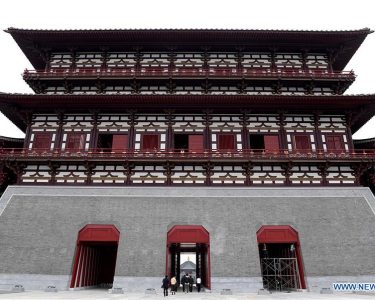
- Citing a modern tourist site marketed under this name as automatically representing the period discussed in a given source — several present-day heritage sites don’t specify which historical period they reconstruct.
A Practical Checklist Before You Cite a Hangu Pass Location
Consider a researcher building a timeline for a Three Kingdoms-themed project who finds two sources: one places a battle at this pass in a Qin-era chronicle excerpt, another places a different event at the same-named site in a Wei-era memoir. Before assuming these describe identical terrain, run through this checklist:
- Does the source specify a dynasty or reign period? If not, flag it as unverified.
- Is a county name — Lingbao or Hongnong versus Xin’an — attached anywhere in the passage or its footnotes?
- Does the surrounding narrative mention other places consistent with one site over the other, such as rivers, neighboring cities, or travel distances?
- Have you checked whether a fan-made map or wiki is your only source for the coordinates? If so, trace it back to a documented chronicle.
- Does your project require the precise historical location, or only the narrative role of a mountain-pass gateway? For fiction or game-lore purposes, the general concept may be sufficient without pinpointing Qin versus Han.
In the scenario above, the Qin-era excerpt should map to the Lingbao gorge, and the Wei-era memoir should map to the Xin’an site — two points roughly 150 kilometers apart, not one location under two names.
For teams compiling historical maps, game lore documents, or academic citations, mixing up these two sites is an easy way to undermine otherwise solid research. If you’re preparing a reference document and need a second check on site attribution for a specific passage, send us the excerpt and its era and we’ll help confirm which location it points to.