By
By How the White Horse Temple in China Became the Cradle of Chinese Buddhism
The question of how a foreign faith took root and flourished in a civilization as established as ancient China is a complex one. Central to this story is a single, pivotal location: the White Horse Temple in China. While many sites are associated with the faith’s later development, this temple in Luoyang is traditionally recognized as the first Buddhist temple in the country. Its origin story, a blend of imperial dreams and scholarly missions, marks the official, state-sanctioned beginning of a religious and cultural transformation that would shape China for millennia.
Understanding this origin is not just about a single date or event. It involves separating a powerful founding legend from the archaeological and textual evidence that has emerged over centuries. For researchers, cultural historians, and travelers, grasping the temple’s foundational role requires looking at how it functioned—not just as a place of worship, but as the nation’s first great translation center and a model for monastic life. It was here that Indian thought was systematically translated, interpreted, and adapted for a Chinese audience, setting a precedent for a uniquely Chinese form of Buddhism.
The Imperial Dream That Sparked a New Faith
The traditional account of the temple’s founding begins not with a missionary’s journey, but with an emperor’s dream. According to historical texts like the Book of the Later Han, in approximately AD 64, Emperor Ming of the Eastern Han Dynasty had a vision of a tall, golden deity flying near his palace. The figure radiated light from its head and was unlike any of the traditional Chinese deities.
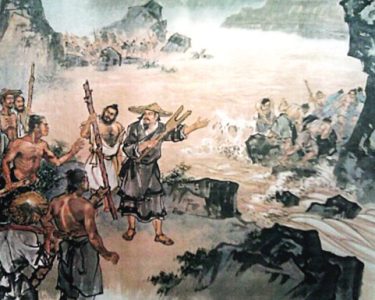
Unsettled and intrigued, the emperor consulted his ministers. One of them, Fu Yi, identified the figure as the Buddha from India, a sage from the West who had achieved enlightenment. This interpretation prompted Emperor Ming to dispatch an official delegation to seek out the source of this new “dharma” or teaching. The mission, led by officials Cai Yin, Qin Jing, and Wang Zun, traveled west along the Silk Road into what is now modern-day Afghanistan and northern India.
After several years, the envoys returned around AD 67. They were not alone. They were accompanied by two eminent Indian Buddhist monks, named Dharmaratna and Kasyapa Matanga. Crucially, they also brought back sacred texts and statues of the Buddha, carried on the back of a white horse. This detail would become the namesake for the institution that followed. Upon their arrival in the capital, Luoyang, Emperor Ming was pleased with the results of the mission. He ordered the construction of a monastery to house the visiting monks and the sacred artifacts they had brought. This temple, built in AD 68 outside the city walls, was named the White Horse Temple (Baima Si) in honor of the animal that had carried the first scriptures to China.
This narrative provides a clear, imperially sanctioned starting point for Buddhism in China. It establishes several key elements:
- Imperial Patronage: The faith’s introduction was not a grassroots movement but a direct result of the emperor’s interest and resources. This gave it immediate legitimacy and protection.
- A Scholarly Focus: From its inception, the temple’s purpose was tied to texts. It was founded to house scriptures and the monks who could interpret them.
- A Link to the West: The story firmly connects the origin of Chinese Buddhism to its source in India, establishing a lineage of authenticity.
This founding legend became the orthodox account, solidifying the status of the White Horse Temple, China, as the undisputed “cradle” of Chinese Buddhism.
The AD 68 Legend vs. Historical Evidence
While the story of Emperor Ming’s dream is powerful and widely accepted, modern historical and archaeological analysis presents a more nuanced picture. The traditional AD 68 founding date marks the first *imperially sponsored* establishment, but it may not represent the first arrival of Buddhist ideas in China. For researchers and serious students of history, it is critical to compare the founding tradition with surviving evidence from later periods and the broader history of Buddhist translation.
This comparison helps differentiate between the symbolic importance of the founding story and the practical, gradual process of religious integration. Here is a breakdown of the key points:
| Aspect | The Founding Tradition (AD 68) | Archaeological & Textual Evidence |
|---|---|---|
| Temple Founding Date | A precise date of AD 68 is given, linked directly to the return of Emperor Ming’s envoys. | The earliest detailed accounts of the dream and temple founding appear in texts from the 3rd to 5th centuries, much later than the events themselves. While some earlier, more ambiguous references exist, the full story was consolidated later, possibly to create a definitive origin point. Archaeological evidence of the original Han-dynasty structure is virtually non-existent due to centuries of reconstruction. |
| The First Monks | Identifies Kasyapa Matanga and Dharmaratna as the first two monks, who arrived with the imperial mission. | While these two figures are central to the legend, other, less formal introductions of Buddhist thought likely occurred earlier via Silk Road merchants and migrants. The official arrival of these two monks signifies the beginning of state-level engagement, not necessarily the first contact. |
| The First Scriptures | The monks are credited with producing the first translation, the Sutra of Forty-two Chapters, at the temple. | Scholarly consensus suggests the Sutra of Forty-two Chapters is more likely a compendium compiled in China from various sources, rather than a direct translation of a single Sanskrit text. Its format and content seem designed as an introductory guide for a Chinese audience. The first verifiable, large-scale translation projects began later with monks like An Shigao in the 2nd century. |
| Architectural Style | The original temple was built in a style suitable for foreign monks, likely based on Indian monastic layouts (viharas). | The current structures at the White Horse Temple are primarily from the Ming and Qing dynasties (1368-1912), with significant modern renovations. While the layout may retain some traditional elements, no original Han dynasty architecture survives. The international additions, like the Thai and Indian-style halls, are late 20th and early 21st-century contributions. |
What This Means for Interpretation
Getting this distinction right is crucial. Believing the current buildings date to AD 68 is a common mistake for travelers. For researchers, attributing complex later translations to the initial period oversimplifies a centuries-long intellectual project. The AD 68 story is best understood as an “inaugural moment”—it represents the point where Buddhism entered the imperial consciousness and received the institutional support necessary to become a major force in China.
From Translation Center to Architectural Beacon
The immediate and most lasting impact of the White Horse Temple was its role as a center for translation. It was not merely a place of worship; it was a state-sponsored institute of linguistic and philosophical exchange. The work started by Kasyapa Matanga and Dharmaratna, legendary or not, established a model for how to transmit complex Buddhist ideas across a vast cultural divide.
For centuries after its founding, the temple remained a hub for foreign monks arriving in China and for Chinese monks seeking to study the dharma. It was a place where Sanskrit sutras were painstakingly rendered into Chinese characters. This process was far more than simple word-for-word translation. It involved finding or inventing Chinese terms for concepts that had no local equivalent, such as nirvana, samsara, and bodhisattva. This intellectual labor, centered at the temple, laid the very foundation of the Chinese Buddhist vocabulary.
Key Contributions of the Early White Horse Temple
The temple’s early activities set critical precedents that shaped the future of Buddhism in East Asia. Understanding these contributions is essential for anyone studying the history of cross-cultural exchange. If you are conducting architectural analyses or historical research, consider these foundational roles:
- Establishing a Translation Methodology: The temple was the site of the first organized efforts to translate Buddhist scriptures. This involved collaboration between foreign monks who understood the source text and Chinese scholars who mastered the target language, a model that would be refined over generations.
- Creating a Monastic Template: As the first official monastery, it provided a blueprint for how a Buddhist monastic community (sangha) should be organized and governed within a Chinese context, balancing religious duties with imperial oversight.
- Legitimizing a Foreign Religion: By operating under the emperor’s direct patronage and within the shadow of the capital, the temple gave Buddhism a level of prestige and protection that was vital for its survival and growth in a society dominated by Confucianism and Taoism.
- Serving as an Educational Hub: It became a magnet for scholars and devout followers from across the empire, functioning as the country’s first de facto Buddhist university where doctrines were studied, debated, and disseminated.
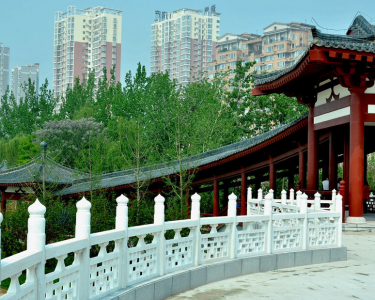
Over the dynasties, the White Horse Temple in China was destroyed and rebuilt many times, with its current architecture largely reflecting Ming and Qing dynasty styles. Yet, its identity as the “ancestral court” and the “hidden source” of Buddhism has remained constant. It stands today not just as a historical artifact, but as a living symbol of that initial, transformative encounter between two of the world’s great civilizations.
For organizations involved in cultural preservation projects, the temple’s long history of reconstruction offers a case study in how a site’s identity can be maintained even as its physical structures evolve. Its significance is carried more in its narrative and function than in any single surviving beam or stone from the original foundation.
For researchers and professionals analyzing historical sites, the temple serves as a reminder that a location’s importance is often a combination of verifiable history and foundational legend. Both must be understood to appreciate its full impact.
For detailed analysis of historical sites or consultation on cultural preservation projects, contact our technical team to discuss your specific research requirements.