By
By Planning a Luoyang Longmen Grottoes Visit Means Choosing the Right Hill Sequence First
Most first-time visitors arrive at the entrance and ask the same question: which side do you walk first, East Hill or West Hill? It sounds like a minor detail, but the wrong sequence at Luoyang Longmen Grottoes means crossing the Yi River bridge twice, doubling back on stairs, and losing an hour you didn’t plan to lose. This guide breaks down what each hill actually contains, the order that avoids retracing your steps, and where independent travelers typically go wrong.

East Hill vs West Hill — What Each Side Actually Contains
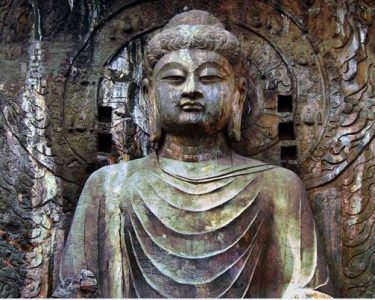
The two hills of Luoyang Longmen Grottoes sit across the Yi River from each other, and they are not interchangeable stops. West Hill holds the majority of the large-scale, historically dense carvings, including the Fengxian Temple grouping with its seated Buddha figure. East Hill is smaller in carving density but includes the Kanjing Temple area and a quieter walking path with fewer crowds. Knowing this difference before you arrive changes how you allocate time.
| Feature | West Hill | East Hill |
|---|---|---|
| Carving density | High — main historical grottoes concentrated here | Lower — more spread out |
| Walking difficulty | Moderate, mostly stepped paths along the cliff face | Easier, gentler incline |
| Crowd levels | Heaviest, especially near the main niches | Noticeably quieter |
| Typical visitor priority | First stop for most travelers | Secondary stop, often skipped by rushed visitors |
| Notable area | Fengxian Temple grouping | Kanjing Temple area, Xiangshan Temple hillside |
The site is recognized as a World Heritage Site, and the carvings run along both banks of the Yi River. That river is exactly why sequencing matters — it physically separates the two halves of the visit, and crossing it costs time and steps.
How to Sequence East and West Hill Viewpoints to Avoid Backtracking
The single biggest planning mistake at Luoyang Longmen Grottoes is treating the two hills as a loop you can wander freely. They’re not. The layout rewards a linear path, not a back-and-forth one. Here’s the sequence that avoids doubling back:
- Start at the main entrance and walk West Hill first, south to north (or north to south, depending on your entry gate). Reasoning: West Hill has the highest concentration of carvings, and starting here while you have full energy and daylight means you won’t rush the most significant section. Checkpoint: confirm you’ve passed the major grouping before continuing — if you haven’t, you’re still in the early section and shouldn’t cross the river yet.
- Continue to the far end of West Hill until you reach the river crossing point. Common failure here: visitors cross too early, midway through West Hill, then have to walk back to finish the section — this is the single most common cause of backtracking on-site.
- Cross the Yi River once, in one direction only. This is the pivot point of the whole route. Do not cross back to “just check” something you missed on West Hill — note it, but continue forward.
- Walk East Hill from the crossing point toward the far exit. East Hill is shorter and less dense, so it moves faster. Checkpoint: if you notice East Hill feels emptier and lighter on carvings, that’s expected — it confirms you’re on the correct, lower-density side, not lost.
- Exit from the East Hill end rather than looping back to the original entrance. Most site layouts allow an exit near the far end; using it avoids retracing the entire route on foot.
The core rule: one river crossing, one direction, no returning to “finish” a section after you’ve moved on. Visitors who ignore this typically add 30–45 minutes of pure walking with no added sightseeing value.
A Worked Example — Half-Day Independent Visit
Consider a traveler arriving late morning with roughly four hours before needing to leave for a train. Following the sequence above: West Hill takes up the bulk of the time, since it’s denser and busier, particularly around midday. The river crossing happens once, around the midpoint of the visit. East Hill then moves quickly because the walking path is easier and there’s simply less to stop for. The traveler exits from the East Hill side, catches transport back into central Luoyang, and never once has to reverse direction. Compare that to a visitor who crosses the river twice out of curiosity — same four hours, but roughly a third of it spent walking sections already covered.
Common Mistakes That Waste Time at Longmen Grottoes
- Crossing the river before finishing West Hill. This is the top cause of backtracking — always confirm you’ve reached the far end of West Hill first.
- Underestimating West Hill’s walking time and rushing East Hill. Since West Hill holds most of the dense carving areas, allocate the larger share of your time there, not an even 50/50 split.
- Visiting during the midday peak without a plan. Crowds concentrate heavily around the main West Hill grouping between late morning and early afternoon; arriving earlier reduces congestion at the narrowest walkways.
- Skipping East Hill entirely because of fatigue. East Hill’s shorter, gentler path means it’s rarely the section that should be cut if time runs short — West Hill’s crowded stretches are the more likely time sink.
- Not checking which entrance gate you’re using. The route direction described above assumes a standard entry point; confirm your gate placement on arrival so you don’t sequence the hills in reverse without meaning to.

A Visitor’s Decision Checklist Before You Go
- Do you know which side (East or West) is closer to your entry gate? Confirm before walking — it determines your starting direction.
- Do you have enough time to prioritize West Hill’s denser sections without rushing? If your window is under two hours, West Hill alone may be a more realistic plan than both hills.
- Are you visiting during a peak travel period? If so, arriving earlier in the day reduces crowd bottlenecks at the main West Hill viewpoints.
- Have you identified where the river crossing point is relative to the route, so you cross only once?
- Do you have a planned exit point on the East Hill side, rather than assuming you’ll loop back to the entrance?
This checklist matters most for travelers with fixed onward transport, since a miscalculated route at Luoyang Longmen Grottoes is one of the easier ways to run late for a train or flight out of the city.
When This Route Sequence Does Not Apply
The single-crossing sequence assumes a standard visit with limited time and a straightforward interest in seeing both hills. It doesn’t apply as strictly if you’re visiting specifically for research, photography sessions requiring multiple lighting conditions, or a guided group tour with a fixed itinerary set by a local guide — in those cases, backtracking may be intentional and unavoidable. For a typical independent traveler working with a half-day or full-day window, though, the one-direction, one-crossing approach remains the most time-efficient way to see what Luoyang Longmen Grottoes actually offers on both sides of the river.
If you’re mapping out a multi-stop Luoyang itinerary and want route or timing suggestions tailored to your travel dates, feel free to reach out for planning advice before your trip.