 By
By How to Find Fengxian, Binyang, and Guyang Caves at Longmen Grottoes
First-time visitors usually ask the same question before they even buy a ticket: which caves actually matter, and where are they along the cliff? Longmen Grottoes stretches for roughly a kilometer along the Yi River, with thousands of niches carved into limestone cliffs on both banks. Without a plan, most travelers waste their first hour wandering past minor niches while missing the three groups that define the site — Fengxian, Binyang, and Guyang. This guide answers the orientation problem directly, section by section, so you can walk the site once and see what matters.
Understanding the Layout Before You Walk In
Longmen Grottoes sits along a north-south river gorge, with the West Hill holding the vast majority of significant caves and the East Hill offering fewer, later carvings. Nearly all first-time visitors enter from the West Hill side, walk south along the river-facing cliff, then cross a bridge to the East Hill if time allows. The three landmark groups covered here — Fengxian, Binyang, and Guyang — all sit on the West Hill, but they are not clustered together. They mark three different points along the cliff and three different centuries of carving activity, which is exactly why sequencing your visit correctly matters more than trying to see everything.
Locating the Three Landmark Cave Groups by Cliff Section
Each of these groups occupies a distinct stretch of the West Hill cliff, and each represents a different period of Buddhist sculpture. Use this as your mental map before entering:
| Cave Group | Cliff Position (walking from main entrance) | Historical Period | Defining Artwork |
|---|---|---|---|
| Guyang Cave | Early section, closer to the entrance, upper cliff level | Northern Wei dynasty | Densely packed donor niches and some of the earliest dated Buddhist inscriptions at the site |
| Binyang Caves | Mid-section, a short walk past Guyang | Northern Wei through early Tang transition | Symmetrical seated Buddha groupings with more rounded, softened facial modeling than Guyang |
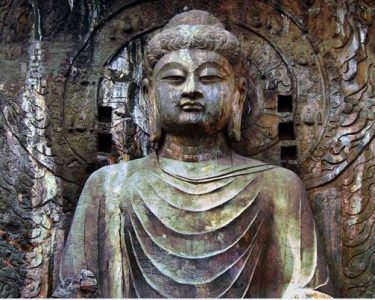
| Fengxian Cave | Further south, the largest open-air recess on the cliff | Tang dynasty | The colossal seated Vairocana Buddha flanked by attendant figures, the site’s best-known ensemble |
The practical takeaway: walk south, and you walk forward in time. Guyang shows the earliest style, Binyang the transitional phase, and Fengxian the mature Tang aesthetic. If you only remember one rule for orientation, remember this progression — it prevents backtracking and makes the stylistic differences easier to notice on-site rather than requiring afterthe-fact reading.

A Suggested Self-Guided Walking Order
This sequence works for most visitors with two to three hours on-site, and it follows the natural cliff path rather than forcing detours:
- Start at Guyang Cave. It is close to the entrance and easy to miss if you walk too fast — many tour groups pass it because it lacks a single dominant statue. Slow down here; the value is in the density of smaller carvings.
- Move to the Binyang Caves. Look for the change in facial proportion and drapery style compared to Guyang. This is the clearest on-site way to feel the stylistic shift without needing a placard.
- Continue south to Fengxian Cave. Budget the most time here — it draws the largest crowds and the open-air setting means lighting and photo conditions change through the day. Midday generally gives more even light on the main Buddha face.
- Cross to the East Hill only if time remains. It holds fewer major caves and is often skipped by visitors on a tight schedule.
A common failure at step one is treating Guyang as a “warm-up” and rushing through it — this is a mistake because Guyang’s carvings are harder to read quickly, and visitors who skip it often can’t distinguish it later from the mid-period caves they see next. Slowing down at the start actually saves confusion later.
Common Mistakes First-Time Visitors Make
- Walking the East Hill first. This reverses the natural chronology and leaves the strongest sculptures — Fengxian included — for when visitors are already tired.
- Skipping Guyang because it lacks a single “hero” statue. Its value is cumulative, not singular, and visitors who bypass it lose the reference point for comparing Binyang and Fengxian.
- Visiting Fengxian at midday in peak season. Crowds concentrate here more than anywhere else on the cliff; arriving right after opening or later in the afternoon reduces wait time significantly.
- Assuming all caves are indoors. Fengxian is an open-air recess, so weather affects the visit directly — check conditions before planning a photography-heavy stop there.
- Not budgeting river-crossing time. The walk between West Hill and East Hill takes longer than it looks on a map, especially with midday crowd density near the bridge.
Decision Checklist: Prioritizing With Limited Time
If you only have 90 minutes rather than half a day, use this checklist to decide what to cut:
- Have less than 90 minutes? Skip the East Hill entirely and focus only on Guyang, Binyang, and Fengxian on the West Hill.
- Traveling with a group interested mainly in photography? Prioritize Fengxian first for lighting, then backtrack to Binyang and Guyang if time allows.
- Traveling with a group interested in art history or inscriptions? Start at Guyang and move south — this matches the chronological teaching order most site guides use.
- Visiting during a holiday period? Arrive at opening time; Fengxian’s crowd density rises sharply by mid-morning and stays high until late afternoon.
- Only have time for one cave? Fengxian is the single stop most first-time visitors regret skipping, given its scale and central place in Tang-era Buddhist art at the site.
Why the Cliff-Section Approach Works Better Than a Cave-by-Cave List
Longmen Grottoes contains far more niches than any visitor can realistically study in one visit, which is why generic “top 10 caves” lists tend to overwhelm rather than help. Organizing the visit by cliff section — early Northern Wei carvings near the entrance, transitional work at Binyang, mature Tang sculpture at Fengxian — gives a structure that mirrors how the site was actually carved, over multiple centuries by different patrons. This matters practically: it means your walking route and your understanding of art history develop together, instead of requiring a separate reference guide at each stop. It also has a limit worth noting — this three-group framework covers only the West Hill highlights. Visitors with a specific interest in later East Hill carvings, or in smaller donor niches scattered between the major groups, should treat this walking order as a foundation, not a complete inventory. As a UNESCO World Heritage Site, the full grottoes complex includes far more than these three groups, but for orientation purposes, Fengxian, Binyang, and Guyang remain the clearest entry point for a first visit.
For groups planning a coordinated visit or needing a tailored route recommendation around Longmen Grottoes, reach out to our travel advisory desk for planning support.