
Blog
Trace Luoyang City Heritage Districts by Dynasty

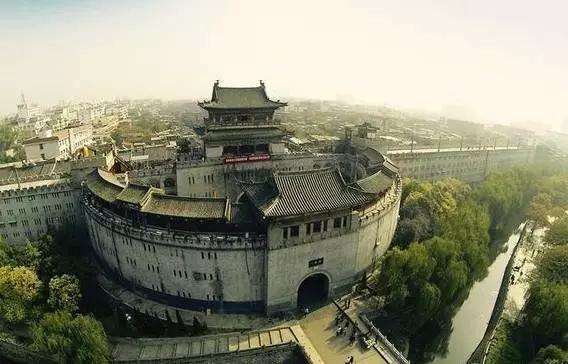
Trace Luoyang City Heritage Districts by Dynasty
How can a traveler distinguish one period of luoyang city history from another when monuments, ruins, religious sites, and old commercial streets are spread across a large urban area? The useful answer is not to memorize attractions one by one. Build a dynasty-based map first, then place each district or archaeological site within its political, religious, or commercial role.
This approach helps cultural travelers, students, and researchers avoid a common planning error: treating all historic places as if they belonged to one continuous period. Luoyang city developed through changing capitals, court cultures, religious patronage, trading activity, and later urban rebuilding. A site may preserve material from more than one era, but its main historical meaning usually comes from the dynasty that established, expanded, rebuilt, or transformed it.
Build a dynasty framework before choosing sites
The best starting point is to divide your research into historical layers rather than geographic neighborhoods alone. This gives every stop a purpose. For example, an archaeological palace area should be studied differently from a Buddhist cave complex or a surviving old-town street.
For luoyang city, a practical framework begins with the Zhou-era royal landscape, moves through the Han and Wei capital tradition, then focuses on the Sui and Tang imperial city, before examining later urban and religious heritage. This structure suits travelers who want to understand change over time. It is less useful for visitors with only a short general sightseeing window, who may prefer a compact route by location instead.
| Historical layer | Places to connect | Main research question | When this layer is most useful |
|---|---|---|---|
| Zhou royal tradition | Royal-city archaeology and the wider early capital landscape | How did Luoyang become associated with early state authority? | For political history, urban origins, and early Chinese capitals |
| Han and Wei period | Eastern Han religious heritage, Wei-era city remains, and related museum collections | How did court administration and Buddhism reshape the city? | For religion, imperial administration, and archaeological study |
| Northern Wei period | Longmen Grottoes and the capital-area religious landscape | How did imperial patronage influence Buddhist art? | For art history, religion, and patronage research |
| Sui and Tang period | Sui Tang Luoyang City ruins, palace zones, and urban planning remains | How was a grand imperial capital organized? | For city planning, court history, and archaeology |
| Later imperial and commercial heritage | Luoyang Old Town, temple precincts, and preserved urban streets | How did commercial and religious life continue after the capital era? | For architecture, local life, and urban continuity |
The conclusion is straightforward: do not begin with a list of famous places. Begin with the historical question you want to answer. A traveler studying Buddhist patronage should prioritize the Northern Wei and Tang layers. A visitor focused on imperial urban design should place luoyang city archaeology at the center of the itinerary. The framework does not apply when the goal is simply leisure travel, because it requires note-taking, comparison, and time for site interpretation.
Connect major heritage districts and archaeological sites to the dynasties that developed them
Rather than listing attractions alone, use the following connections to identify why each location matters. This is the central method for reading Luoyang heritage sites as evidence of successive dynasties. The site’s present appearance may be later than its historical origin, so always separate the founding period from later rebuilding and conservation.
| District or site | Primary dynasty connection | What to examine | Frequent interpretation mistake |
|---|---|---|---|
| Early royal-city archaeological landscape | Zhou tradition | Settlement position, royal authority, and the relationship between city planning and early state ritual | Assuming visible modern buildings represent the earliest layer |
| White Horse Temple area | Eastern Han Buddhist tradition | The role of religious institutions in the development of Buddhism in China | Treating all existing structures as original to the founding period |
| Longmen Grottoes | Northern Wei foundation with later Sui and Tang development | Changes in iconography, patronage, carving style, and court involvement | Assigning the whole complex to a single dynasty |
| Sui Tang Luoyang City ruins | Sui foundation and Tang-era use | Palace-city organization, ceremonial space, and the scale of imperial planning | Confusing archaeological boundaries with the present-day city center |
| Luoyang Old Town | Later imperial urban fabric | Street commerce, religious precincts, reconstructed elements, and surviving local character | Calling the entire district a direct survival from the ancient capital period |
Use this table as a working classification tool. The key conclusion is that luoyang city should be read as a layered historical landscape, not a single preserved ancient city. This approach fits researchers comparing dynastic urban policy and travelers creating a themed itinerary. It does not fit visitors seeking exact original fabric at every stop, because many heritage areas contain restoration, later construction, or incomplete archaeological exposure.
For context on the international recognition of the grotto complex, consult the UNESCO World Heritage List. Use official heritage information as a verification point, not as a substitute for comparing dynastic layers on site.
Follow a practical research process for a dynasty-focused visit
A strong itinerary for luoyang city starts with a research file, not a booking platform. The aim is to assign each site a historical role before you arrive. This reduces wasted travel time and makes museum labels, site plans, and guide explanations easier to evaluate.
- Choose one primary theme. Select imperial capitals, Buddhist art, religious institutions, or later commercial urban life. This works because a narrow theme tells you what evidence to collect. It does not work if you expect one theme to explain every district.
- Create a site card for each stop. Record the associated dynasty, site type, main question, and whether the evidence is archaeological, architectural, artistic, or documentary. This prevents vague notes. Do not rely on memory after visiting several locations.
- Separate foundation from later modification. Ask who first established the site, who expanded it, and which period shaped what you see now. This is essential at Luoyang heritage sites with long histories. It is less relevant only when a site is clearly confined to one excavated historical phase.
- Compare one capital site with one religious site. Pair Sui Tang Luoyang City with Longmen Grottoes, for example. The comparison reveals how political power and religious patronage interacted. Avoid forcing a direct comparison if your research topic is purely architectural.
- Reserve time for maps and museum interpretation. Archaeological remains often require plans, models, or excavated-object displays to make sense. This is especially true in luoyang city, where major historic footprints extend beyond what can be seen from a single viewpoint.
- Write a short finding after each visit. Use one sentence: “This site demonstrates how the dynasty used religion, planning, or commerce.” The exercise turns a sightseeing route into a usable research record.
The decisive checkpoint is whether every stop answers a different historical question. If two sites offer the same evidence, replace one with a contrasting location. For instance, adding Luoyang Old Town after palace ruins changes the study from imperial planning to later urban life. That contrast is valuable for travelers investigating how ancient Luoyang continued to influence later communities.
Avoid the mistakes that weaken a heritage itinerary
Many research-focused visits fail because travelers collect names without checking historical relationships. The following mistakes are common when planning luoyang city study routes.
- Mistake: treating every site as Tang heritage. The Tang period is highly visible in many discussions, but important evidence also belongs to earlier and later periods. The correction is to mark a primary dynasty beside every location. This rule does not mean later additions are unimportant; they may be central to the site’s present form.
- Mistake: assuming an old district is an untouched ancient capital. Luoyang Old Town is better approached as a layered historic urban area. Look for commercial patterns, religious spaces, and later architectural character rather than expecting a complete ancient street grid.
- Mistake: visiting Longmen without comparing carving periods. The complex developed across more than one dynasty. Study differences in patronage and artistic emphasis. A broad scenic visit may not require this level of detail, but academic travelers should not skip it.
- Mistake: ignoring archaeology because ruins appear visually limited. Archaeological sites can provide the strongest evidence for city planning even when walls or buildings are not fully visible. Use site models, plans, and interpretive displays before deciding a location lacks value.
- Mistake: planning by modern distance alone. Nearby places may belong to different historical narratives, while related dynastic evidence can be separated geographically. Group stops by research question first, then refine the route for travel efficiency.
Use a decision checklist to shape a focused itinerary
Before finalizing your plan for luoyang city, test it against this checklist. A route that meets most of these criteria is likely to produce clearer historical understanding than an attraction-heavy schedule.
| Checklist question | Why it matters | Action if the answer is no |
|---|---|---|
| Does each stop have a named primary dynasty? | It prevents vague chronology | Research the site’s founding, expansion, and visible phases |
| Does the route include both archaeology and living urban heritage? | It shows change from capital planning to later city life | Add either a palace-area ruin or Luoyang Old Town |
| Have you included a site linked to Buddhism? | Religion is essential to interpreting the city’s historical role | Add Longmen Grottoes or the White Horse Temple area |
| Can you explain why Sui Tang Luoyang City matters? | It anchors the imperial-capital layer of the itinerary | Review a site plan and define one urban-planning question |
| Have you identified later rebuilding or reconstruction? | It protects your notes from false claims of originality | Label visible fabric separately from historical foundation |
A compact worked example is a route built around “capital power and Buddhist patronage.” Begin with Sui Tang Luoyang City to understand planned imperial space. Then study Longmen Grottoes for the connection between elite patronage and religious art. Finish in Luoyang Old Town to compare the capital-era framework with later commercial and local urban life. This route fits a traveler who wants an interpretive story rather than a broad survey. It does not fit a specialist whose research is limited to Zhou archaeology or a single religious institution.
Answer common dynasty-based research questions
Which dynasty built Luoyang heritage sites?
No single dynasty built all Luoyang heritage sites. Zhou rulers shaped the early royal association; the Han and Wei periods contributed important capital and religious history; Northern Wei patronage was crucial at Longmen; Sui and Tang rulers developed the imperial city; and later periods shaped much of the historic urban fabric visible in Luoyang Old Town. The correct method is to identify the main development phase of each individual site.
How to identify Luoyang sites by dynasty?
Check four criteria: the founding authority, the main construction or carving phase, the site’s historical function, and the date of visible rebuilding. In luoyang city, this method is more reliable than judging a place by architectural appearance alone. It may require consulting museum labels, official site materials, and academic references where a location has multiple layers.
What are the historic districts in Luoyang?
For itinerary planning, the major categories include the early capital archaeology landscape, the Sui Tang Luoyang City area, the Longmen religious landscape, the White Horse Temple area, and Luoyang Old Town. These are not interchangeable attractions. Each represents a different relationship between political authority, religion, urban planning, and later community life.
For a more rigorous trip, seek selection advice for a dynasty-based research route before finalizing your heritage itinerary.
About LyWOW Tours
LyWOW is a locally based travel agency in Luoyang, specializing in private tours for international travelers across Luoyang, Shaolin, Xi’an and Central China. English-speaking guides, flexible itineraries and door-to-door service.
Learn more about us or browse all our tours.