 By
By Trace Rebuilt Eras at White Horse Temple Luoyang
How can a visitor tell whether a visible hall, gate, stele, or courtyard at white horse temple luoyang reflects an early association or a later rebuilding campaign? That is the central planning question for history-minded independent travelers. The founding tradition may be ancient, but the structures encountered during a visit can belong to several different construction and restoration moments.
This guide does not ask visitors to identify every building by appearance alone. Instead, it provides a practical method for reading white horse temple luoyang as a layered historic site. The goal is to distinguish between an early Han-period connection, evidence of later Yuan, Ming, or Qing work, and modern reconstruction or repair.
That distinction changes the visit. A traveler who treats every roofline as original may miss the site’s real historical value: its long sequence of preservation, rebuilding, religious use, commemoration, and interpretation.
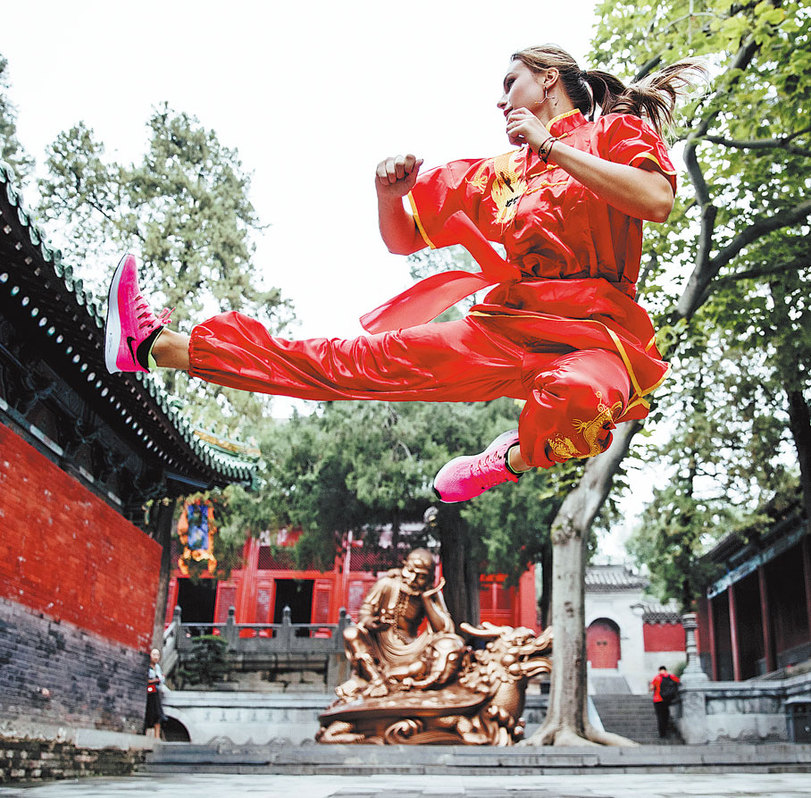
Build a source hierarchy before interpreting the site
The best first step is to separate evidence by reliability. For white horse temple luoyang, a founding legend, a modern signboard, an old photograph, and a dated inscription do not carry the same weight. Treating them as equal leads to confident but weak conclusions.
The most useful planning rule is simple: give priority to evidence that can be dated, located, and checked against another source. This approach fits travelers who want to prepare independently and do not have access to a specialist guide. It does not replace archaeological study, archival research, or expert conservation assessment.
| Evidence type | What it can help establish | How to use it during planning | Limit |
|---|---|---|---|
| Dated inscription or stele | A known commemoration, repair, donation, or rebuilding event | Record the date, location, named patron, and object described | An inscription may date an event rather than the whole structure |
| Official site label or museum panel | The current interpretation of a hall, object, or courtyard | Photograph the full panel, including title and date references | Labels can simplify complex construction histories |
| Historic photograph, drawing, or map | Whether a feature existed before a later restoration | Compare roof form, gateway position, wall line, and courtyard layout | Images may show only one angle or one stage of change |
| Architectural form | Possible clues about rebuilding style or repair | Use it to ask questions, not to make final dating claims | Older styles can be copied in later work |
| Founding story or oral tradition | Why the temple has religious and cultural importance | Read it as an association that shapes the site’s identity | It does not automatically date a visible building |
Before visiting white horse temple luoyang, prepare a one-page note with three columns: “early association,” “documented rebuilding,” and “modern presentation.” Add observations to the appropriate column rather than trying to decide everything immediately. This works especially well when signs use broad phrases such as “ancient,” “restored,” or “rebuilt.” Those words require follow-up questions.
A chronology-based method for distinguishing surviving Han-period associations from later Yuan, Ming, Qing, and modern rebuilt structures
The most reliable way to interpret white horse temple luoyang is to work from chronology outward. Start with the earliest claimed association, then test each visible feature against later rebuilding evidence. Do not begin with visual age. Timber, paint, roof tiles, and decorative details can be repaired, replaced, copied, or deliberately styled after earlier models.
This method is useful for independent travelers because it turns a vague question—“Is this original?”—into smaller questions that can be answered with notes, photographs, labels, and comparative observation. Its limit is equally important: without a clearly dated source, a visitor should describe a feature as “possibly later,” “presently interpreted as,” or “requiring verification,” rather than assigning it to a dynasty.
-
Step 1: Identify the claimed Han-period association.
Look for language connecting the temple to its earliest religious founding, a historical arrival, a named figure, or a commemorative tradition. Write down whether the source refers to the institution, the location, an object, or a surviving building. This distinction matters because an ancient temple foundation does not prove that every current structure survives from that time.
-
Step 2: Search for direct evidence of Yuan, Ming, or Qing intervention.
Prioritize inscriptions, plaques, repair records, donor references, or panels that name a rebuilding period. A rebuilding record can establish that work occurred, but it may not identify every component replaced during that campaign. Mark the evidence as “documented intervention,” not “complete replacement,” unless the source says more.
-
Step 3: Compare architectural clues with documentary clues.
Use roof profile, bracket form, decorative painting, brickwork, paving, gateways, and courtyard organization as supporting observations. A basic understanding of Chinese Buddhist architecture can help visitors notice recurring forms. However, style alone is not a date. Later restoration can preserve an earlier visual language.
-
Step 4: Identify modern rebuilding markers.
Look for contemporary explanatory panels, uniform replacement materials, clearly recent surfaces, construction joints, or statements that a building was reconstructed. Modern work may be essential for visitor access and site continuity. It should not be dismissed as “inauthentic”; it should be understood as a separate layer in the temple’s history.
-
Step 5: Write a qualified conclusion for each feature.
Use a short formula: “The site has an early association; the visible feature appears linked to a later rebuilding or restoration phase; confirmation depends on the dated evidence displayed or cited.” This is more accurate than making a binary original-versus-fake judgment.
| Chronological category | Question to ask | Strongest checkpoint | Common failure reason |
|---|---|---|---|
| Han-period association | Is the evidence about the temple’s founding connection, a place, an object, or the current structure? | Precise wording that identifies what is being dated | Assuming an institutional origin dates the visible hall |
| Yuan-period work | Is there a named repair, donor, reconstruction, or inscription from this period? | A date linked to a specific building element or event | Using a broad dynasty label without locating the evidence |
| Ming-period work | Does the source describe rebuilding, expansion, replacement, or renovation? | Record of scope and location of the work | Treating one repair record as proof that all buildings are Ming |
| Qing-period work | Does visible decoration correspond with documented repairs or commemoration? | Matching inscription, label, and feature location | Dating by paint color, roof form, or ornament alone |
| Modern rebuilding | Does the site identify a recent reconstruction, restoration, or presentation phase? | Official explanation combined with visible construction context | Calling a modern reconstruction ancient because it follows older forms |
For white horse temple luoyang, this chronology-based method prevents a frequent mistake: using “ancient temple” as a description of every individual object in view. The temple’s significance can be ancient while its present fabric contains several later layers.
Use a walking sequence that preserves evidence
Once on site, follow a repeatable route. Begin at the entrance area, continue through the principal courtyards, then examine halls, side structures, stelae, and interpretive displays. At white horse temple luoyang, this sequence helps visitors understand how approaches, gateways, and courtyards frame the experience before focusing on individual buildings.
The conclusion here is practical: record context before details. A photograph of a plaque without the building behind it is less useful than a wide image, a mid-range image, and a close-up of the text. This procedure fits self-guided visits and can be completed with a phone and notebook. It is less suitable when photography is restricted; in that case, use written notes and sketch the location.
- Photograph the building from a distance so its position within the courtyard is clear.
- Take a second image showing the entrance, roofline, and adjoining structures.
- Photograph any interpretive sign, plaque, inscription, or dated marker in full.
- Write the feature name exactly as presented on site.
- Note whether the text describes “construction,” “reconstruction,” “repair,” “restoration,” “commemoration,” or “association.”
- Mark uncertainty rather than filling gaps with assumptions.
Separate religious continuity from surviving building fabric
A temple can remain important through changing political periods, rebuilding campaigns, and modern visitor management. That is why a useful reading of white horse temple luoyang separates two questions: “How old is the religious association?” and “How old is this physical feature?”
The reasoning is straightforward. Religious continuity may be carried through location, ritual memory, names, texts, relic traditions, pilgrim practice, and later commemoration. Building fabric is a different category. It depends on what survives, what was replaced, what was repaired, and what records identify those changes.
- Use “association” when discussing a founding tradition or an early historical connection. This is appropriate when the evidence concerns the temple’s identity rather than a surviving wall, hall, or roof.
- Use “rebuilding phase” when a source identifies later construction or repair. This is appropriate for Yuan, Ming, Qing, or later interventions documented by text or interpretation.
- Use “modern reconstruction” when the feature is presented as recent work following an earlier model. This wording recognizes the feature without overstating its age.
- Use “undetermined” when no dateable evidence is available. This is the correct answer when style is the only clue.
This distinction is particularly valuable at white horse temple luoyang because visitors often arrive expecting a single untouched historic moment. The more accurate experience is usually a sequence of moments, each revealing how later communities understood and maintained the site.
Avoid the mistakes that distort a self-guided visit
Independent travelers can make a stronger reading of white horse temple luoyang by avoiding a few predictable errors. Each mistake comes from treating one kind of evidence as stronger than it is.
- Mistake: dating a building from its roof alone. Roof forms can be retained or copied. Use visual style only after checking labels, inscriptions, or documented rebuilding references.
- Mistake: treating a dynasty name as a complete construction date. A Yuan, Ming, or Qing reference may describe one repair, one object, or one patron. Confirm what part of the site the reference actually covers.
- Mistake: assuming restoration removes historical value. Restoration can reveal long-term care and continuity. The better question is what was restored, when, and how the site explains the intervention.
- Mistake: relying on a cropped photograph of a plaque. Capture its setting. A date without a location can be attached to the wrong structure in later notes.
- Mistake: repeating a guidebook statement without recording its source. Note whether the statement came from an official panel, a museum reference, a published work, or an informal conversation.
Use this final checklist before leaving white horse temple luoyang:
- Have you identified which features are tied to the early Han-period association?
- Have you recorded any references to Yuan, Ming, or Qing rebuilding?
- Have you separated documented repair from inferred architectural style?
- Have you noted which structures or elements appear modern, restored, or reconstructed?
- Can each conclusion be linked to a photograph, inscription, sign, or named source?
When these questions are answered, white horse temple luoyang becomes easier to interpret without forcing every feature into a single date. Save this checklist with your route notes before your visit.