 By
By A Practical Field Guide to Art Styles at the Longmen Caves China
When observing the thousands of statues at the Longmen Grottoes, the primary challenge is distinguishing the two major artistic periods: the Northern Wei and the Tang Dynasty. To the untrained eye, the figures can blur into a single, ancient collection. However, their stylistic differences are dramatic and reveal profound shifts in culture, religion, and political power. Understanding these differences transforms a simple viewing into a deep appreciation of Chinese art history.
This guide provides a clear framework for identifying the key characteristics of each period. It moves beyond simple descriptions to explain why these styles emerged, helping researchers, tour planners, and cultural professionals analyze the art of the longmen caves china with confidence. We will break down the visual cues, from body proportions to facial expressions, enabling you to pinpoint the era of a sculpture on sight.
Historical Context: Why Northern Wei and Tang Styles Differ So Greatly
The stylistic evolution at Longmen was not accidental; it was driven by fundamental changes in Chinese society between the 5th and 8th centuries. The patrons, cultural influences, and even the capital city itself changed, directly shaping the art carved into the limestone cliffs.
Northern Wei Dynasty (493-534 AD at Longmen):
- Political and Cultural Drivers: The Northern Wei dynasty was founded by the Tuoba clan of the Xianbei people. When Emperor Xiaowen moved the capital to Luoyang in 493 AD, he initiated a systematic policy of Sinicization. The art produced during this era reflects a blend of foreign influence and a conscious adoption of Chinese aesthetic traditions, particularly those of the Southern Dynasties.
- Patronage: Early patronage came primarily from the emperor and the aristocracy. Their goal was to accumulate spiritual merit and legitimize their rule. This resulted in art that was more formal, spiritual, and detached from worldly concerns.
- Religious Influence: The Buddhism of this period emphasized transcendence and detachment. The sculptures were not meant to be realistic portraits but ethereal icons, aids for meditation that pointed toward a reality beyond the physical world.
Tang Dynasty (618-907 AD):
- Political and Cultural Drivers: The Tang Dynasty is widely regarded as a golden age of Chinese cosmopolitanism and cultural confidence. The empire was powerful, stable, and connected to the world via the Silk Road. This influx of international trade and ideas fostered a vibrant, worldly, and realistic artistic expression.
- Patronage: While imperial patronage continued, it reached its zenith under Emperor Gaozong and Empress Wu Zetian. Their sponsorship of massive projects like the Fengxian Temple was a statement of imperial power and piety. The art reflects the immense wealth and confidence of the era.
- Religious Influence: Tang Buddhism became more integrated into the fabric of daily life. Deities were depicted as powerful, majestic, yet accessible beings. The art aimed to inspire awe and devotion through a powerful, humanized naturalism rather than abstract spirituality.
A Visual Comparison: Northern Wei’s Linear Grace vs. Tang’s Full-Bodied Realism
The single most effective way to distinguish the two styles is through direct visual comparison. The Northern Wei aesthetic is defined by its slender, linear elegance, while the Tang style is characterized by its full, rounded, and naturalistic forms. This section breaks down the specific features to look for, citing representative caves for on-site identification.
This table provides a direct comparison of the key artistic elements from each dynasty found at the Longmen Grottoes.
| Artistic Feature | Northern Wei Style (c. 493-534 AD) | Tang Dynasty Style (c. 618-907 AD) |
|---|---|---|
| Overall Silhouette | Elongated, slender, and flattened. Figures appear tall and ethereal, almost weightless. The focus is on vertical lines. | Full, rounded, and three-dimensional. Figures have a sense of volume, weight, and physical presence. They are grounded and powerful. |
| Body Proportions | Unrealistic proportions with stretched torsos and limbs. The head is often proportionally smaller than the elongated body. | Naturalistic and well-proportioned. Sculptors accurately captured the human form, creating believable, powerful bodies. |
| Facial Features | Long, narrow faces with sharp features. High-bridged noses, thin lips, and an “archaic smile”—a serene, mysterious, and impersonal expression. | Round, fleshy faces with soft, individualized features. A calm, confident, and majestic expression replaces the smile. Faces convey personality and emotion. |
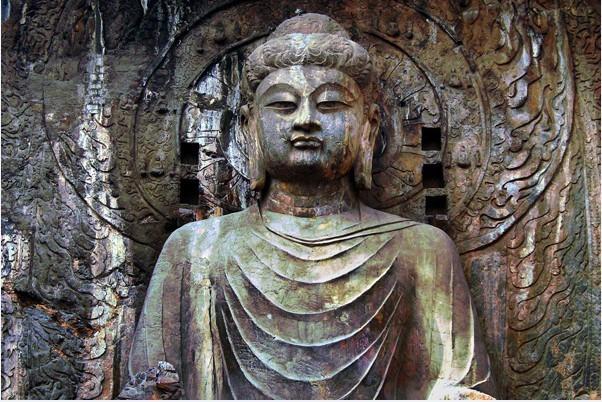
| Clothing & Drapery | Stylized, with sharp, parallel, cascading folds (often called “waterfall drapery”). The clothing conceals the body form beneath abstract patterns. | Realistic drapery that clings to the body, revealing the form underneath. Folds are softer, more varied, and flow naturally. |
| Overall Mood | Spiritual, transcendent, serene, and otherworldly. The figures feel detached from the viewer and the physical realm. | Majestic, confident, powerful, and worldly. The figures engage the viewer with their commanding presence and human-like qualities. |
| Key Examples at Longmen | Guyang Cave, Binyang Central Cave, Lianhua (Lotus) Cave. | Fengxian Temple (Vairocana Buddha group), Wanfo (Ten Thousand Buddha) Cave, Kanjing Temple. |
Common Mistakes in Identifying Sculptural Eras at Longmen
Even with a clear guide, certain details can lead to misinterpretation. Recognizing these common pitfalls is key to accurate on-site analysis. Many visitors make simple errors that can be avoided by focusing on primary characteristics rather than secondary details or assumptions.
- Mistake 1: Judging by Size Alone. While the Tang Dynasty’s Fengxian Temple contains the largest figures, size is not a definitive indicator of the period. There are many small, intricate Tang carvings and some relatively large Northern Wei figures. Always prioritize stylistic cues like body shape and drapery over sheer scale.
- Mistake 2: Confusing Weathering with Artistic Style. Centuries of erosion have softened the features of many statues. It’s easy to mistake a weathered Northern Wei face with its sharp lines now blurred for an early Tang figure. Try to find a well-preserved section, like the folds of a robe, to make a more accurate assessment.
- Mistake 3: Overlooking Attendant Figures. The central Buddha may be the main attraction, but the surrounding Bodhisattvas, disciples, and guardians are often better preserved and show the stylistic hallmarks more clearly. A Bodhisattva’s rounded Tang-era face or a Wei-era guardian’s linear armor can be the decisive clue.
- Mistake 4: Ignoring the Cave’s Architecture. The shape of the niche (or apse) and the decorative elements on the ceiling and walls can also indicate the period. Northern Wei caves often feature lotus motifs on the ceiling and simpler, more angular niche designs compared to the more complex and ornate Tang compositions.
A Practical Checklist for On-Site Stylistic Analysis
When you are standing inside one of the grottoes, use this step-by-step process to determine the period of the carvings you are examining. This structured approach helps you focus on the most reliable indicators and build a confident conclusion.
- Assess the Overall Form First: Before looking at details, step back and observe the figure’s silhouette.
- Is it predominantly vertical, slender, and seemingly weightless? -> Likely Northern Wei.
- Does it have noticeable volume, with rounded shoulders and a solid stance? -> Likely Tang.
- Examine the Head and Face: Zoom in on the face, the most expressive element.
- Is the face long and narrow? Do you see a faint, mysterious smile? -> Likely Northern Wei.
- Is the face round and full? Does the expression convey calm majesty or power? -> Likely Tang.
- Analyze the Drapery and Clothing: The treatment of fabric is one of the clearest differentiators.
- Are the folds sharp, parallel, and stylized, obscuring the body? -> Likely Northern Wei.
- Do the clothes seem to cling to the body, with soft, flowing lines that reveal the form beneath? -> Likely Tang.
- Consider the Entire Composition: Look at the relationship between the main figure and its attendants.
- Is the composition more rigid and formal, with figures that feel isolated from one another? -> Likely Northern Wei.
- Do the figures interact, creating a dynamic, unified scene with a clear sense of depth? -> Likely Tang.
- Cross-Reference with Location: Finally, confirm your assessment with the known period of the cave you are in. Use your analysis to understand why a cave like Guyang is a prime example of Northern Wei art, or why Fengxian Temple is the pinnacle of the Tang style.
By applying this methodical approach, you can move beyond simple appreciation and engage with the art of the longmen caves china on a deeper, analytical level, recognizing the distinct creative visions that shaped this monumental World Heritage Site.
For organizations requiring in-depth cultural site analysis or planning for specialized research delegations, our team can provide detailed logistical and academic support. Contact us to discuss your project’s specific requirements.