 By
By How the White Horse Temple China Layout Reveals Its History
Many first-time visitors to the White Horse Temple China arrive expecting a single, ancient structure. Instead, they find a sprawling complex of halls, pagodas, and international-style temples. Understanding the layout isn’t just about navigation; it’s about reading a physical story of Chinese Buddhism’s origins and evolution. The key is to see the site not as one building, but as a series of distinct zones, each with a specific purpose and history.
This guide breaks down the temple’s architecture into its functional parts. We will walk through the central axis that forms the historical core, analyze how different sections serve distinct religious functions, and provide a framework for planning a visit that respects the site’s profound significance. By understanding the flow from the main gate to the memorial stupas and newer precincts, you can appreciate the rich narrative embedded in the temple’s ground plan.
Understanding the Core Axis: A Step-by-Step Visitor’s Guide
The historical heart of the White Horse Temple China is organized along a traditional north-south central axis. This layout is not accidental; it reflects principles of Chinese palace architecture and creates a deliberate spiritual progression for the visitor. Moving from one hall to the next is a journey through core Buddhist concepts. We recommend following this sequence to experience the temple as it was intended.
Here is a step-by-step walkthrough of the main halls along the central axis:
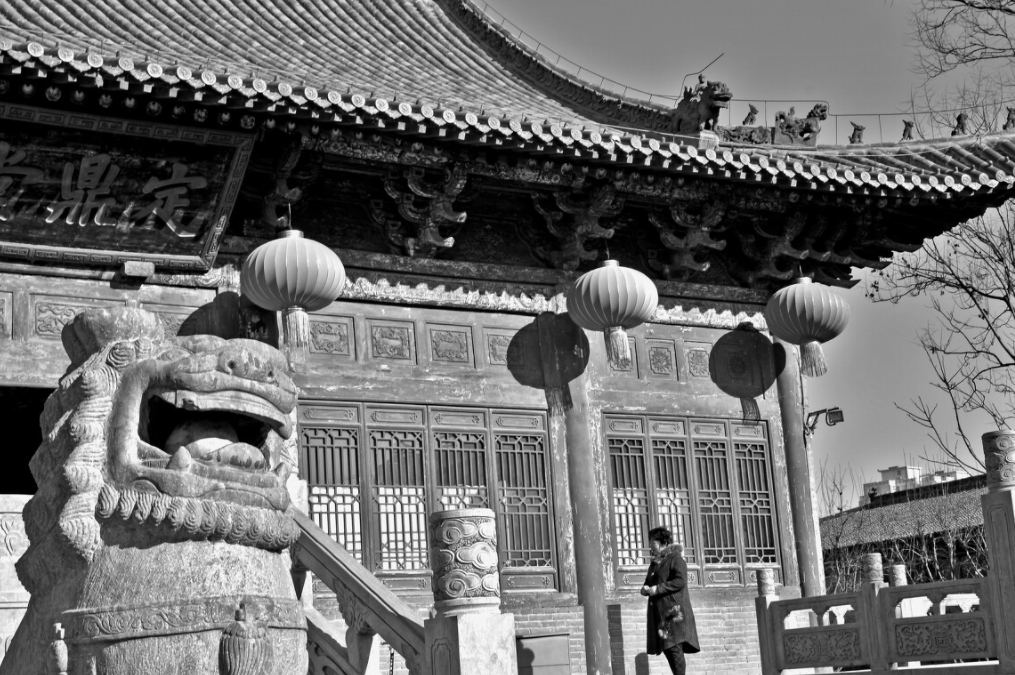
- Step 1: The Main Gate (Shanmen). Your visit begins here. The gate serves as a symbolic transition from the secular world to the sacred space within. Note the stone horses flanking the entrance, which commemorate the horses that were said to have carried the first Buddhist scriptures and monks to Luoyang from India.
- Step 2: Hall of Heavenly Kings (Tianwang Dian). Immediately after the gate, this hall houses the four imposing statues of the Heavenly Kings, guardians of the four cardinal directions in the Buddhist world. Their fierce expressions are meant to protect the temple and the faith from evil. In the center, you will find the smiling Maitreya Buddha, the “future Buddha.”
- Step 3: Hall of the Great Buddha (Daxiong Baodian). This is the main hall of the temple complex and the primary location for ceremonies. It houses the central trinity of Buddhist figures: Sakyamuni Buddha in the center, flanked by his two most important disciples. The scale and grandeur of this hall signify its importance as the core of worship at the White Horse Temple China.
- Step 4: Hall of Mahavira (Dafodian). Continuing north, this hall is often dedicated to the principal figures and teachings of the Mahayana school of Buddhism. The atmosphere here is typically one of serene reverence, providing a space for deeper contemplation away from the main hall’s activity.
- Step 5: Hall of Guidance (Jieyin Dian). This hall is dedicated to Amitabha Buddha, who is believed to guide the souls of the deceased to the Pure Land. Its placement further back in the complex reflects a spiritual journey towards enlightenment and release from the cycle of rebirth.
- Step 6: Cool and Clear Terrace (Qingliang Terrace). Located behind the main halls, this is believed to be the original site where the first Indian monks translated Buddhist sutras into Chinese. It is a place of immense historical importance, representing the intellectual and scholarly foundations of Buddhism in China.
Following this path provides a coherent narrative, moving from worldly entrance to divine protection, central worship, advanced teachings, and finally, the historical origins of the entire faith in China.
The Temple’s Religious Function Explained Through Its Architecture
The layout of the White Horse Temple is not merely a collection of buildings; it is a functional blueprint for religious practice, education, and commemoration. Each major section of the complex serves a distinct purpose, which becomes clear when you analyze the central axis, the memorial stupas, and the more recent international precincts. Understanding these functions allows a visitor to move beyond simple sightseeing and engage with the site’s living purpose.
This table breaks down how different architectural zones reveal their specific religious function:
| Architectural Zone | Primary Religious Function | How to “Read” Its Purpose |
|---|---|---|
| The Central Axis Halls | Worship, Ritual, and Doctrinal Progression | The linear, south-to-north progression of halls acts as a guided spiritual path. You move from guardians (protection), to the main Buddha (worship), to advanced figures (deeper teaching), and finally to the historical source (scholarly foundation). This structure is designed for ceremonial processions and to educate devotees on the core tenets of the faith in an organized way. |
| The Memorial Stupas of the Monks | Commemoration and Pilgrimage | Located to the southeast of the main gate, the tombs of the two founding Indian monks, Kasyapa Matanga and Dharmaratna, are marked by stupas. Their placement outside the main worship axis designates them as sites of historical reverence. They are focal points for visitors to pay respect to the specific individuals who brought Buddhism to China, making the temple a site of pilgrimage. |
| The Qiyun Pagoda (The “Cloud-Reaching” Pagoda) | Relic Veneration and Landmark | As one of the oldest structures on site, this pagoda, located southeast of the temple, likely functioned as a reliquary, housing sacred artifacts. Its verticality makes it a prominent landmark, a beacon for the faithful. Pagodas traditionally serve as centers of circumambulation, a meditative practice, and symbolize the Buddhist cosmos. |
| The International Temple Zone | Diplomacy and Cross-Cultural Exchange | The newer precincts built in Thai, Burmese, and Indian architectural styles are located to the west of the old temple. Their function is explicitly diplomatic and educational. They showcase the diversity of Buddhist practice across Asia and reaffirm the White Horse Temple China’s status as an international center for the faith. This zone is for learning about global Buddhism, not for performing the traditional Chinese rituals found on the main axis. |
Planning Your Visit: Common Mistakes to Avoid
A successful visit to a site as historically dense as the White Horse Temple China requires more than just showing up. Many visitors make predictable errors that limit their understanding and enjoyment of the complex. By anticipating these common missteps, you can structure your time for a more meaningful experience.
Here is a checklist of common mistakes and how to avoid them for a more productive and insightful visit.
Visitor Planning Checklist
-
Mistake: Starting in the International Zone.
- Why it’s a problem: The Thai, Indian, and Burmese temples are visually stunning but are modern additions. Starting there removes the historical context and makes the original, more subdued Chinese halls seem less impressive by comparison.
- Solution: Always begin at the main south gate and walk the central axis first. Experience the history chronologically before exploring the modern, international additions.
-
Mistake: Underestimating the Site’s Scale.
- Why it’s a problem: The complex is much larger than it appears from the entrance. Trying to see everything in an hour leads to rushing and a superficial understanding.
- Solution: Allocate a minimum of three hours for your visit. This allows for roughly 90 minutes for the main axis and pagoda, and another 90 minutes for the international zone and gardens.
-
Mistake: Ignoring the Ancillary Structures.
- Why it’s a problem: Focusing only on the main prayer halls means you miss key parts of the story, such as the monks’ tombs and the historic Qingliang Terrace where the first scriptures were translated.
- Solution: After the main halls, make a specific point to visit the stupas of the founding monks and the terrace. These sites are less crowded and offer a direct connection to the temple’s foundational narrative.
-
Mistake: Visiting During Peak Crowds.
- Why it’s a problem: The narrow halls of the central axis can become extremely congested during national holidays or midday on weekends, making quiet contemplation impossible.
- Solution: Plan your visit for a weekday morning, arriving shortly after opening time. This will give you at least an hour to explore the central axis in relative peace before the largest tour groups arrive.
By thoughtfully structuring your tour, you can transform a simple visit into a genuine exploration of one of the most important sites in the history of Chinese Buddhism. The layout of the White Horse Temple China is its story; taking the time to read it correctly is the key to a rewarding experience.
For any complex cultural heritage projects or logistical challenges requiring detailed, expert planning, please reach out to our team for guidance.