 By
By Understanding Which Dynasties Ruled From Luoyang China
For businesses evaluating partners and opportunities in the region, understanding the deep historical context of Luoyang China is crucial. A common question arises: which dynasties actually designated this city as their capital? The answer is more complex than a simple list, as Luoyang’s role fluctuated between being the primary seat of imperial power, a secondary “eastern” capital, and a vital regional center of culture and commerce even when the court was elsewhere.
This article provides a clear, dynasty-by-dynasty breakdown to distinguish between periods of direct imperial rule from Luoyang and times when it maintained its importance through other means. This historical perspective offers valuable insight into the city’s enduring legacy and industrial foundations.
Timeline of Power: When Luoyang Was a Capital vs. a Cultural Hub
Not every dynasty associated with Luoyang held it as their sole, primary capital. Its strategic location on the Central Plain made it a perpetual prize, but its political status shifted depending on military, economic, and internal political factors. The key is to differentiate between when it was the center of the empire versus a prestigious but secondary city.
Here is a timeline clarifying Luoyang’s status through the major Chinese dynasties.
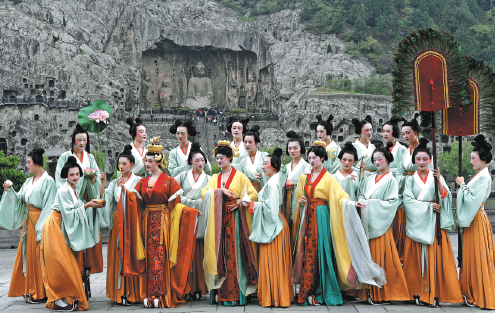
- Eastern Zhou Dynasty (770–256 BCE)
- Status: Primary Capital. After a catastrophic attack on their western capital, the Zhou court fled east and established their new capital at Luoyang (then called Luoyi). This marked the beginning of its long history as an imperial center.
- Eastern Han Dynasty (25–220 CE)
- Status: Primary Capital. After the collapse of the Western Han (capital at Chang’an), the restored Han dynasty established its government firmly in Luoyang. This was a period of great prosperity and expansion, cementing Luoyang’s reputation as a grand imperial city.
- Cao Wei Kingdom (220–266 CE)
- Status: Primary Capital. During the turbulent Three Kingdoms period, the kingdom of Wei, which controlled northern China, used Luoyang as its capital.
- Western Jin Dynasty (266–316 CE)
- Status: Primary Capital. After unifying the Three Kingdoms, the Jin dynasty continued to rule from Luoyang until internal strife and invasions forced them to flee south.
- Northern Wei Dynasty (494–534 CE)
- Status: Primary Capital. In a significant move, Emperor Xiaowen relocated the capital to Luoyang from Pingcheng (modern-day Datong). This period saw a massive reconstruction of the city and a flourishing of Buddhist art, including the nearby Longmen Grottoes.
- Sui Dynasty (581-618 CE)
- Status: Secondary / Eastern Capital. The primary capital was officially Daxing (Chang’an), but Emperor Yang invested enormous resources into rebuilding Luoyang as the empire’s eastern hub. He spent considerable time there, and it functioned as a de facto capital for managing the eastern part of the empire and launching major campaigns.
- Tang Dynasty (618–907 CE)
- Status: Secondary / Eastern Capital. Similar to the Sui, the Tang’s primary capital was Chang’an. However, Luoyang was designated the “Eastern Capital” (Dongdu). It was a vital economic center connected to the Grand Canal and served as a frequent residence for emperors, especially during the reign of Empress Wu Zetian, who briefly made it the primary capital under her own Zhou dynasty (690-705). For most of the Tang, it was the second most important city in the empire.
- Later Liang & Later Tang (907-937 CE)
- Status: Primary Capital. During the chaotic Five Dynasties and Ten Kingdoms period that followed the Tang collapse, several short-lived dynasties based in the north used Luoyang as their capital.
- Post-Tang Dynasties (Song, Yuan, Ming, Qing)
- Status: Regional Cultural & Economic Center. From the Northern Song dynasty onward, the national capital moved to other cities like Kaifeng, Hangzhou, Beijing, and Nanjing. While Luoyang lost its status as a political capital, it remained a significant prefecture, a major cultural center known for its history, poetry, and peonies, and an important node in regional trade networks. It never again served as the seat of imperial power.
Why Luoyang’s Capital Status Shifted So Often
The frequent changes in Luoyang’s role were not random; they were driven by consistent geopolitical and economic pressures. For international buyers sourcing from the region, understanding these historical drivers provides context for the city’s long-standing strategic importance.
The primary reasons for its fluctuating status include its strategic advantages and its critical vulnerabilities.
Strategic Advantages
- Centrality: Located on the Central Plain, Luoyang offered a commanding position to control the populous and agriculturally rich heartland of ancient China.
- Logistics: Proximity to the Luo and Yellow Rivers, and later the Grand Canal, made it a logistical hub for transporting grain, taxes, and troops across the empire.
- Symbolic Legitimacy: Its history as the capital of the revered Zhou and Han dynasties gave it immense prestige. Ruling from Luoyang was a powerful symbol of legitimate succession.
Critical Vulnerabilities
- Military Exposure: Unlike the western capital of Chang’an, which was protected by mountains and strategic passes, Luoyang sat on an open plain. This made it more vulnerable to direct assault from northern nomadic groups and internal rebellions.
- Reliance on Canals: In later dynasties, the city became heavily dependent on the Grand Canal for its grain supply. Any disruption to this waterway could quickly paralyze the capital, a risk that emperors in Chang’an (with its closer agricultural base in the Wei River valley) faced to a lesser degree.
This tension between strategic centrality and military vulnerability is the primary reason why many powerful dynasties, like the Tang, opted for a dual-capital system. Chang’an served as the secure military and administrative fortress, while Luoyang China functioned as the economic and logistical forward base.
Common Mistakes to Avoid When Assessing Luoyang’s History
When researching Luoyang, it’s easy to fall into common traps that oversimplify its rich past. A nuanced understanding is essential for appreciating its true historical significance. Here are frequent misinterpretations to avoid.
| Common Mistake | Correct Interpretation |
|---|---|
| “Luoyang was always one of China’s capitals.” | Fact: While Luoyang was a capital for many dynasties over a span of more than 1,500 years, there were long intermissions. For the last millennium (since the Northern Song dynasty), it has not been a national political capital, though it has remained a major regional city. |
| “If it wasn’t the primary capital, it was unimportant.” | Fact: Its role as a secondary or “Eastern” capital during powerful dynasties like the Tang was extremely significant. It was often the empire’s largest economic center, a hub of culture and arts, and a frequent imperial residence. Losing primary status did not mean losing importance. |
| “The history is ancient and has no modern relevance.” | Fact: The city’s historical role as a transportation and administrative hub on the Central Plain laid the groundwork for its modern position as a center for heavy industry, logistics, and research. The strategic logic that made it a capital in the past still influences its economic geography today. |
| “Confusing Luoyang with other ancient capitals.” | Fact: Luoyang is often mentioned alongside Xi’an (Chang’an), Beijing, and Nanjing. The key distinction is its role as the quintessential “eastern” capital, often paired with the “western” capital of Chang’an, creating a dual political axis for many of China’s most powerful empires. |
By understanding these nuances, you gain a more accurate and strategically useful picture of the city’s legacy. Its history is not just one of emperors and courts, but of enduring economic and logistical importance that continues to shape its business environment.
For detailed inquiries about sourcing from this historic industrial region, our technical team can provide the specific information you need to make an informed decision.