 By
By What the Inscriptions Reveal About the China Longmen Grottoes
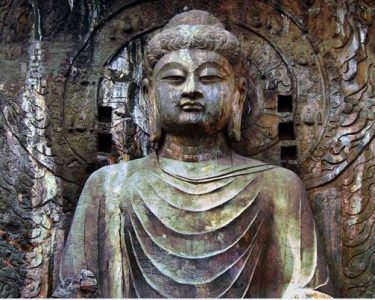
Most visitors to the China Longmen Grottoes are immediately struck by the scale of the monumental Buddhas and the sheer density of the carvings. It’s easy to be overwhelmed by the artistry. Yet, hidden in plain sight on the rock faces are thousands of inscriptions—dedications, names, and dates—that tell a deeper, more human story. These texts are not mere footnotes; they are the primary sources that unlock the social, political, and religious history of this UNESCO World Heritage Site.
Understanding these inscriptions transforms a visit from simple sightseeing into a historical investigation. It allows you to see the grottoes not as a monolithic project, but as a dynamic collection of personal and political statements carved in stone over centuries. This guide explains how to read these clues and what they reveal about the people who funded this incredible monument.
Why Patron Inscriptions Are the Key to Understanding Longmen
The creation of the caves at Longmen spanned several powerful dynasties, most notably the Northern Wei and the Tang. During these periods, sponsoring the carving of a Buddhist image or niche was a significant act of piety and a public display of status. The inscriptions left by these donors, known as patrons, provide invaluable data that statues alone cannot.
These texts function as a direct window into the past, answering critical questions:
- Who funded the carvings? Inscriptions identify patrons ranging from powerful emperors and empresses to court officials, influential monks, military generals, and local family associations.
- When were they made? Precise dates anchor the artistic style of a carving to a specific historical period, allowing art historians to track the evolution of Buddhist sculpture.
- Why were they commissioned? Dedications often state the purpose of the carving: to gain merit, to pray for the health of the emperor, to ensure a favorable rebirth for deceased parents, or to commemorate a military victory.
Without these inscriptions, the individual caves and niches would be largely anonymous works of art. With them, the rock walls become a detailed social register of medieval China. They reveal how the practice of Buddhism permeated every level of society and how it was used to legitimize political power and express personal devotion.
How to Decode Patron Inscriptions: A Step-by-Step Guide
At first glance, the weathered, character-filled inscriptions can seem impenetrable. However, by knowing what to look for, you can begin to piece together the story behind a specific carving. The process involves locating the text, identifying its core components, and interpreting the patron’s role and motivation.
Step 1: Locate the Inscription Tablet
Inscriptions are typically found on a rectangular tablet carved next to, below, or sometimes inside a niche. They are not always obvious. Look for flat, smoothed surfaces adjacent to the main sculptures. In larger, imperially sponsored caves like Guyang Cave or Binyang Cave, inscriptions can be numerous and densely packed, documenting hundreds of individual commissions within the larger space.
Step 2: Identify the Three Key Elements
Most dedicatory inscriptions, regardless of their size or complexity, contain three fundamental pieces of information:
- The Patron’s Name and Title: This identifies the person or group who paid for the carving. Titles are crucial, as they reveal the person’s social standing (e.g., “Grand General,” “Palace Lady,” “Head of the Village Association”).
- The Date: Usually given as a reign year of a specific emperor (e.g., “Third year of the Jingming era”). This is the single most important piece of data for historians, as it allows the carving to be placed on a precise timeline.
- The Dedication or Vow: This is the “why.” The text expresses the patron’s wish or prayer. Common dedications include prayers for the longevity of the emperor, for the well-being of one’s family, or for the salvation of deceased ancestors, wishing them a better rebirth.
Step 3: Interpret the Patron’s Role and Status
The language, location, and scale of an inscription reveal the patron’s identity. The patrons at the China Longmen Grottoes generally fall into three categories: imperial, clerical/monastic, and lay families or groups. Each group left distinct clues in their dedications.
Use this table to differentiate between patron types when examining an inscription:
| Patron Type | Typical Location of Carving | Clues in Inscription Text | Purpose of Dedication |
|---|---|---|---|
| Imperial Patrons | Prominent, large-scale central caves (e.g., Fengxian Temple, Binyang Central Cave). | Formal, official language. Refers to the emperor, empress, or crown prince. Often uses grand titles. The scale of the project itself is a key indicator. | To legitimize rule, project state power, secure the spiritual health of the empire, and display imperial piety. |
| Monks & Nuns | Smaller niches, often within caves dedicated to specific Buddhist teachings or figures. May be clustered around a major cave. | Uses clerical titles (e.g., Bhikṣu, Dharma Master). Text may be more doctrinal, referencing specific sutras or Buddhist concepts. | To gain religious merit, honor a teacher, or pray for the flourishing of the Buddhist doctrine (the Dharma). |
| Local Families & Associations | Small, numerous niches lining the cliff faces, often filling spaces between larger caves. | Lists multiple family members by name. May identify a “yi” (義邑), a local religious association that pooled resources. Language is more personal and direct. | To pray for the health of living relatives, transfer merit to deceased parents for a better rebirth, or seek good fortune for the community. |
By applying this framework, you can stand before a small, unassuming niche and deduce that it was likely commissioned by a local family hoping for the salvation of an ancestor, a story vastly different from the grand political statement of the nearby Vairocana Buddha at Fengxian Temple.
Common Mistakes to Avoid When Interpreting Carvings
While inscriptions are invaluable, interpreting them requires caution. Novice and even experienced observers can fall into traps that lead to misinterpretations of the site. Being aware of these common pitfalls ensures a more accurate understanding of the China Longmen Grottoes.
Here is a checklist of common mistakes and how to avoid them:
- Mistake: Assuming One Cave = One Patron.
Correction: Many of the largest and earliest caves, like Guyang Cave, are actually mosaics of hundreds of smaller, individual commissions. An imperial family member may have initiated the main statue, but the walls were filled in over decades by dozens of other, lower-ranking patrons. Always look for multiple, distinct inscriptions within a single cave. - Mistake: Ignoring the Effects of Weathering.
Correction: Centuries of exposure to wind and water have erased or obscured countless inscriptions. What is visible today is only a fraction of what was originally carved. Do not assume that a niche without a visible inscription was anonymous; its text may simply be lost to time. - Mistake: Attributing All High-Quality Art to Imperial Patrons.
Correction: While imperial commissions resulted in the largest statues, many smaller niches funded by wealthy officials or devout monastic communities exhibit exceptional artistry. Quality of carving is not always a direct indicator of imperial funding. The inscription is the only definitive evidence. - Mistake: Taking Vows at Face Value.
Correction: Dedicatory language was often formulaic. A vow “for the benefit of all sentient beings” was a standard Buddhist phrase and does not necessarily reflect a uniquely universalist view from the patron. Similarly, vows for the emperor were both a pious and politically wise statement to make. Read them as expressions of conventional piety and social obligation, not always as deeply personal, unique confessions.
By keeping these points in mind, your on-site analysis will be more nuanced and historically sound. You can appreciate the art while critically evaluating the evidence left behind by its creators, leading to a much richer appreciation for the complexity of the site.
For expert guidance on navigating the cultural and historical nuances of key regions, contact our team.