 By
By Why Luoyang China Became the Capital for Nine Dynasties
For over 1,500 years, emperors and strategists repeatedly chose one location as the heart of their empire. While other cities rose and fell, the area around modern Luoyang, China, served as the capital for numerous dynasties, earning it a place among the great ancient capitals of the world. But this was no accident of history. Its selection was a calculated decision based on a unique convergence of geography, military defensibility, and economic access that few other locations could offer.
Understanding why Luoyang was chosen reveals the fundamental principles of power and control in ancient China. The city wasn’t just a place; it was a strategic asset. For businesses and researchers looking at the region today, this history provides critical context for its long-standing importance as a center of culture, transport, and industry. The same rivers and plains that supplied ancient armies now form the backbone of modern supply chains.
The Geographic Blueprint for an Imperial Capital
Luoyang’s enduring status as a capital city was not based on a single advantage, but on a combination of geographic features that created a near-perfect balance of security, sustenance, and control. An emperor ruling from Luoyang could project power across the core territories of ancient China while remaining relatively secure from external threats. This strategic trifecta is a masterclass in geopolitical thinking.
The city’s location on the Central Plains (Zhongyuan), considered the cradle of Chinese civilization, placed it at the nexus of everything that mattered. Here is a breakdown of the specific geographic and political factors that made this location so compelling for rulers.
| Geographic Factor | Strategic Advantage & Practical Impact |
|---|---|
| River Corridors (Luo & Yi Rivers) | The city is strategically positioned at the confluence of the Luo River and Yi River, both southern tributaries of the massive Yellow River. This provided a reliable water supply for a large urban population, irrigation for agriculture, and most importantly, an efficient transportation network for grain, taxes, and troops. Controlling these waterways meant controlling the economic lifeblood of the empire. |
| Defensible Terrain (Mountains) | Luoyang is naturally fortified. To the north lies the Mang Mountains, providing a barrier against threats from the northern steppes. To the south are the Funiu Mountains, and to the east, the Songshan Mountains. These ranges created chokepoints and natural gateways, making it difficult for an invading army to approach the capital without being detected and funneled into a disadvantageous position. |
| Access to the Central Plains | While protected by mountains, Luoyang was not isolated. It commanded easy access to the vast, fertile North China Plain. This region was the demographic and agricultural heartland of ancient China. From Luoyang, a ruler could administer this core territory, quell rebellions, and mobilize its immense resources. It was the ideal command center for governing the most critical part of the empire. |
| The Hangu Pass Gateway | To the west, the strategic Hangu Pass controlled the primary route to the Wei River Valley, the homeland of formidable rivals like the Qin state (and the location of another major capital, Chang’an/Xi’an). By holding Luoyang, a dynasty controlled this critical pass, effectively creating a buffer zone and an early warning system against attacks from the west. |
A Timeline of Dynastic Power in Luoyang
The city’s strategic value is proven by the sheer number of dynasties that made it their capital, or at least one of their primary capitals. This repeated selection across centuries underscores that its advantages were not temporary. Each new ruling house reassessed the map of China and came to the same conclusion.
While often cited as the capital for nine dynasties, the exact count can vary depending on historical interpretations, but its long-term importance is undeniable. Here are some of the most significant periods when Luoyang served as the center of the Chinese world.
Eastern Zhou Dynasty (770–256 BCE)
After their western capital was sacked, the Zhou kings fled east and established their new court at Wangcheng (part of modern Luoyang). Although their direct power was diminished during this period, Luoyang remained the symbolic and ritual heart of the fractured kingdom for over 500 years. It was the center of culture and philosophy during the era of Confucius.
Eastern Han Dynasty (25–220 CE)
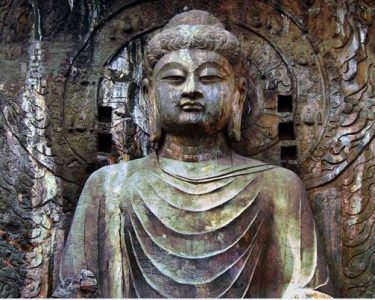
Following the collapse of the Western Han, Emperor Guangwu re-established the dynasty and moved the capital to Luoyang. This era saw the city flourish into one of the largest and most prosperous metropolises in the world. It was a major hub on the Silk Road, a center of learning with a grand imperial university, and the site where Buddhism was formally introduced to China. The city’s layout during this time became a model for future imperial capitals.
Tang Dynasty (618–907 CE)
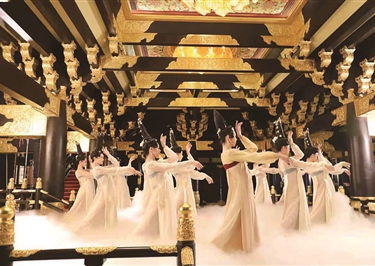
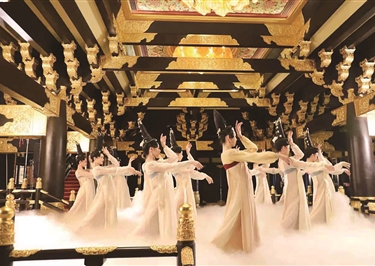
While Chang’an (modern Xi’an) was the primary capital of the glorious Tang Dynasty, Luoyang served as the “Eastern Capital” (Dongdu). It was not a secondary city but a fully functioning alternative seat of power. Empress Wu Zetian, China’s only female emperor, even moved her court and ruled exclusively from Luoyang for a period, renaming it “Shendu” (the Divine Capital). Its economic importance, fueled by canal transport, often rivaled that of Chang’an.

Common Misconceptions About Ancient Capitals
The history of cities like Luoyang challenges several common assumptions about how ancient powers operated. Understanding these distinctions is crucial for appreciating the city’s unique role. Many decisions that seem strange today were based on sound logic for their time.
- Myth: The capital was always the biggest city. While Luoyang was massive during its peak, strategic value often trumped sheer population. A city’s defensibility and its ability to control food and transport routes were far more critical for the stability of a dynasty than being the largest commercial center.
- Myth: A capital was chosen once and remained permanent. The concept of a fixed, permanent capital is a relatively modern one. Ancient Chinese rulers frequently moved their courts between multiple capitals (like Chang’an and Luoyang) or relocated entirely due to military threats, astrological omens, or the exhaustion of local resources. Luoyang’s role as a recurring choice highlights its reliable, fundamental advantages.
- Myth: The choice of capital was purely a military decision. While defense was paramount, economics were just as important. Luoyang’s position on the Grand Canal system (rebuilt and expanded over centuries) made it a logistical linchpin. Grain and goods from the fertile southern regions could be shipped efficiently to feed the court and the northern armies, a task that was much harder from the more westerly capital of Chang’an.
The history of Luoyang China is a powerful reminder that location is strategy. Its rise was not a historical accident but the result of a sophisticated understanding of geography, logistics, and power. The same strategic thinking that guided emperors continues to shape the region’s development today, making it a vital hub in modern China.
This deep history of strategic planning and logistical excellence is embedded in the region’s DNA. For companies sourcing from or operating in Central China, understanding this heritage provides valuable insight. Contact our team to discuss how this historic center of innovation can support your project needs.