By
By Trace China’s Dynastic History Through Luoyang China Landmarks
Which Luoyang sites actually explain China’s dynastic history, and which are best treated as optional additions? That is the central planning question for a first visit. Luoyang China is not simply a city with old monuments; it is a former capital landscape where different dynasties left evidence in caves, temple grounds, city ruins, gates, tombs, and museum collections.
A productive educational itinerary does not begin by searching for the most photographed attraction. Begin by deciding which historical transitions you want to understand. The most useful route through Luoyang China connects a site to the ruling house, political change, religious development, or urban system it represents. This approach makes a short visit far more coherent.
Set a dynastic question before choosing any landmark
The right first step is to choose a learning objective. Luoyang was significant under several ruling periods, but no single site can explain every era equally well. A visitor interested in the rise of Buddhism needs a different sequence from someone studying imperial capitals and city planning.
Conclusion: build your day around two or three dynastic questions, rather than attempting to cover every famous location. This works best for first-time visitors with limited time and an educational goal. It does not apply if your visit is primarily for leisure, photography, or a broad family outing, where a simpler attraction-based plan may be more suitable.
- Question one: How did Luoyang become an imperial center? Focus on the remains and interpretation of ancient city sites associated with the Eastern Han, Cao Wei, and later imperial administrations.
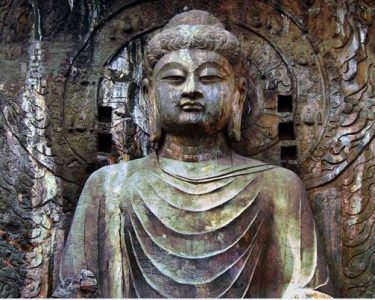
- Question two: How did Buddhism become visible in public art and architecture? Pair White Horse Temple with the Longmen Grottoes.
- Question three: How did a capital change under the Sui and Tang? Use the Sui-Tang Luoyang City archaeological area and surviving urban references to explore planned capital space.
- Question four: How did later restoration shape what visitors see today? Compare archaeological remains with reconstructed buildings and active religious sites.
Keep a simple distinction in mind throughout Luoyang China: a visible structure may be modern, restored, or rebuilt, while the site itself can still preserve authentic historical significance. Visitors often mistake a reconstructed gateway for direct dynastic fabric, or dismiss an archaeological park because its original walls no longer stand. Both errors weaken historical interpretation.
Follow an action-based route from surviving sites to their dynastic eras
This route is designed to link surviving places in Luoyang China to the specific dynastic eras they represent, rather than ranking attractions by popularity. Follow the order as a historical sequence. At each stop, identify the era, locate the surviving evidence, and ask what changed between one dynasty and the next.
- Start with the Eastern Han context at White Horse Temple. The temple is traditionally associated with the arrival and early institutional development of Buddhism in China during the Eastern Han period. Look beyond the present-day buildings. Ask whether the feature you are viewing is an ancient artifact, a later reconstruction, or a commemorative element. This stop fits visitors studying religion and cultural exchange. It is less useful as a stand-alone explanation of imperial urban planning.
- Move to the ancient capital remains connected with Han and Wei Luoyang. Archaeological areas associated with the Han and Wei capital landscape help explain why rulers selected this region for administration and defense. Your checkpoint is the city-scale evidence: roads, palace zones, walls, or site interpretation rather than decorative architecture. This stop suits visitors interested in state organization. It may feel abstract if you expect intact palaces.
- Use Longmen to trace Northern Wei and Tang religious patronage. The Longmen Grottoes preserve Buddhist cave art developed across several periods, including major Northern Wei and Tang contributions. Compare figure styles, inscription contexts, and the scale of carved programs. This is the strongest stop for connecting political patronage to religious art. It does not provide a complete picture of everyday urban life.
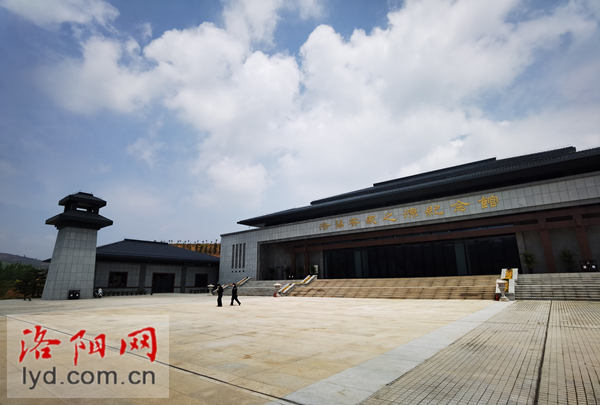
- Continue to the Sui-Tang city area and Dingding Gate context. This stage focuses on the eastern capital of the Sui and Tang periods. Look for evidence of city layout, gate placement, ceremonial movement, and the relationship between archaeological remains and modern interpretation. It fits visitors who want to understand capital planning. Do not treat reconstructed features as if every visible surface were original.
- End with a museum visit to test your interpretation. A museum can supply maps, artifacts, inscriptions, and chronological labels that clarify what open-air sites cannot show. Use it to verify the eras you encountered and note where the physical evidence was found. This works especially well after the outdoor stops. It is less effective as your only activity because artifacts lose much of their geographic context when viewed alone.
| Route stop | Dynastic connection | What to examine | Common interpretation error |
|---|---|---|---|
| White Horse Temple | Eastern Han Buddhist tradition | Site history, religious function, later building phases | Assuming all visible buildings date to the founding period |
| Han and Wei capital remains | Eastern Han and Cao Wei capital history | Urban scale, palace zones, archaeological interpretation | Expecting a preserved imperial palace complex |
| Longmen Grottoes | Northern Wei and Tang patronage | Carving styles, cave groups, inscriptions, patronage | Viewing every cave as belonging to one period |
| Sui-Tang city area | Sui and Tang eastern capital | Gate location, urban axes, archaeological remains | Confusing reconstruction with surviving original fabric |
This sequence gives Luoyang China a clear historical logic: early Buddhist memory, imperial capital development, Northern Wei artistic change, Tang-scale patronage, and planned urban space. The route is adaptable, but the order matters because it turns separate visits into a narrative.
Match each landmark to the evidence it can and cannot provide
Different sites answer different kinds of questions. Choosing the wrong location for your research goal creates frustration, particularly when a visitor expects a complete ancient city but finds foundations, displays, and interpretive signage instead.
| If you want to learn about | Best landmark type | Why it helps | Limit to remember |
|---|---|---|---|
| Buddhism’s early place in Luoyang | Temple site | Provides religious context and continuity of worship | Later rebuilding may complicate architectural dating |
| Dynastic art and imperial patronage | Cave-temple complex | Shows visual changes across historical periods | Requires careful reading of individual cave dates |
| Capital planning and government | Archaeological city site | Connects political power to roads, gates, and palace areas | Much of the evidence may be below ground or interpretive |
| Chronology and portable artifacts | Museum collection | Offers labels, objects, and comparative displays | Cannot replace seeing the original landscape |
Conclusion: use temple and grotto sites for religious history, archaeological areas for capital history, and museums for chronology checks. This is especially effective for students, educators, and independent travelers who want a defensible itinerary. It is not necessary to force every category into one day if travel time or visitor energy is limited.
When reading signage in Luoyang China, separate three layers of evidence: the date of the historical event, the date of an artifact, and the date of the present structure. For example, a temple may preserve an old institutional tradition without retaining its earliest buildings. A cave complex may include work from multiple dynasties. A gate museum may explain an ancient gate location through modern protective architecture.
Avoid planning mistakes that blur the dynastic story
The most common problems are not caused by a lack of famous sites. They come from treating every location as interchangeable or assuming that chronology is obvious on arrival.
- Mistake: Visiting sites in random order. This weakens the historical narrative. Begin with an early-period question, then move toward later Buddhist art and Sui-Tang urban planning. Random order is acceptable only when transport or opening arrangements make a chronological route impractical.
- Mistake: Calling every old-looking structure ancient. Buildings may have been repaired, reconstructed, or rebuilt in later periods. Read date panels and site explanations before assigning a dynasty. Visual appearance alone is not reliable.
- Mistake: Treating Longmen as one artistic moment. The complex developed over time. Compare cave groups rather than making conclusions from a single large sculpture. A quick scenic visit may not allow enough time for this comparison.
- Mistake: Skipping archaeological sites because they appear less dramatic. These places often explain the political geography that temples and caves cannot. Skip them only if your objective is strictly religious art or you have very limited time.
- Mistake: Leaving without recording dynasty-to-site links. Keep a short note for each stop: dynasty, evidence type, historical question, and uncertainty. This is most useful for educational travel, research preparation, or guided group planning.
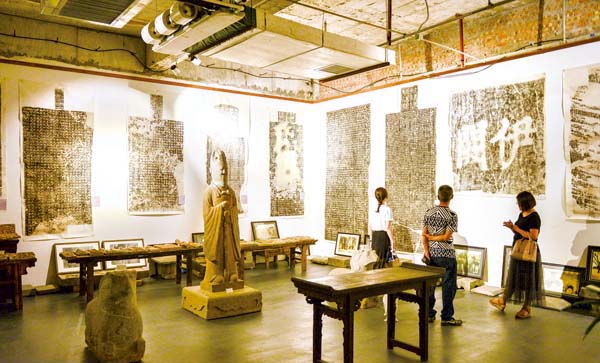
Build a practical educational itinerary with clear checkpoints
A strong day in Luoyang China should have checkpoints, not just destinations. Before departure, list the sites in historical order and decide what evidence you need from each one. At the site, photograph or note only the panels, maps, artifacts, or features that answer your chosen question. After the visit, compare those notes before moving to the next era.
- Choose a historical thread. Select capital history, Buddhist development, or Sui-Tang city planning as the main thread.
- Choose one anchor site per era. Avoid adding multiple sites that repeat the same lesson unless you have a specific comparison in mind.
- Check the site’s evidence type. Confirm whether you will see archaeological remains, religious structures, carved art, or museum objects.
- Prepare three questions. Ask who commissioned the site, what survives from the relevant period, and what later changes affect interpretation.
- Use a final review stop. A museum or detailed site map can correct assumptions made during the route.
For a first educational visit, the most reliable plan is not to “cover” all of Luoyang China. It is to leave with a connected account of how successive dynasties used the city: as a capital, a religious center, an artistic patronage site, and an organized urban landscape.
If you are planning a study-focused visit to Luoyang China, seek itinerary advice that matches each landmark to the dynastic questions you want to answer.