 By
By Which Site Holds the Oldest Temple in China Claim?
Which place should travelers and researchers name when asked about the oldest temple in China? The most accurate short answer is White Horse Temple in Luoyang, Henan Province. It is traditionally recognized as China’s first Buddhist temple, founded during the Eastern Han dynasty.
That answer needs a boundary. “Oldest” may refer to the earliest Buddhist institution, the oldest surviving building, the oldest religious structure of any tradition, or an archaeological site with much earlier ritual use. These are not interchangeable claims. A visitor who asks for the oldest temple in China may be seeking a Buddhist origin story, while an architectural researcher may instead be asking about surviving fabric and construction dates.
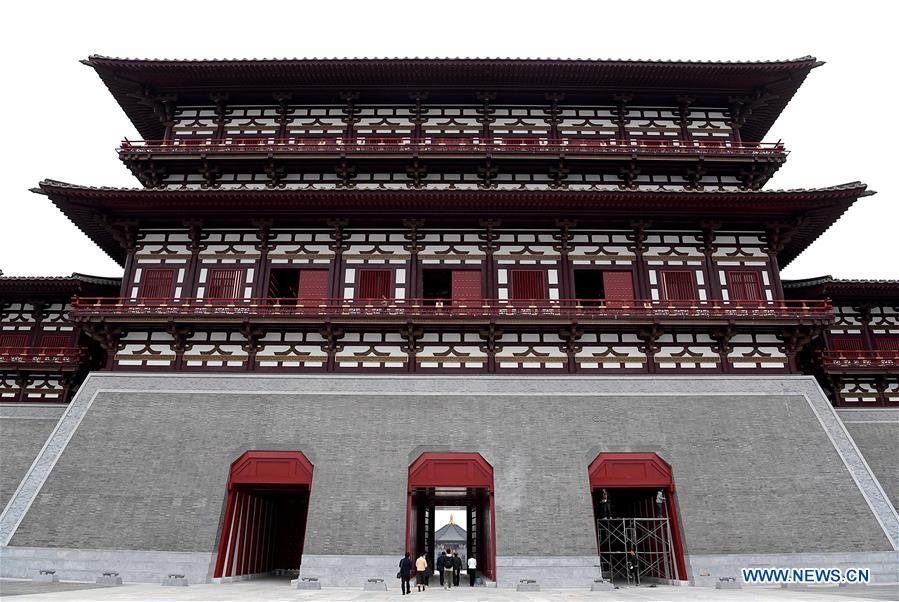
White Horse Temple is the strongest answer for China’s first Buddhist temple
The conclusion is clear: White Horse Temple is the appropriate site to name when the question means “Which Buddhist temple was established first in China?” Its traditional founding date is 68 CE, during the Eastern Han dynasty. The temple stands outside Luoyang, an imperial center that played a major role in the early transmission of Buddhism into China.
The traditional account connects the foundation to Emperor Ming of Han. According to the story, the emperor sought Buddhist teachings after a dream and dispatched envoys westward. The envoys returned with Buddhist scriptures and two Indian monks, Kāśyapa Mātaṅga and Dharmaratna, who were said to have arrived with texts carried by white horses. The temple’s name commemorates those animals.
For early-stage research, this gives White Horse Temple a specific historical role. It is not simply an old monastery. It is a landmark in the institutional arrival of Buddhism in China. That is why travel guides, heritage summaries, and general reference works commonly associate it with the oldest temple in China question.
There is a limit to this conclusion. The founding narrative is a traditional historical account, and early Buddhist transmission involved networks of merchants, monks, translators, courts, and communities rather than one single moment. Researchers should therefore describe White Horse Temple as traditionally regarded as China’s first Buddhist temple, rather than claiming that every detail of its origin is independently proven in the modern documentary sense.
What the White Horse Temple claim does and does not establish
| Question being asked | Most useful answer | Why it fits | Limit of the answer |
|---|---|---|---|
| What was China’s first Buddhist temple? | White Horse Temple | Its traditional foundation is linked to Buddhism’s early institutional establishment in Han China. | The founding story should be presented as tradition-based historical attribution. |
| What is the oldest temple in China? | White Horse Temple, if “temple” means Buddhist institution | This is the standard interpretation behind the common claim. | The phrase is too broad if it includes non-Buddhist religious sites or surviving structures. |
| Which Buddhist building is physically oldest? | A separate architectural question | Building survival and institutional founding dates differ. | White Horse Temple’s present structures are not unchanged originals from its founding period. |
| Which religious structure in China is oldest? | No single shortcut answer | Different traditions and definitions produce different candidates. | Ancient ritual sites, temples, pagodas, shrines, and rebuilt complexes require separate comparison. |
Set the boundary between Buddhist priority and broader religious-age claims
The phrase oldest temple in China becomes misleading when it is used without defining the religious tradition and the thing being dated. White Horse Temple’s distinction concerns Buddhism. It does not automatically prove that the site is older than every sacred place, shrine, ancestral structure, Daoist site, or archaeological ritual complex in the country.
This boundary matters in practice. A traveler planning an itinerary may be satisfied with the first Buddhist temple. A researcher preparing a museum label, academic note, article, or heritage database entry needs a more precise formulation. Using an overly broad superlative can turn a correct Buddhist-history statement into an inaccurate national-history claim.
| Claim boundary | Accurate wording | What changes if it is ignored |
|---|---|---|
| Buddhist institutional history | “White Horse Temple is traditionally regarded as China’s first Buddhist temple.” | The statement retains its intended historical scope. |
| All Chinese religious traditions | “White Horse Temple is not necessarily the oldest religious site in China across every tradition.” | Without this distinction, the claim may wrongly exclude older ritual and non-Buddhist contexts. |
| Site foundation versus visible structures | “The temple’s founding tradition is ancient, while its built environment reflects later rebuilding and restoration.” | Visitors may otherwise assume that every visible hall dates to the Han period. |
| Temple versus pagoda | “An early surviving pagoda is not automatically evidence for the oldest Buddhist temple.” | Architectural survival may be confused with the date of an institution’s foundation. |
| Tradition versus documented certainty | “The claim is traditional and widely repeated, with appropriate historical caution.” | Absolute language can overstate what the surviving evidence can establish. |
Use this practical rule: if the audience has asked about the origin of Buddhism in China, White Horse Temple is the relevant answer. If the audience has asked about the oldest standing sacred architecture, stop and clarify the category before answering. The oldest temple in China label is useful only when its boundaries remain visible.
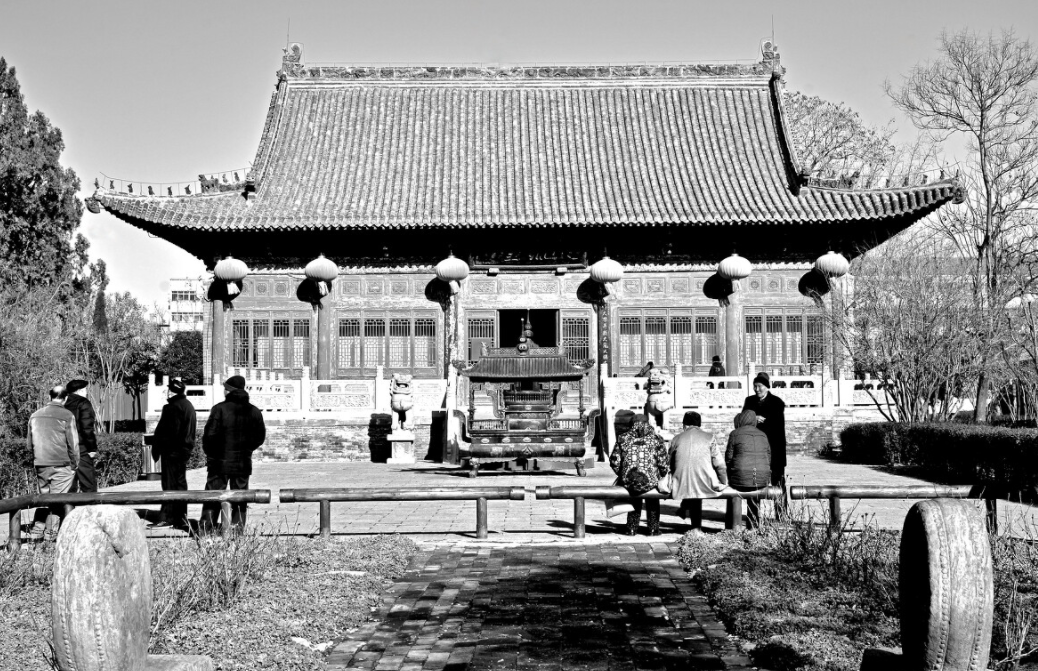
Do not confuse a temple’s foundation date with the age of its surviving buildings
A temple is an institution and a site. It is also a collection of structures that may be rebuilt many times. This distinction is essential when investigating the oldest temple in China claim.
White Horse Temple has endured through long periods of political change, religious transformation, destruction, repair, and reconstruction. As with many ancient religious complexes, the current visitor experience cannot be treated as a frozen image of the original foundation. A temple may preserve its historic identity, location, ritual significance, and name even when individual halls have been replaced.
This is where a site such as Songyue Pagoda becomes relevant. Songyue Pagoda, located near Mount Song in Henan Province, is frequently discussed because it is among China’s oldest surviving brick pagodas. It is important architectural evidence, but it answers a different question. A pagoda’s survival does not displace White Horse Temple’s traditional priority as an early Buddhist institution.
A practical comparison for travel and research use
- Choose White Horse Temple when your subject is the introduction and early establishment of Buddhism in China. This fits cultural-history itineraries, introductory research, and general heritage questions. It does not fit a study limited to original surviving Han-era construction.
- Compare surviving pagodas and halls when your subject is early Chinese Buddhist architecture. This fits architectural historians and conservation-focused visitors. It does not identify the first Buddhist temple institution.
- Review archaeological and ritual sites separately when the question includes every form of religion in China. This fits broad comparative religious history. It does not produce a simple White Horse Temple-only answer.
- Use qualified wording in published material when accuracy matters. “Traditionally regarded as the first Buddhist temple” is safer than “the oldest religious building in China.” The latter claim requires evidence outside the White Horse Temple tradition.
The wrong choice has a predictable result. A travel article may promise viewers an original Han building and create false expectations. A research summary may mistake a surviving pagoda for the oldest Buddhist institution. A heritage description may erase the difference between Buddhist history and China’s wider religious landscape.
Use a four-step method before repeating the oldest-site label
The best way to evaluate an oldest temple in China statement is to turn a broad claim into a defined research question. This method is useful for destination planners, writers, tour operators, students, and researchers preparing an initial site list.
- Identify the tradition. Ask whether the claim concerns Buddhism, Daoism, popular religion, imperial ritual, or all religious traditions. White Horse Temple is the leading answer only in the Buddhist-temple context.
- Identify the object being dated. Determine whether the date refers to the institution, the site, the main hall, a pagoda, an inscription, or archaeological remains. These can have very different dates.
- Identify the evidence type. Separate traditional attribution, historical text, excavation evidence, and surviving architecture. Each supports a different level of certainty.
- Write the claim at the right level. For a general audience, say “traditionally regarded as China’s first Buddhist temple.” For an architecture-focused audience, add that the existing complex has undergone later rebuilding.
For example, a researcher drafting a one-sentence destination note could write: “Located near Luoyang, White Horse Temple is traditionally regarded as China’s first Buddhist temple, founded in the Eastern Han period.” That statement is direct, useful, and bounded. Calling it the oldest temple in China without the Buddhist qualifier would be less precise.
Common mistakes that weaken an accurate answer
- Using “oldest” without a category. The correction is to state whether “oldest” refers to a Buddhist institution, a surviving building, or a religious site of any tradition.
- Assuming the present buildings are Han-era originals. The correction is to distinguish the ancient founding tradition from later rebuilding and restoration.
- Treating a pagoda as the same thing as a temple. The correction is to describe the pagoda as an architectural structure and the temple as an institutional complex.
- Presenting tradition as absolute proof. The correction is to use terms such as “traditionally regarded,” “commonly identified,” or “associated with.” These phrases fit the evidence better.
- Turning a Buddhist claim into a universal religious claim. The correction is to explain that China’s sacred landscape includes traditions and sites that must be assessed on their own terms.
The most reliable final answer is therefore straightforward: White Horse Temple is the site most commonly and traditionally identified when people ask for the oldest temple in China, provided they mean China’s first Buddhist temple. Its importance lies in Buddhist institutional history, not in an unqualified claim to be the country’s oldest religious structure or oldest surviving building.
Need help framing an accurate heritage, travel, or research description? Submit your research question for selection advice.