
 By
By Lo Yang China: Industrial Hub and Export Guide
Lo Yang China commonly refers to Luoyang, a historic city and major industrial center in Henan Province. Known for ancient culture, heavy engineering, advanced materials, and equipment manufacturing, the city is an important sourcing destination for international buyers.
For procurement teams, Luoyang offers far more than traditional Chinese products. Local manufacturers produce mining machinery, agricultural equipment, bearings, refractory materials, steel products, new-energy components, chemicals, and industrial systems. Henan’s central location also connects factories to domestic markets, rail freight routes, highways, and major export ports.
This guide covers the city’s industrial strengths, the sectors most relevant to overseas buyers, and the practical steps needed to assess suppliers in the region.
What Is Lo Yang China?
“Lo Yang” is an older English spelling and pronunciation of Luoyang China. In current international trade documents, the city is usually written as Luoyang. It is located in western Henan Province, central China, and has a population of several million across its urban districts and surrounding counties.
Luoyang has a deep industrial heritage. Large state-owned enterprises and research institutions established strong capabilities in metallurgy, machinery, mining equipment, materials science, and energy-related engineering. Private manufacturers and specialized industrial parks later broadened the city’s production base.
Today, the manufacturing economy is diverse. Some companies build large, capital-intensive equipment, while smaller workshops supply machined parts, castings, components, packaging materials, and customized products to larger factories.
Where Is Lo Yang China Located?
Where is Lo Yang China located? Luoyang sits in western Henan Province along the middle reaches of the Yellow River. It lies west of Zhengzhou, Henan’s provincial capital, and east of Xi’an in neighboring Shaanxi Province. The city forms part of a broad industrial corridor linking central, northern, and western China.
Luoyang is served by highways, conventional rail, high-speed rail, and freight links to the wider national transport network. Zhengzhou, one of China’s major railway and logistics hubs, is within practical reach for many shipments. Export cargo can then move by truck or rail to coastal ports such as Qingdao, Shanghai, Ningbo-Zhoushan, and Tianjin, depending on the product, destination, and freight strategy.
For buyers, the inland location has two practical implications. Factory access can be efficient when a supplier has reliable domestic logistics, but the final export journey may be longer than for a coastal factory. Freight should be calculated from the supplier’s facility to the selected port, not simply from the city name shown on a quotation.
What Is Lo Yang China Known For?
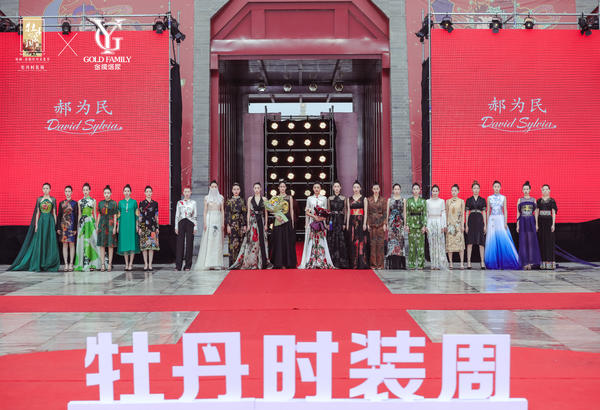
What is Lo Yang China known for? The city is known for ancient Chinese history, the Longmen Grottoes, peony cultivation, and its role as a former imperial capital. From an industrial sourcing perspective, it is particularly recognized for heavy machinery, industrial materials, bearings, mining equipment, and engineering-related manufacturing.
Heavy Equipment and Industrial Machinery
Luoyang manufacturers produce equipment and components used in mining, construction, metallurgy, cement production, energy, and material handling. Product categories may include crushers, conveyors, feeders, grinding equipment, screening systems, hydraulic components, and custom steel structures.
These products often require technical drawings, load specifications, motor details, material grades, and installation data. Buyers comparing offers should review the full technical scope instead of focusing on the lowest unit price. Two machines with similar names can differ substantially in capacity, wear resistance, automation, and after-sales support.
Bearings and Precision Components
Bearing production is one of the city’s established industrial strengths. Suppliers may offer standard deep-groove bearings, cylindrical roller bearings, tapered roller bearings, slewing bearings, or large-diameter bearings for specialized machinery.
International buyers should confirm the bearing designation, internal clearance, cage material, heat-treatment process, dimensional tolerance, lubrication requirements, and applicable standard. For demanding applications, request test reports and traceability records for the steel used in the rings and rolling elements.
Refractory Materials and Metallurgical Products
Luoyang’s links to metallurgy support the production of refractory bricks, monolithic refractories, ceramic materials, kiln components, and other high-temperature products. These materials are used by steel mills, foundries, cement plants, glass factories, and non-ferrous metal processors.
Important purchasing data includes alumina content, bulk density, apparent porosity, refractoriness under load, thermal conductivity, corrosion resistance, and dimensional tolerance. A sample that performs well in one furnace may not be suitable for another operating at a different temperature or under a different chemical load.
New Energy and Advanced Materials
The region is also associated with advanced materials, non-ferrous metals, lithium-related materials, carbon products, and components used in energy and industrial applications. As demand rises for batteries, solar equipment, electric vehicles, and energy storage, suppliers in central China are expanding their technical and processing capabilities.
Because this segment evolves quickly, buyers should verify current production licenses, laboratory capacity, environmental compliance, and export experience. A supplier that trades a product is not necessarily a factory capable of stable, specification-controlled production.
Agricultural and Food-Processing Equipment
Manufacturers in and around the city also supply agricultural machinery, grain-processing equipment, feed mills, dryers, pumps, and packaging systems. A grain mill for maize, wheat, or rice may look similar in a catalog, but the right configuration depends on moisture content, throughput, target particle size, power supply, and local service conditions.
For overseas projects, buyers should request installation drawings, spare-parts lists, operator manuals, and videos of the exact model in production. These documents can prevent costly delays once equipment reaches the destination country.

Luoyang Manufacturing: Key Advantages for Buyers
Luoyang manufacturing offers several advantages for international procurement teams:
- Industrial depth: The city has longstanding experience in machinery, metallurgy, materials, and large-scale engineering.
- Engineering capability: Many factories can work from drawings, samples, performance requirements, or detailed project specifications.
- Competitive production costs: Inland operating costs may be lower than those in some major coastal manufacturing centers.
- Supplier variety: Buyers can find state-linked enterprises, established private factories, component specialists, and trading companies.
- Central logistics: The location supports distribution across central and western China, with connections to national export networks.
In practice, the strongest results come when supplier selection is treated as a technical process. A clear request for quotation should specify materials, dimensions, tolerances, output, packaging, destination, inspection requirements, and applicable standards.
Major Export Sectors in Luoyang
International shipments from the area may include finished machinery, industrial components, steel and non-ferrous products, refractory materials, chemicals, agricultural equipment, and custom-fabricated parts. The export mix depends on the supplier’s license, product certification, destination-market rules, and logistics arrangements.
Commonly evaluated sectors include:
- Mining, quarrying, and mineral-processing machinery
- Bearings, gears, shafts, rollers, and transmission components
- Refractory bricks, kiln furniture, and furnace materials
- Steel structures, castings, forgings, and machined parts
- Agricultural, grain, and food-processing equipment
- Industrial pumps, valves, motors, and hydraulic assemblies
- Advanced materials and selected energy-sector components
Some products require additional export controls, dangerous-goods documentation, technical certificates, or destination-specific approvals. A supplier should be able to explain the product’s HS code, packaging method, declared value, country-of-origin documentation, and any required compliance paperwork.
How to Evaluate China Export Suppliers in Luoyang
Working with China export suppliers requires more than reviewing a marketplace profile or comparing three quotations. Start by confirming the company’s legal name, registered address, business scope, factory location, and export history.
Verify the Factory and Product Scope
Ask whether the company is a manufacturer, a trading company, or a combination of both. A trading company can still be useful, especially for complex sourcing, but commercial and quality responsibilities must be clearly defined.
Request a live video tour or arrange an independent factory audit. Check whether the facility has the machinery needed to make the quoted product. For a large bearing, for example, look for suitable heat-treatment, grinding, inspection, and assembly capabilities, not only a warehouse of finished goods.
Review Technical and Quality Documents
Request drawings, material certificates, inspection standards, performance data, and sample reports. For machinery, ask for test-run records, motor specifications, safety features, spare-parts recommendations, and installation requirements.
Quality control should be agreed before production begins. A typical inspection plan may include raw-material verification, in-process dimensional checks, functional testing, surface inspection, packaging review, and final pre-shipment inspection.
Clarify Commercial Terms
Quotations should state the trade term, currency, payment schedule, lead time, packaging, warranty, and validity period. Incoterms such as EXW, FOB, CIF, and DAP assign different responsibilities and costs. An FOB quotation is not directly comparable with one offered on a DAP basis.
For customized equipment, avoid paying the entire balance before testing unless the supplier has an exceptional track record and the contract provides strong protection. Milestone payments tied to design approval, production progress, factory acceptance testing, and shipping documents are often easier to manage.
Logistics and Export Planning
Because the city is inland, shipping plans should be prepared early. A supplier may deliver cargo to a coastal port by truck, rail, or a combination of transport modes. Oversized machinery can require route surveys, special trailers, lifting plans, and port coordination.
Packaging deserves close attention. Bearings need protection from moisture and contamination. Refractory products require sturdy pallets and edge protection. Large machines may need vapor-barrier wrapping, desiccants, shock indicators, and reinforced export cases.
Ask the supplier for carton or crate dimensions, gross and net weight, container-loading plans, and photographs of the final packaging. These details affect freight quotations and customs clearance. For project cargo, one incorrect dimension can result in an expensive rebooking.
Practical Sourcing Checklist
Before placing an order with a manufacturer in the region, confirm the following:
- Exact product specification and revision-controlled drawings
- Supplier legal identity and manufacturing location
- Relevant certifications and test capabilities
- Material standards and traceability requirements
- Sample approval or prototype process
- Production lead time and inspection milestones
- Packaging, labeling, and spare-parts requirements
- Incoterm, payment schedule, warranty, and dispute provisions
- HS code, export documents, and destination-country compliance
- Transport route, port selection, and cargo insurance
For repeat orders, maintain a supplier scorecard covering delivery performance, defect rate, response time, documentation accuracy, and corrective-action speed. A dependable relationship is built on measurable performance, not simply a friendly first conversation.
FAQ About Lo Yang China
What is Lo Yang China known for?
It is known for historic sites and peony culture, as well as industrial manufacturing. Key business sectors include heavy machinery, mining equipment, bearings, refractory materials, steel products, advanced materials, agricultural equipment, and engineering components.
Where is Lo Yang China located?
Lo Yang, usually written Luoyang, is located in western Henan Province in central China. It lies west of Zhengzhou and east of Xi’an, with road and rail connections to major domestic markets and export logistics hubs.
What products are made in Luoyang China?
Products made in the city include mining and construction machinery, industrial bearings, refractory bricks, kiln materials, steel castings, forged and machined parts, agricultural equipment, grain-processing machinery, pumps, valves, and selected advanced-material products.
Is Luoyang suitable for overseas sourcing?
Yes. The city can be suitable for buyers seeking industrial equipment, custom components, and materials. Buyers should account for inland freight, verify factory capabilities, confirm export documentation, and conduct product inspections before shipment.
How can an international buyer find reliable suppliers there?
Begin with technical specifications and a shortlist of companies with relevant production experience. Verify registration details, inspect the factory, request samples or test data, agree on quality standards, and use a written contract with clear delivery and warranty terms.
Conclusion: Build a Better Sourcing Plan
Lo Yang China—more commonly called Luoyang—is a capable industrial sourcing base with particular strengths in machinery, bearings, metallurgy, refractory products, and engineering materials. Its central location and established manufacturing background make it worth considering for international procurement projects.
Success depends on careful supplier verification, precise specifications, realistic logistics planning, and disciplined quality control. If you are comparing manufacturers or preparing an export project, contact our team to discuss suitable products, technical requirements, and a practical supply solution from our product range.
