
 By
By luoyang longmen grottoes: Art, Faith, and Preservation
The luoyang longmen grottoes are among China’s most significant centers of Buddhist art, where sculpture, architecture, imperial history, and cultural memory meet along the Yi River. Far more than a scenic stop outside Luoyang, this UNESCO World Heritage Site preserves nearly 1,400 years of religious devotion, artistic experimentation, and social change.
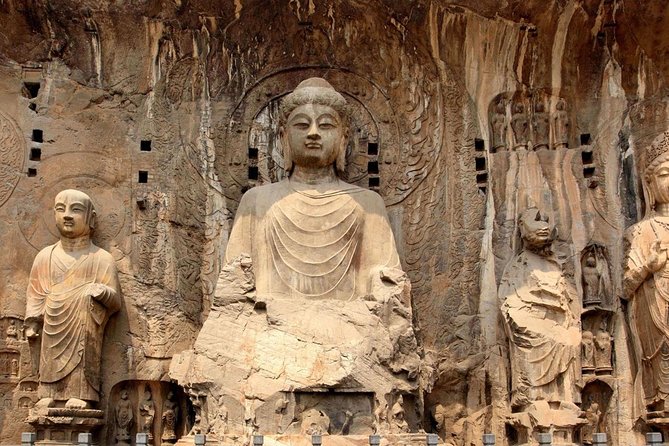
Cut into limestone cliffs on Longmen Mountain and Xiangshan Mountain, the grottoes include thousands of caves, niches, statues, inscriptions, and stone steles. Some figures are tucked into shallow recesses and barely larger than a hand. Others command the cliff face, most notably the monumental Vairocana Buddha at Fengxian Temple, whose calm expression remains striking from a distance.
A historical introduction to the Longmen site
Carving at Longmen began in the late fifth century under the Northern Wei dynasty. In 493, Emperor Xiaowen relocated the capital to Luoyang and promoted cultural and religious building projects throughout the region. The cliffs beside the Yi River provided an ideal setting for Buddhist cave temples, and work continued through later dynasties.
The Northern Wei period favored slender figures, elongated faces, and robes arranged in precise, linear folds. These early sculptures often feel restrained yet elegant. Under the Tang dynasty, the visual language shifted noticeably: bodies became fuller, poses more natural, and expressions more confident. Tang-period works reflect the energy of an empire linked with Central Asia, India, Korea, and other parts of the broader Buddhist world.
Longmen was never the result of a single construction campaign. Over generations, patrons commissioned new images, restored older carvings, added inscriptions, and adapted caves to suit changing religious practices. Emperors and imperial relatives sponsored major projects, but officials, monks, military leaders, and private believers also took part. Each carving tells two stories: one about Buddhist belief and another about the individual or community that funded it.
Numbers that reveal the scale
Official descriptions commonly cite more than 2,000 caves and niches, around 100,000 Buddhist statues, and over 30,000 inscriptions and engraved tablets across the site. Totals vary depending on classification and survey methods, yet the overall scale is unmistakable. Longmen is not one monument but a vast cultural landscape where sculpture, text, ritual space, and natural geology remain closely intertwined.
Artistic highlights visitors should not miss
Fengxian Temple and the Vairocana Buddha
The central image at Fengxian Temple is the Vairocana Buddha, completed during the Tang dynasty in the seventh century. The statue stands approximately 17 meters tall, including its pedestal, and is surrounded by celestial figures, guardians, and attendants. Its broad face, gently curved lips, and balanced proportions create a sense of serenity without making the figure feel remote.
Most visitors notice the Buddha’s expression first. It is neither severe nor overly ornamental. Instead, the face appears composed, watchful, and almost human. That quality is central to the sculpture’s impact. Rather than merely reproducing a religious symbol, the artists gave physical form to an idea of universal wisdom.
Fengxian Temple also demonstrates how scale served religious purpose. A worshipper standing below the cliff would have looked up at a figure many times larger than the human body. The effect encouraged awe. Mountain, sky, river, and carved image came together as a single ceremonial environment.
Guyang Cave and early Northern Wei style
Guyang Cave is one of the earliest major areas at Longmen. Its inscriptions are especially important for the study of calligraphy and Buddhist patronage. The cave contains numerous small niches and dedicatory texts, many connected with Northern Wei officials and aristocratic patrons.
The sculpture here differs clearly from the fuller Tang figures at Fengxian Temple. Forms are more linear, garments fall in narrow folds, and faces often have a distinctive elongated shape. For researchers, these contrasts help trace the development of Chinese Buddhist sculpture from the fifth century onward.
Binyang Caves and imperial devotion
The Binyang Caves include works associated with Northern Wei imperial commissions. Their planning and decoration reveal how the court used religious art to express legitimacy, family loyalty, and hopes for protection. The caves served as places of worship, but they also conveyed political values.
Look closely at how the figures are arranged. Buddhas occupy the central positions, while bodhisattvas, disciples, guardians, and donors support the main narrative. This visual hierarchy was deliberate. Visitors who pause over the smaller attendants may spot details in jewelry, crowns, gestures, and clothing that distinguish one figure from another.
Faith carved into stone
The religious meaning of the site becomes clearer when the sculptures are viewed as objects of devotion rather than museum pieces. A cave could be commissioned to pray for a parent’s recovery, gain merit for deceased relatives, protect a local community, or support the spiritual future of its donor. Inscriptions often record these aims with remarkable directness.
Buddhist sculpture at Longmen was meant to be seen, approached, and used in ritual. Oil lamps, incense, chanting, processions, and offerings would all have shaped the original experience. The statues were not isolated artworks intended for private contemplation. They belonged to active cave temples connected with monks, patrons, and local communities.
This devotional context also explains why repetition appears so often. Hundreds of small Buddha images may fill a single wall. To a modern visitor, the pattern can seem decorative. For historical worshippers, repeated images represented accumulated merit and the far-reaching presence of Buddhist teaching.
The inscriptions add another important layer. Some are brief dedications, while others preserve formal prose or poetry. Calligraphy ranges from formal clerical styles to more fluid scripts. Together, these texts record names, dates, religious aspirations, family ties, and political circumstances. Longmen is therefore a major resource for historians of religion, language, society, and Chinese writing.
Why preservation is so difficult
Stone may appear permanent, but limestone is vulnerable. Rainwater can enter cracks, dissolve mineral surfaces, and loosen fragments. Temperature changes place the rock under stress. Wind carries dust and pollutants into recessed areas, while biological growth can stain or weaken the surface. Earlier human damage, including the removal of statues and heads, has also left a lasting mark on the site.
Tourism creates another set of pressures. Millions of visitors can increase vibration, humidity, dust, and the risk of accidental contact. In enclosed caves, even breath and body heat can matter when numbers are high. One hand resting on a carved surface may seem harmless, but repeated contact gradually polishes away fragile details.
Conservation methods at Longmen
Modern conservation brings together documentation, monitoring, environmental control, structural work, and careful visitor management. Specialists use high-resolution photography, three-dimensional scanning, mapping, and digital records to monitor changes over time. These tools allow teams to compare the condition of a statue or inscription without touching the original stone.
Engineers and conservators also assess cliff stability. Water moving behind the rock face can create serious structural risks, making drainage and geological monitoring essential. Repairs must remain restrained. Rebuilding a missing feature with modern material may make a statue look whole, but it can also obscure evidence of age and mislead future researchers.
The most responsible preservation approach respects both the object and its setting. Moving every sculpture into a climate-controlled gallery might protect certain surfaces, but it would separate the images from the cliffs, river, caves, and ritual geography that give them meaning. Conservation at Longmen is therefore a careful balance: protect the carvings while keeping the landscape understandable and accessible.
Planning a thoughtful visit
A visit is more rewarding when you allow several hours instead of treating Longmen as a quick photo stop. The site is extensive, and the two main cliff areas are linked by paths and bridges. Comfortable shoes are a good idea, particularly if you plan to explore beyond the most accessible viewpoints.
Morning light is pleasant for walking, while late afternoon often gives the cliff faces a warmer tone. Weather can change quickly along the river, so bring water, sun protection, and a light extra layer. Avoid touching sculptures, leaning against carved walls, or using flash where restrictions apply. Small habits like these help protect details that have survived for more than a millennium.
Make time to compare works from different periods. Begin with the early Northern Wei carvings in Guyang Cave, then move to the more expansive Tang style around Fengxian Temple. Watch for changes in body proportions, robe folds, facial modeling, and composition. A guide or reliable site map can help identify the major caves, though quiet observation is equally valuable.
For travelers interested in wider cultural routes, Luoyang pairs well with the White Horse Temple, the ancient city’s museums, and nearby historical sites. Together, these places put the grottoes into a broader story of Buddhism, imperial capitals, craft production, and exchange across Asia.
The continuing cultural value of Longmen
The importance of the luoyang longmen grottoes extends far beyond their age. They document the development of Chinese sculpture, the spread and adaptation of Buddhism, and the evolving relationship between religious art and political authority. They also show that heritage is not automatically safe simply because it is well known.
Preservation depends on research, funding, skilled conservation workers, responsible tourism, and public understanding. A visitor who understands why a small inscription matters is more likely to protect it. Businesses that support high-quality cultural travel services can also help make access safer and more sustainable. Every decision, from walkway design to educational signage, shapes how future generations will encounter the site.
For organizations serving travelers, cultural institutions, and international visitors, the story of Longmen provides a strong foundation for responsible heritage communication. Explore our product range for solutions that can support professional cultural-tourism projects, visitor experiences, and international sourcing needs, or contact our team to discuss your requirements.
Frequently asked questions
What are the luoyang longmen grottoes famous for?
The site is famous for its vast collection of Buddhist caves, statues, inscriptions, and cliff temples. The Vairocana Buddha at Fengxian Temple is its best-known image, while Guyang Cave is especially valued for early sculpture and calligraphy.
When is the best time to visit the Longmen Grottoes?
Spring and autumn generally offer comfortable walking conditions in Luoyang. Early morning or late afternoon can bring softer light and a quieter atmosphere. Check local opening hours and weather conditions before traveling, as access arrangements may change.
How long should I spend at the Longmen Grottoes?
Plan at least three hours for the main route. Visitors who want to study inscriptions, compare artistic periods, take photographs, or explore both sides of the river may prefer half a day or longer.
Why do the statues at Longmen look different from one another?
The carvings were created over many centuries by different workshops for patrons with different religious and political aims. Northern Wei sculptures often feature slender proportions and linear drapery, while Tang works tend to show fuller bodies, naturalistic modeling, and greater monumentality.
How can visitors help preserve the grottoes?
Follow marked routes, do not touch or climb on the carvings, obey photography rules, keep food and drinks away from cave areas, and avoid creating dust or vibration. Respectful behavior helps protect the stone and improves the experience for other visitors.
Conclusion
The luoyang longmen grottoes bring art, faith, history, and conservation together in one extraordinary landscape. Their statues reveal changing artistic ideals, their inscriptions preserve personal hopes and imperial ambitions, and their fragile surfaces show why heritage protection demands constant care. When planning a cultural-tourism project or sourcing related solutions, explore our products and contact our team for practical support.
