
 By
By White Horse Temple China: The Complete B2B Guide
White Horse Temple China is widely recognized as the first Buddhist temple built on Chinese soil. Its establishment, dating back to the Eastern Han Dynasty, marks the formal introduction of Buddhist philosophy into a civilization already rich with Confucian and Taoist thought. For any business professional traveling to Luoyang or seeking to understand the deep cultural roots that influence modern Chinese business etiquette, this site is not merely a tourist stop. It is a foundational text written in stone and wood.
The temple’s narrative begins with a dream. Emperor Ming of Han envisioned a golden man flying above his palace. Interpreting this as a divine sign, he dispatched envoys westward. The story goes that these envoys encountered two Indian monks, Kasyapa Matanga and Dharmaratna, on the ancient Silk Road. They were carrying Buddhist scriptures and statues on two white horses. To honor the animals that bore the weight of these sacred texts, the emperor ordered the construction of the monastery, naming it the White Horse Temple. This origin story matters because it establishes a direct, tangible link between the temple and the concept of cross-border knowledge transfer—a principle that underpins modern global commerce.
Walking through the temple today requires an understanding of its layered reality. Much of what a visitor sees is not the original Han Dynasty structure. The compound has been destroyed and rebuilt through centuries of war and dynastic change. The current halls largely reflect Ming and Qing Dynasty architectural styles, with significant restoration work undertaken in the 20th century. This palimpsest of history—where new bricks sit atop ancient foundations—mirrors the Chinese business landscape itself, where innovation constantly builds upon deep tradition. The temple’s endurance speaks to a cultural resilience that partners and clients in China value deeply.
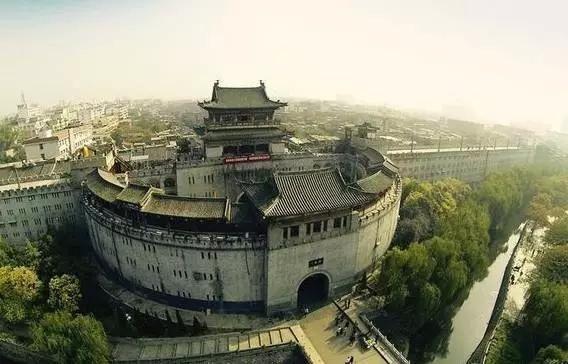
Architectural Layout and Sacred Geometry
Unlike sprawling modern industrial parks, the layout of White Horse Temple China follows a strict axial symmetry that reflects hierarchical order. The compound faces south, a standard orientation for significant Chinese architecture. Entering through the mountain gate, a visitor progresses along a central north-south axis through five main halls. This linear progression is deliberate. It guides the visitor from the mundane world into increasingly sacred space, culminating in the清凉台 (Qingliang Terrace), a cool, elevated platform where the original sutras were translated.
The main halls are not just large rooms; they are specialized spaces built with specific materials and structural techniques common to classical Chinese construction. The massive timber frames support sweeping roofs with upturned eaves, a design feature that manages rainwater while symbolizing lightness. Inside the Hall of Heavenly Kings, the first major structure, one encounters the smiling Maitreya Buddha. This placement is strategic. It offers a moment of levity and welcome before the visitor confronts the more imposing figures of the Four Heavenly Kings, guardians who represent favorable conditions for prosperity and safety. For a business visitor, this sequence subtly reinforces the Chinese cultural norm of building rapport and goodwill before addressing serious matters.
The Hall of the Great Buddha serves as the structural and spiritual center of the complex. The ceiling is high, creating a sense of vertical aspiration. The central statue of Sakyamuni Buddha is flanked by his disciples, an arrangement that emphasizes mentorship and the direct transmission of knowledge. The materials used—gilded lacquer over a clay core—represent a sophisticated composite manufacturing technique that was advanced for its era. The hall’s floor, worn smooth by centuries of pilgrims, is a testament to sustained, long-term engagement, a value often prioritized over short-term gains in Chinese business culture.
Stone Inscriptions and the Weight of Authenticity
Beyond the timber and tile, the true institutional memory of White Horse Temple China resides in its stone. Scattered throughout the courtyards are dozens of stelae—tall stone tablets inscribed with calligraphy. These are not decorative. They are legal and historical records, documenting imperial decrees, land grants, and the biographies of eminent monks. The most famous of these is the stele recording the temple’s founding legend, a physical artifact that has anchored the temple’s authority for centuries.
In an era before digital contracts, these stone inscriptions served as immutable public records. A carved edict from an emperor could not be easily altered or repudiated. This permanence offers a quiet lesson in the value of durable, verifiable documentation. The calligraphy itself, often executed by renowned scholars or officials, elevates the text to an art form. The union of aesthetic precision and factual accuracy in these stelae reflects a cultural preference for formality and exactness in official dealings. Observing a Chinese partner study these inscriptions can reveal a deep-seated respect for documented history and established protocol.
One notable area is the Hall of Scripture Storage, which, while not always open to the public, historically housed a vast collection of Buddhist texts. The concept of a dedicated repository for core knowledge is a powerful one. Just as the temple guarded its scrolls, modern enterprises guard their proprietary processes. The meticulous cataloging and preservation methods developed here were an early form of knowledge management, ensuring that critical information survived political upheaval and physical decay.
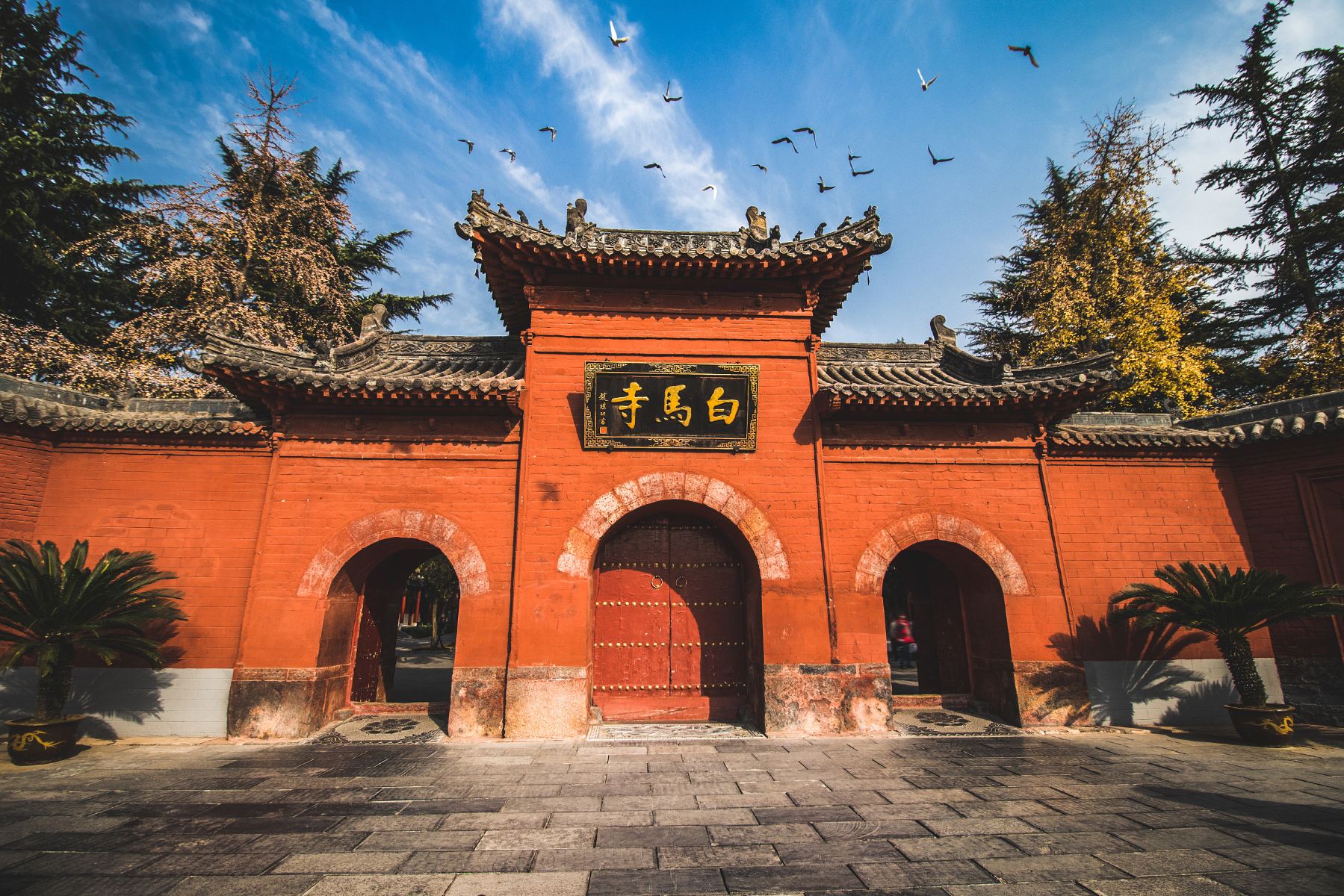
The International Zone: A Cross-Cultural Hub
In a development that may surprise first-time visitors, White Horse Temple China features a distinct international section. This area, built with cooperation from the governments of India, Myanmar, and Thailand, contains temples constructed in the distinct architectural styles of those nations. The Indian-style temple, modeled after the Sanchi Stupa, is a circular dome of sandstone built with traditional Indian techniques. The Thai temple gleams with gold leaf and white marble, its sharp gables contrasting with the gentle curves of the Chinese halls.
This is not a theme park. It is a physical manifestation of the temple’s original mandate as a hub for international exchange. The presence of these foreign structures within the temple grounds reinforces the identity of White Horse Temple China as the starting point of a globalized religious network. For a business visitor, this zone serves as a powerful metaphor for successful international joint ventures. Each national pavilion maintains its distinct identity while existing harmoniously within the larger framework of the host site. The mutual respect required to build a Thai temple on Chinese soil, using Thai craftsmen and materials, is a masterclass in cross-cultural project management.
Walking from the austere gray brick of the Chinese halls into the ornate golden interior of the Thai temple is a sensory transition. The air changes. The visual language shifts from symbolic minimalism to elaborate narrative. This juxtaposition highlights how different cultures can interpret and house the same core philosophy. It’s a reminder that a single, rigid operational model rarely fits all markets. Adaptation to local conditions, while maintaining core principles, is a strategy visibly celebrated here.
Practical Navigation and Cultural Context
Visiting White Horse Temple China requires a practical plan. The temple is located approximately 12 kilometers east of Luoyang city center. The journey is a short taxi or bus ride, but allocating a full half-day is wise. The compound is larger than it appears on maps, and the international zone adds considerable walking distance. Early mornings are best for quiet contemplation, while major Buddhist festivals see the site thronged with pilgrims, offering a completely different, high-energy experience of living faith.
Dress and behavior should align with the site’s active religious function. While there is no strict, enforced dress code, clothing that covers shoulders and knees is a sign of respect that is noticed and appreciated. The burning of incense is a primary devotional act. Visitors will see locals holding bundles of smoking sticks, bowing in the four cardinal directions. The haze of sandalwood incense is a constant sensory element. Observing this ritual without interference is essential; it is a personal act, not a performance for cameras.
For a professional with limited time, prioritizing the Qingliang Terrace and the international zone is recommended. The terrace offers the deepest historical resonance, while the international zone provides the most visually striking photographs and a clear narrative of cross-border collaboration. The temple is not just about the past. It is an active monastery where monks still chant sutras at dawn and dusk. The sound of their rhythmic recitation, echoing off the ancient tiles, connects the modern listener directly to the temple’s founding purpose: the translation and transmission of transformative ideas.
