 By
By Understanding the True History of Luoyang City Henan
Many business professionals and travelers know that Luoyang is one of China’s great ancient capitals. But this general knowledge often leads to confusion. For which dynasties was it the capital? Was its status continuous? Understanding this history provides more than just trivia; it offers a deeper context for the cultural and economic landscape of the region. The story of Luoyang city Henan is not one of a single, unbroken reign but a complex sequence of rises, falls, and enduring significance.
This guide clarifies Luoyang’s role through the ages, distinguishing its periods as a primary national capital from its other historical associations. We will break down the timeline, correct common misconceptions, and explore the lasting legacy of this pivotal city, providing a clear framework for anyone engaging with this historically rich part of China.

Distinguishing Capital Eras from Historical Importance: A Timeline
The claim that Luoyang was the capital for nine (or sometimes thirteen) dynasties can be misleading. It implies a continuous period of political dominance, which is not historically accurate. The city’s status fluctuated, serving as a primary capital, a secondary or co-capital, or simply a major metropolis at different times. A dynasty-by-dynasty approach is the only way to grasp the reality of its political history.
The following table provides a clear breakdown, separating periods when Luoyang was the undisputed center of power from times its role was more nuanced. This distinction is crucial for understanding its influence.
| Dynasty | Capital Period in Luoyang | Status & Key Significance |
|---|---|---|
| Eastern Zhou | c. 771–256 BCE | Primary Capital. After the fall of their western capital, the Zhou dynasty moved its court to Luoyi (ancient Luoyang). This era, though marked by declining royal power, established the city as a major political and cultural hub. |
| Eastern Han | 25–190 CE (officially until 220) | Primary Capital. The Han dynasty re-established its capital here after the collapse of the Western Han. Luoyang became a massive, prosperous city and a key terminus of the Silk Road, fostering international trade and the introduction of Buddhism to China. |
| Cao Wei | 220–266 CE | Primary Capital. During the Three Kingdoms period, the state of Cao Wei, which controlled northern China, established its capital in Luoyang. It was a center of political and military power during this fragmented era. |
| Western Jin | 266–311 CE | Primary Capital. The Jin dynasty briefly reunified China and continued to rule from Luoyang. The city’s fall to Xiongnu forces in 311 was a catastrophic event in Chinese history, marking a period of division. |
| Northern Wei | 493–534 CE | Primary Capital. Emperor Xiaowen moved the capital from Pingcheng (modern Datong) to Luoyang as part of a major sinicization campaign. This move revitalized the city and initiated the main phase of construction at the Longmen Grottoes. |
| Sui Dynasty | 605–618 CE | Secondary / Eastern Capital. While the primary capital was at Daxing (Xi’an), Emperor Yang built a massive eastern capital at Luoyang. It was a grand, planned city and the hub of the new Grand Canal system, but its construction exhausted the empire. |
| Tang Dynasty | c. 657–736 CE (intermittently) | Secondary / Eastern Capital. The Tang also designated Luoyang as a co-capital. Empress Wu Zetian briefly made it the sole capital (as Shendu, “Divine Capital”) of her Zhou dynasty (690-705), solidifying its importance. |
| Later Liang | 909–913 CE | Primary Capital (briefly). During the chaotic Five Dynasties and Ten Kingdoms period, the short-lived Later Liang dynasty used Luoyang as its capital for a few years before moving. |
| Later Tang | 923–937 CE | Primary Capital. The Later Tang also established its capital in Luoyang, marking the final time the city served as the central seat of a major Chinese dynasty. |
Correcting Common Misconceptions About Luoyang’s History
A clear understanding of Luoyang’s past requires moving beyond popular slogans and addressing common points of confusion. For international business or academic pursuits, having accurate historical context is essential. Here are some frequent misunderstandings and the factual corrections.
- Myth: Luoyang was the capital for nine consecutive dynasties.
Reality: As the timeline shows, there were significant gaps between its periods as a capital. For example, nearly 200 years passed between the end of the Western Jin’s rule from Luoyang and the Northern Wei’s relocation there. The city’s status was not continuous. - Myth: Luoyang was always the most important city in China when it was the capital.
Reality: While it was immensely powerful during the Eastern Han and Northern Wei, its status was often shared. During the Sui and Tang dynasties, it was explicitly a secondary or “eastern” capital, with the primary political center located at Chang’an (modern Xi’an). Its importance was strategic and economic, but it did not always hold supreme political authority. - Myth: The “Nine Dynasties” are a definitive, universally agreed-upon list.
Reality: The count can vary. Some lists include short-lived regimes or count Empress Wu Zetian’s interregnum as a separate dynasty, leading to different totals. The nine listed in our table represent the most significant and commonly cited periods where Luoyang served as a capital. The key takeaway is its recurring importance, not a specific magic number. - Myth: Luoyang’s significance ended after the Tang Dynasty.
Reality: While it never regained its status as the national capital after the Five Dynasties period, Luoyang remained a major prefectural city and a strategic location. Its historical and cultural legacy, embodied by sites like the Longmen Grottoes and the White Horse Temple (often cited as the first Buddhist temple in China), ensured its continued importance through the Song, Yuan, Ming, and Qing dynasties and into the modern era.
The Enduring Legacy Beyond Capital Status
Understanding when Luoyang was a capital is only part of the story. The city’s true significance lies in the cultural and technological developments that occurred during those periods, which have shaped China for millennia. For anyone doing business in or studying Henan province, recognizing this legacy is key to appreciating the local identity.
Two major contributions stand out: its role as a cultural crossroads and as a center of innovation.
A Crossroads of Culture and Belief
Luoyang’s position at the heart of the Central Plains and as an eastern terminus of the Silk Road made it a melting pot. Its most profound global contribution was its role in the introduction and establishment of Buddhism in China.
- The White Horse Temple: Founded during the Eastern Han dynasty, this temple is traditionally considered the cradle of Chinese Buddhism. It was here that the first Buddhist sutras were translated into Chinese, a monumental task that laid the intellectual foundation for the religion’s spread across East Asia.
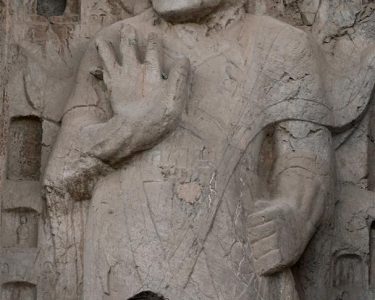
- The Longmen Grottoes: This UNESCO World Heritage site is a testament to the city’s golden age under the Northern Wei and Tang dynasties. The tens of thousands of statues carved into the limestone cliffs represent the pinnacle of Chinese Buddhist art and reflect the immense patronage the religion received when the court was based in Luoyang.
A Center for Governance and Planning
The city was also a model for urban planning and administration. The grid-based city plan of Sui-Tang era Luoyang, with its wide avenues, walled wards, and distinct administrative and commercial zones, influenced city design across East Asia, including in Japan and Korea. This emphasis on order and grand scale reflected the centralized power of the imperial state that was governed from the city.
Today, while Zhengzhou is the provincial capital of Henan, the deep historical identity of Luoyang city Henan continues to resonate. It is a major industrial base but also a city that lives and breathes its unparalleled history, offering a unique window into the foundations of Chinese civilization.
For organizations looking to engage with this region, a grasp of this deep-rooted history is not just an academic exercise. It demonstrates respect and provides a valuable framework for understanding local culture and priorities.
For more detailed information on specific historical sites or cultural context relevant to your business activities in the region, our team can provide further insights.