
 By
By Is Louyang a Real City in China or a Video Game Location?
If your search for “louyang” has returned a confusing mix of information—some about an ancient Chinese capital and others about a town in the popular online game Ragnarok Online—you are not alone. This common ambiguity stems from a slight difference in spelling that represents two entirely separate entities. Understanding this distinction is not just a matter of trivia; for B2B professionals involved in sourcing, logistics, and international trade, precision in geography is critical to avoiding costly errors.
This guide clarifies the confusion, explaining the origins of both the fictional and the real-world locations. We will detail why this specific name variant can cause problems in business communication and provide actionable steps to ensure your supplier and shipping information is always accurate. The name you use on a purchase order or bill of lading must correspond to a real-world place, not a digital one.
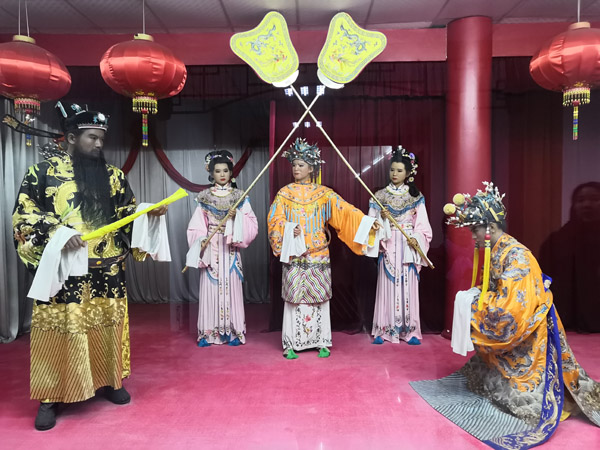
Disambiguation: Louyang (Game) vs. Luoyang (Real City)
The core of the confusion lies in the single-letter difference between “Louyang” and “Luoyang.” One is a virtual destination inspired by Chinese culture, while the other is a major industrial and historical city in the People’s Republic of China. For any business transaction, from initial supplier vetting to final customs clearance, knowing which is which is non-negotiable.
Here is a direct comparison to eliminate any ambiguity:
| Feature | Ragnarok Online’s “Louyang” | Luoyang City, Henan, China |
|---|---|---|
| Official Spelling | Louyang | Luoyang (using the Pinyin romanization system) |
| Nature | Fictional, in-game location | Real-world prefecture-level city |
| Origin | Created by game developer Gravity as part of the “Global Project” expansion. | One of the Four Great Ancient Capitals of China, with over 4,000 years of history. |
| Primary Purpose | A quest hub, dungeon location, and themed area for players to explore. | A major industrial hub, center for agriculture, tourism destination, and transportation nexus. |
| Key Features | Styled with ancient Chinese architecture, features NPCs (non-player characters), monsters, and game-specific quests. Includes landmarks like the Great Wall and a central castle. | Home to UNESCO World Heritage Sites like the Longmen Grottoes, the White Horse Temple, and a significant manufacturing sector. |
| Economic Activity | Virtual economy based on in-game currency (Zeny) and item trading between players. | Real-world economy focused on heavy industry, including machinery, metallurgy, petrochemicals, and advanced materials manufacturing. |
| Geographic Location | Exists only on the game servers of Ragnarok Online. | Located in the west of Henan province, on the central plain of China. |
The takeaway is simple: for all business, logistical, and official purposes, the correct name is Luoyang. Using the “Louyang” spelling from the game on official documentation will likely lead to database errors, shipping delays, or failed searches for legitimate suppliers.
How Geographic Naming Errors Impact B2B Operations
While mistaking a video game city for a real one may seem like a minor error, its consequences in a B2B context can be significant. Accuracy in location details forms the bedrock of international trade. A single misplaced letter can disrupt supply chains, invalidate documents, and erode trust with partners. The confusion over louyang serves as a perfect example of these potential risks.
Consider the practical implications across different business functions:
- Supplier Sourcing and Vetting: When searching online supplier directories or B2B platforms, using the incorrect “Louyang” spelling will yield few, if any, legitimate results. This can lead to the false conclusion that there are no viable manufacturers in the region, causing you to overlook a major industrial center. Authentic suppliers will always list their location as Luoyang, Henan.
- Logistics and Shipping: Freight forwarders, customs brokers, and carriers rely on precise location data. An address listed as “Louyang” on a Bill of Lading or Commercial Invoice can be flagged by automated systems, causing delays at ports. Customs officials may hold shipments for clarification, incurring demurrage fees and disrupting production schedules.
- Financial Transactions: When conducting due diligence or processing payments, banks and financial institutions cross-reference company details with official registration databases. A discrepancy between the address on an invoice (“Louyang”) and the registered address (“Luoyang”) could trigger fraud alerts and delay wire transfers.
- Legal and Contractual Agreements: Contracts must specify the legal address of all parties. Using an incorrect or non-existent city name could potentially be used to challenge the validity of an agreement in a dispute.
A Buyer’s Checklist for Verifying Supplier Locations
To prevent the issues stemming from geographic misinformation, B2B buyers should implement a systematic process for verifying a potential supplier’s location. This goes beyond simply trusting the address listed on a website or in an email signature. Taking these extra steps can save significant time and money later.
Use this checklist before finalizing a sourcing decision with a new partner:
- Standardize the Spelling: Always use the official Pinyin romanization for Chinese city names. For the location in question, confirm that all your internal documents, purchase orders, and communication refer to Luoyang, not Louyang.
- Request a Business License: Ask for a copy of the supplier’s official business license. The registered address will be clearly printed on it in Chinese characters. Use a translation tool or a native speaker to verify that the characters correspond to “洛阳市” (Luoyang City).
- Use Official Databases: Cross-reference the company’s name and address on official or semi-official national enterprise credit information systems. This provides an unbiased confirmation of their legal registration and location.
- Confirm the Province: A city name alone can sometimes be insufficient, as smaller towns may share names. Always confirm the province. The industrial city of Luoyang is located in Henan Province (河南省). If a supplier claims to be in Luoyang but is in a different province, it is a major red flag.
- Conduct a Map Search: Input the full address provided by the supplier into a reliable mapping service. Check the satellite view. Does the location appear to be an industrial park or a commercial building? Or does it resolve to an empty field or a residential area? This simple visual check can prevent significant issues.
- Ask for a Pinned Location: For final confirmation, ask your contact to send a real-time pinned location from their factory floor using a messaging app. This provides direct, verifiable proof of their physical presence at the claimed address.
By integrating this verification process, you build a more resilient and secure supply chain, ensuring that your partners are exactly who—and where—they claim to be.
For any inquiries regarding sourcing from verified manufacturing partners in established industrial zones, our team can provide the necessary guidance and support.