
 By
By Longmen Grotto Inscriptions: What the Stone Records Reveal
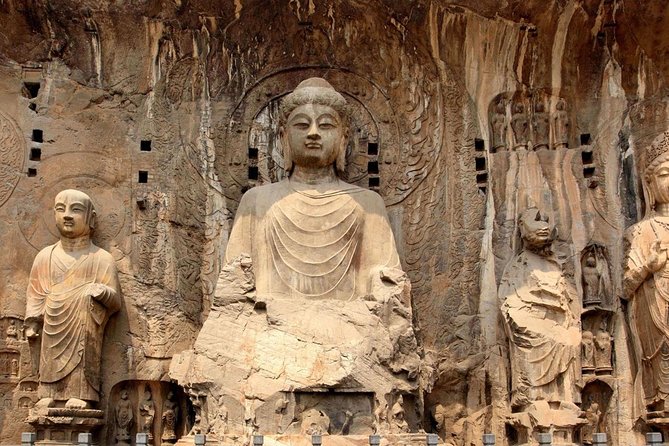
The Longmen Grotto, a UNESCO World Heritage site near Luoyang, holds over 2,300 caves and niches carved into limestone cliffs. Among tens of thousands of Buddhist statues, the stone inscriptions – more than 2,800 of them – offer a rare window into ancient Chinese society. These chiseled words aren’t just decorative flourishes; they record donors, dates, prayers, and even gossip about imperial families. In our experience analyzing rubbings from the site, few historical sources match the immediacy of a dedication scratched into rock 1,500 years ago.
The Historical Context of Longmen Grotto Inscriptions
Work at Longmen began in 493 AD when the Northern Wei dynasty moved its capital to Luoyang. The earliest dated text resides in Guyang Cave – a brief line from 495 AD marking a monk’s donation. Construction surged through the Tang dynasty (618–907), and so did the habit of inscribing. Patrons believed carving a Buddha image and appending their name brought merit, a spiritual insurance policy. The site eventually grew to house about 100,000 statues, and roughly 2,800 of the accompanying stone texts survive.
The inscriptions vary wildly. Some are just a single name and date; others run to several hundred characters describing family lineages, official titles, and the precise amount of silver paid for a carving. The famous Binyang Central Cave, commissioned by Emperor Xuanwu in memory of his father, carries a detailed record of the project’s budget and craftsmen. That kind of data makes life for a historian incalculably richer.
What the Inscriptions Record: Donors, Dates, and Devotion
Walk through the Middle Binyang Cave and you’ll see a text noting that the emperor “respectfully had one Buddha image made for his deceased father, Emperor Xiaowen.” It’s personal, almost intimate. In the Fengxian Temple, the colossal Vairocana Buddha niche includes an inscription linking the project to Empress Wu Zetian, who allegedly used her own cosmetics allowance to fund the statue’s completion in 676 AD. We’ve seen the rubbing of that text; the calligraphy is deliberately grand, mirroring her ambition.
Donors ranged from empresses to merchants, military officers to nuns. A Tang-era inscription in Wanfo Cave names a General Yuchi Gong, a historical figure known from the campaigns against the Western Turks. Dozens of women donors appear, too – aristocratic ladies acting independently, a detail that quietly upends assumptions about female agency in medieval China. One text from 531 AD records a “Madame Liu” who commissioned a niche for her son’s safe passage through an epidemic. Real anxiety, real hope, scratched into limestone.
Linguistic and Calligraphic Treasures
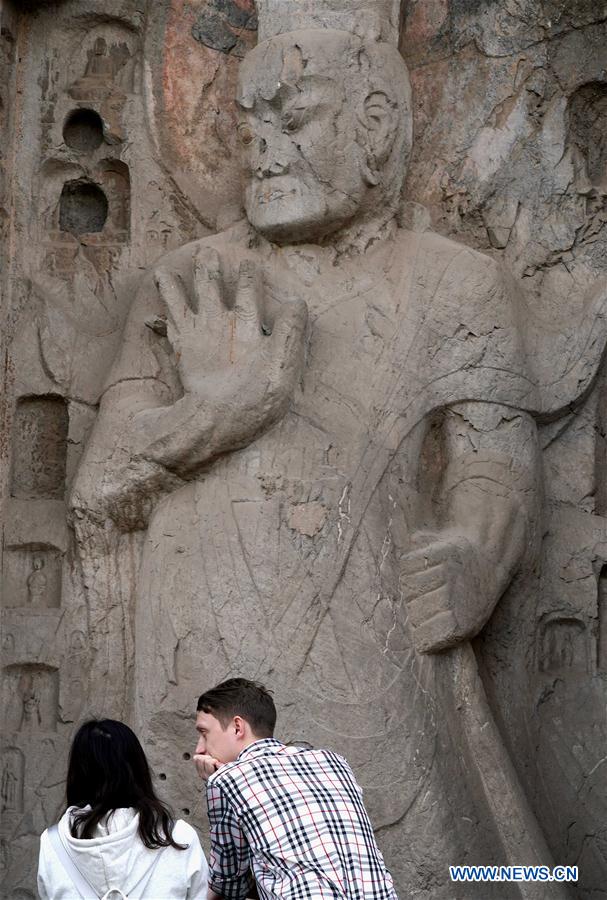
Among scholars of Chinese writing, the Longmen Grotto inscriptions are legendary. Twenty texts, known as the “Longmen Ershi Pin” (Twenty Masterpieces of Longmen), were selected during the Qing dynasty as paragons of Northern Wei calligraphy. The style is vigorous, angular, a world away from the polished regular script of later epochs. Collectors have sought original rubbings for centuries; a complete set of the twenty masterpieces can fetch six figures at auction today.
Language shifts are frozen in the stone. Inscriptions from the early sixth century use vocabulary and grammar typical of ancient Chinese, while eighth-century pieces reflect the evolving vernacular. Epigraphers have used these texts to track the introduction of new Buddhist terms, the standardization of character forms, and even pronunciation clues from rhyming dedications. It’s one thing to read a transmitted manuscript copied by clerks; it’s another to photograph a Tang donor’s exact stroke order, still sharp where the chisel bit into the rock.
Archaeological Insights from Stone Records
Dating art by style alone is messy; carvers copied older models all the time. The inscriptions at Longmen Grotto give us hard anchor points. A niche containing an image of Maitreya and a text dated to 502 AD tells us when that iconography was popular in the region. The so-called “Medical Prescription Cave” (Yaofang Cave) has 140 carved recipes for ailments, some naming specific herbs and dosages – a pharmacopoeia from the Tang dynasty, translated directly from stone. It’s one of the earliest medical formularies preserved in its original context, not a later copy.
The economic data embedded in donor texts is equally valuable. Many inscriptions state the cost of the statue, the weight of consumed bronze for halos, or the number of monks fed during the dedication ceremony. Historian Amy McNair, who spent years cataloguing the Longmen epigraphs, demonstrated how these financial snapshots track inflation and metal shortages along the Silk Road. A 673 AD text mentions that a small niche cost five strings of cash – enough to buy two oxen at the time. By 720 AD, a similar niche cost nine strings. The stone doesn’t lie.
Preservation and Digital Access
Limestone is soft, and centuries of wind, acid rain, and souvenir hunters have erased many characters. Rubbings made in the 19th century sometimes preserve lines that are now illegible on the cliff face. A massive Chinese-led project, begun in 2010, has photographed and 3D-scanned thousands of inscriptions, assembling a digital archive at the Longmen Grottoes Research Institute. We’ve watched some of the high-resolution scans, and you can zoom into individual chisel marks – the virtual equivalent of pressing your nose against the rock.
This digital corpus is already re‑writing the chronology. One text, long believed to be from 520 AD, was reassigned to 616 AD after a better scan revealed a partially effaced cyclical date character. Small corrections like that ripple outward, affecting how museums label their Tang‑period statuary. The full transcription corpus is expected to run to fifty-plus volumes; as of 2025, about 30 have been published.
Frequently Asked Questions
What language are the Longmen Grotto inscriptions in?
All the texts are in Classical Chinese, though they span from the highly literary to the near‑colloquial. Calligraphic scripts vary from clerical to standard to the distinctive Northern Wei “Wei stele” style.
How many inscriptions exist at Longmen Grotto?
Approximately 2,800 inscribed surfaces remain legible, with new fragments occasionally discovered during conservation. The number includes everything from single‑line donor notes to lengthy memorial essays.
Why are the Longmen Grotto inscriptions so important for historians?
They supply exact dates, personal names, official titles, prices, and religious formulae – the scaffolding for building a social history of medieval China. Without them, dating the cave temples and understanding patronage networks would be largely guesswork.
Can visitors see the original inscriptions today?
Yes, many are visible along the walkways, though the finest examples are high on the cliff and best appreciated through binoculars or the digital archive. Rubbing is now strictly prohibited to protect the carvings.
Bringing the Stone Records Home
The Longmen Grotto inscriptions are archives chiseled in stone – raw voices of emperors, generals, widows, and monks. They reveal what people feared, whom they loved, and how they spent their money fifteen centuries ago. Few historical documents get so close to the pulse of daily life.
Today, you can connect with that legacy through our carefully curated collection of Longmen‑inspired art pieces and calligraphy reproductions. Each item echoes the devotion and artistry that thousands of donors once entrusted to a limestone cliff. Visit our store to explore a tangible link to one of China’s greatest archaeological treasures.
