
 By
By Luoyang Henan China Was a Terminus, Not a Sideline, on the Silk Road
Was Luoyang part of the Silk Road, or just a city that benefited from trade passing elsewhere? This question comes up often among researchers and travelers building an itinerary through Henan province. The short answer: Luoyang was one of the two primary eastern termini of the Silk Road network, alongside Chang’an (modern Xi’an). For several dynasties, caravans, envoys, and monks ended their overland journey specifically in Luoyang, Henan, China — not merely passed through it. Understanding why requires looking at geography, imperial administration, and the specific mechanics of how goods and ideas moved across Eurasia.
Why Luoyang Henan China Anchored the Eastern Silk Road
Luoyang sits in a natural basin where the Yellow River meets several tributary valleys, giving it defensible terrain and access to grain-rich agricultural land. This mattered enormously for a terminus city: a Silk Road destination needed enough surplus food and population density to support foreign merchants, translators, and religious communities for months or years at a time.
During the Eastern Han dynasty, and again under the Northern Wei and parts of the Tang, Luoyang served as capital or secondary capital. Administrative status changed everything for trade routing. Imperial edicts, tribute missions, and the licensing of foreign merchants were processed wherever the court sat. When the court moved to Luoyang, so did the paperwork and protection that made long-distance trade viable. This is the core reason Luoyang recurs in Silk Road history rather than staying a permanent fixture — its role rose and fell with dynastic capital shifts.
How the Silk Road Reached Luoyang
The route did not run in a single unbroken line. Goods moved in stages: Central Asian traders brought commodities to garrison towns along the Hexi Corridor, then handed them to Chinese intermediaries who carried them east through Guanzhong toward Chang’an, and from there southeast into the Henan cultural history heartland where Luoyang lay. Few individual merchants traveled the entire distance from the Mediterranean to Luoyang. The Silk Road functioned more like a relay than a highway, with Luoyang acting as one of the final collection points where goods were sorted, taxed, and redistributed into the Chinese interior.
An Action-Oriented Route Narrative: From Corridor to City Gate
For readers trying to reconstruct how a shipment of goods, or a traveling monk, actually moved from Central Asia into Luoyang, it helps to break the journey into discrete stages. Each stage had its own checkpoints and its own common failure points — reasons caravans turned back, lost cargo, or were delayed for seasons.
- Stage 1 — Entry through the Hexi Corridor. Caravans crossed from the Tarim Basin oases into Han-controlled garrison territory. Checkpoint: registration at frontier commanderies, where goods were inventoried and taxed. Common failure: merchants without proper tribute-mission documentation were turned away or heavily taxed, which is why many goods traveled under the cover of official embassies rather than private trade.
- Stage 2 — Transit through Guanzhong to Chang’an. This leg required provisioning stops and safe passage through fortified towns. Checkpoint: Chang’an’s markets, where goods were often exchanged or sold rather than carried further. Common failure: many shipments simply ended here, since Chang’an itself was a full terminus — this is why not everything that reached China reached Luoyang specifically.
- Stage 3 — Onward movement to Luoyang. Whichever goods and travelers were bound for the eastern court, monastery, or secondary market continued along the Yellow River corridor. Checkpoint: river crossings and canal links, which were faster than overland cart routes when water levels allowed. Common failure: seasonal flooding or ice closed river routes, forcing reliance on slower road transport.
- Stage 4 — Arrival and integration at Luoyang. Foreign merchants, monks, and envoys were received at designated quarters near the city, where goods entered official markets and translation work began. Checkpoint: state-sponsored translation bureaus and monastic guesthouses. Common failure: without court sponsorship, foreign visitors had limited access to official markets and had to rely on informal, less profitable exchange.
This staged movement explains why Buddhism reached Luoyang specifically rather than spreading evenly across China. Monks traveling with merchant caravans followed the same relay logic — attaching themselves to trade missions for protection, then settling wherever there was court patronage. Luoyang, as a recurring capital, offered exactly that patronage.
Why Luoyang Was Important for Buddhist Exchange
Why was Luoyang important for Buddhist exchange specifically, rather than other Chinese cities along the route? The reasons are administrative as much as spiritual.
- Court sponsorship — Imperial recognition gave Buddhist monasteries land, funding, and legal protection, which attracted monks and scholars from Central Asia and the Indian subcontinent.
- Translation infrastructure — Luoyang developed sustained institutional support for translating Sanskrit and Central Asian texts into Chinese, a process that required teams of scribes, interpreters, and scholars working over years, not isolated individuals.
- Established foreign quarters — Because merchants and envoys already had lodging and market access in Luoyang, incoming monks could rely on existing infrastructure rather than building support networks from nothing.
- Symbolic centrality — As a capital associated with imperial legitimacy, Buddhist establishment in Luoyang carried more prestige and downstream influence than establishment in a border town.
This combination — administrative capacity plus existing trade infrastructure — is why Luoyang became one of the earliest and most consequential sites of Buddhist institution-building in China, a topic covered in broader surveys of Buddhism and its transmission along overland trade networks.
What Actually Moved Along the Eastern Silk Road Into Luoyang
A common misconception is that the Silk Road primarily carried silk. In practice, the range of goods moving toward Luoyang was much broader, and understanding this range helps explain the city’s layered economic role.
| Category | Examples | Direction | Primary Use in Luoyang |
|---|---|---|---|
| Textiles | Silk, wool felt, dyed fabrics | East and West (bidirectional) | Court garments, diplomatic gifts, resale |
| Religious material | Sanskrit manuscripts, ritual objects, relics | West to East | Monastery use, translation source texts |
| Metals and gems | Glassware, semi-precious stones, worked metal | West to East | Elite consumption, court treasury |
| Animals | Horses, camels | West to East | Military use, transport |
| Agricultural goods | Grain surplus, paper, ceramics | East to West | Export trade, tribute payment |
This mix illustrates why Luoyang functioned less like a single marketplace and more like a distribution hub feeding several sectors of Han and later imperial administration at once — military, religious, and commercial.
Common Mistakes When Interpreting Luoyang’s Silk Road Role
Researchers and content writers covering Henan cultural history sometimes make avoidable errors when describing Luoyang’s trade position. Watch for these:
- Treating Luoyang and Chang’an as interchangeable termini. They served overlapping but distinct roles depending on which dynasty held which city as capital. Conflating the two erases meaningful shifts in trade routing.
- Assuming continuous, unbroken Silk Road activity. Trade volume through Luoyang rose and fell sharply with political stability, frontier control, and dynastic capital location — it was not a constant flow across centuries.
- Overstating direct merchant travel. Very few traders crossed the entire route personally; the relay-stage model described above is closer to how goods and people actually moved.
- Ignoring the river and canal network. Overland caravan routes get most of the attention, but Yellow River transport was often faster and cheaper for the final approach into Luoyang.
A Practical Framework for Evaluating Luoyang Sources
For readers researching ancient China trade for academic work, or preparing content or itineraries around Luoyang’s historical sites, a simple decision checklist helps separate reliable claims from overstatement:
- Does the source specify which dynasty and time period it’s describing? Luoyang’s Silk Road role varied significantly between Han, Northern Wei, and Tang periods.
- Does it distinguish between Luoyang as political capital versus Luoyang as trade terminus? The two statuses often overlapped but were not identical.
- Does it cite specific institutions (translation bureaus, monastic complexes, market quarters) rather than vague references to “trade flowing through the city”?
- Does it acknowledge the relay nature of Silk Road transport rather than implying direct end-to-end caravan journeys?
Applying this checklist filters out a lot of loosely sourced popular writing on the topic and points toward material grounded in administrative and archaeological record rather than romanticized narrative.
Visiting or Researching Luoyang’s Trade Legacy Today
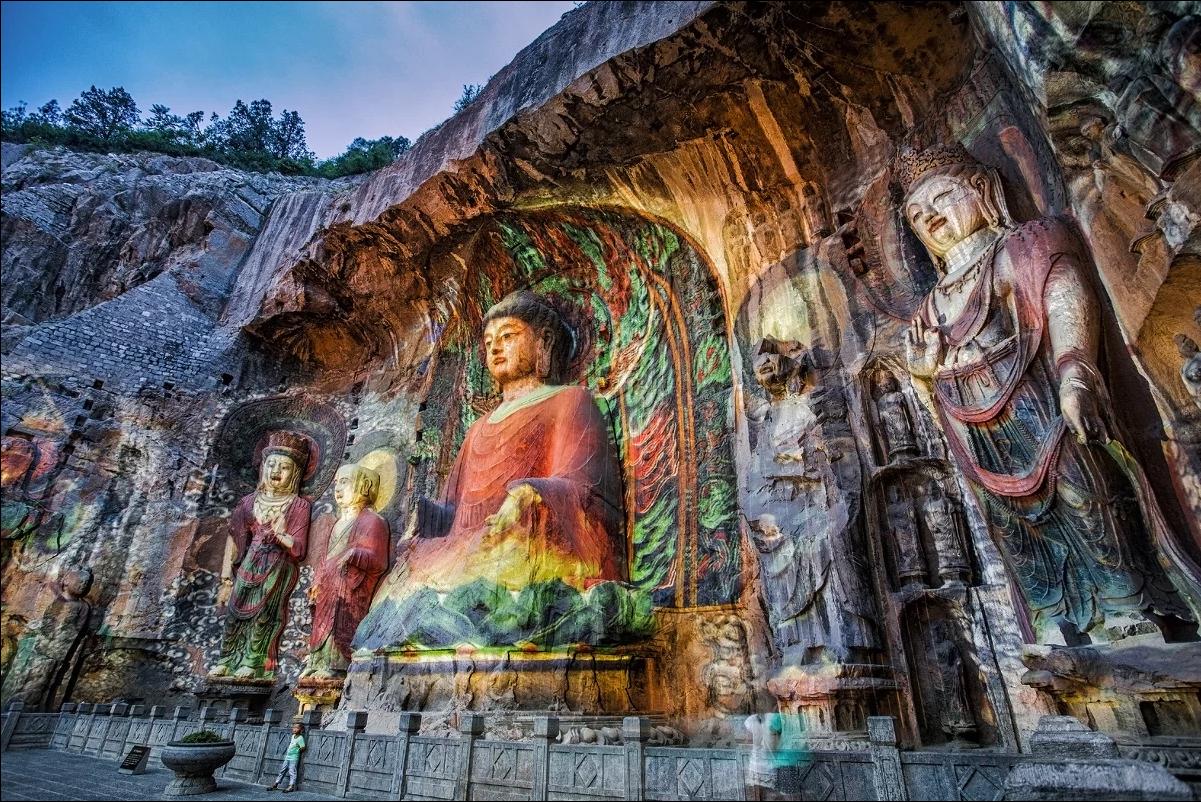
Modern Luoyang retains physical traces of this history — notably Buddhist cave sites and museum collections documenting the city’s role as a receiving point for foreign goods and religious material. For anyone building a research itinerary or an academic paper section around the eastern Silk Road, pairing site visits with dynastic timelines produces a far more accurate picture than treating the Silk Road as a single continuous highway ending at Luoyang’s gates.
If you are compiling a research brief, itinerary, or educational material on Luoyang’s Silk Road history and want a second set of eyes on the route timeline or source list, send over your draft outline and we can help you sanity-check the sequencing and terminology.
