
 By
By Understanding the Sculptural Legacy of the Luoyang Grottoes Longmen
Many visitors to the luoyang grottoes longmen are struck by the sheer scale of the site, but struggle to differentiate the artistic styles spanning centuries of creation. How can you tell a Northern Wei carving from a Tang masterpiece? The key lies in observing the subtle yet distinct shifts in form, expression, and detail. Understanding these differences transforms a visit from a simple viewing into a deep appreciation of evolving Chinese Buddhist art.
This guide provides a framework for identifying the most significant works, including the iconic Vairocana Buddha, and breaks down the stylistic signatures of the two primary dynasties responsible for this UNESCO World Heritage site. We will explore the visual language that defines these sculptures, enabling a more informed and rewarding analysis of one of the world’s finest collections of stone carving.
The Heart of Longmen: Identifying the Fengxian Temple and its Vairocana Buddha
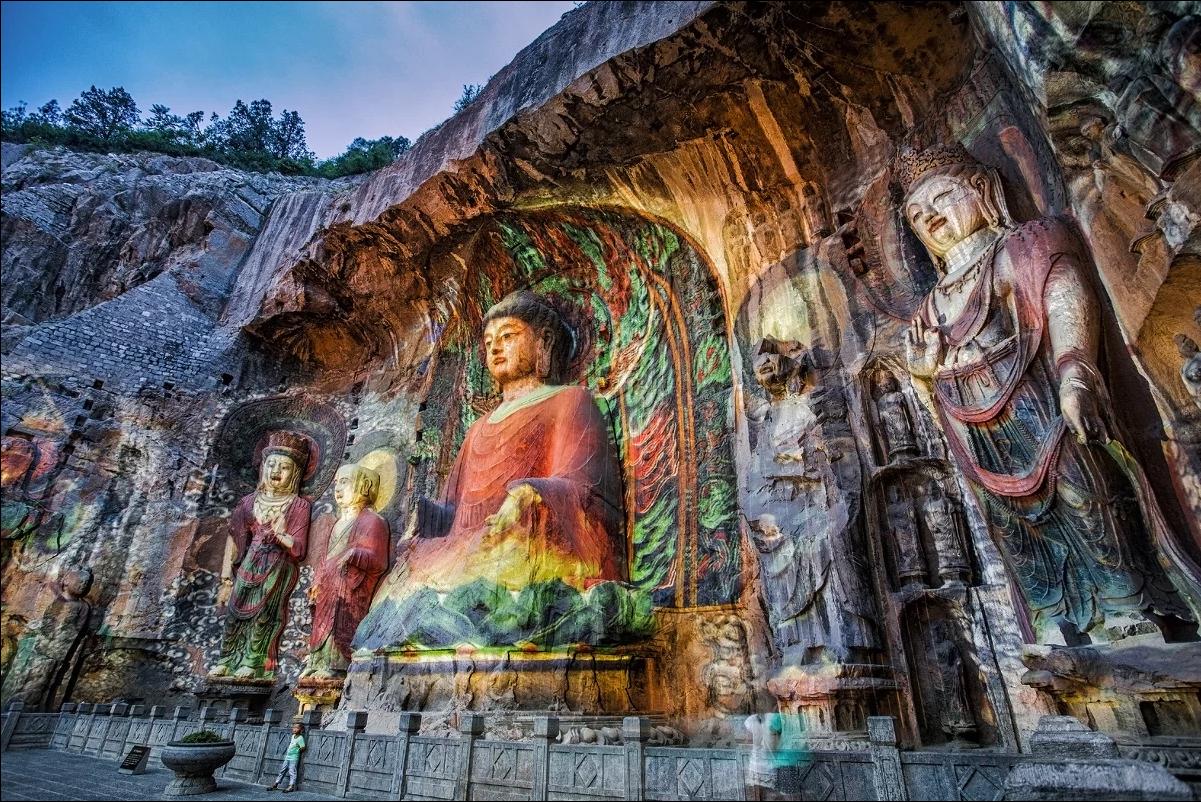
The most famous and breathtaking sculpture at the Longmen Grottoes is undoubtedly the colossal Vairocana Buddha. Located in the open-air Fengxian Temple (Ancestor Worshipping Temple), this grouping represents the zenith of Tang Dynasty artistry and imperial patronage. Identifying this specific area and its main figures is the first step to appreciating the site’s significance.
The Fengxian Temple ensemble is not housed in a cave but carved into the main cliff face, making it the largest and most exposed niche. Its construction was sponsored by Emperor Gaozong and the formidable Empress Wu Zetian, whose likeness is rumored to be the model for the main Buddha’s face. The central figure, the Vairocana Buddha, sits at over 17 meters tall. Its serene, compassionate expression and perfectly balanced proportions create a sense of profound tranquility and power. This is the statue that answers the question, “what is the most famous statue at Longmen Caves?”
Key Figures to Identify in the Fengxian Temple Ensemble:
- Vairocana Buddha: The central, largest figure. Look for the full, rounded face, downcast eyes in meditation, and a subtle, knowing smile. The drapery over the robes is fluid and naturalistic, clinging to the body to reveal its form.
- Ananda and Kasyapa: Flanking the Buddha are his two main disciples. Ananda, the younger disciple, has a smooth, scholarly face. Kasyapa, the elder, is depicted with a deeply lined, ascetic face, reflecting a life of rigorous discipline.
- Bodhisattvas: On either side of the disciples stand two Bodhisattvas. These figures are more ornate, wearing elaborate jewelry and crowns. Their bodies exhibit a graceful ‘S’ curve (tribhanga pose), a feature of mature Tang sculpture that conveys elegance and movement.
- Heavenly Kings (Lokapalas): At the far ends of the group are the fierce guardian figures. They are depicted with muscular bodies, angry expressions, and are often shown trampling a demon underfoot, symbolizing the protection of the Buddhist faith. Their dynamic poses contrast sharply with the serenity of the central Buddha.
Recognizing this specific arrangement—a serene central Buddha, two disciples, two Bodhisattvas, and two guardians—is the primary way to identify the sculptures of Fengxian Temple. The sheer size and artistic realism of the group make it distinct from any other niche at the site.
A Tale of Two Dynasties: Distinguishing Northern Wei from Tang Sculpture Styles
The Longmen Grottoes were built over several centuries, but the two most important periods of construction were the Northern Wei Dynasty (late 5th to early 6th century) and the Tang Dynasty (late 7th to early 9th century). The artistic styles of these two eras are dramatically different, reflecting profound shifts in culture, religion, and politics. Understanding these differences is key to reading the story carved in stone.
The Northern Wei period saw the introduction of Buddhism to the region, and its art is characterized by a more abstract, spiritual, and otherworldly quality. In contrast, the Tang Dynasty was a golden age of Chinese power and cultural confidence, and its art is realistic, powerful, and humanistic. This table breaks down the key visual distinctions in Longmen sculpture styles.
| Artistic Feature | Northern Wei Dynasty Style (e.g., Guyang Cave) | Tang Dynasty Style (e.g., Fengxian Temple) |
|---|---|---|
| Body Proportions | Elongated, slender, and attenuated figures. The focus is on spirituality, not physical reality. Bodies are often flattened and less three-dimensional. | Full, rounded, and naturalistic bodies. Sculptors aimed for realism, showing powerful musculature in guardians and soft, fleshy forms in Buddhas. |
| Facial Features & Expression | Long, narrow faces with a distinct “archaic smile”—a serene, mysterious, and inward-looking expression. Features are more schematic and less individualized. | Round, fleshy faces with natural, human-like expressions. The Vairocana Buddha shows compassion, while guardians show fury. Each face has a distinct personality. |
| Clothing and Drapery | Linear and stylized. Robes fall in a series of sharp, parallel pleats, often described as a “waterfall” pattern. The fabric conceals the body form rather than revealing it. | Fluid and realistic. Fabric appears soft and light, clinging to the body in natural folds and curves (the “wet drapery” technique). It emphasizes the physical form underneath. |
| Overall Composition | Often features smaller, densely packed niches with intricate carvings. Figures can appear stiff and formal in their arrangement. | Grandiose, open compositions with fewer, larger figures. Figures interact with each other in a more natural and dynamic grouping, creating a coherent scene. |
| Cultural Influence | Shows strong influence from Central Asian and Indian artistic traditions, which were newer to China at the time. More abstract and symbolic. | A confident, purely Chinese style. It reflects the worldly power and cultural assimilation of the Tang empire. More realistic and human-centered. |
Common Visitor Misinterpretations and How to Avoid Them
When exploring a site as complex as the luoyang grottoes longmen, it is easy to make simple errors in identification. Being aware of common mistakes can help you focus on the correct details and gain a more accurate understanding of the art.
Here are some frequent points of confusion for first-time visitors:
- Mistake 1: Assuming all large statues are Buddhas. While the central figures are typically Buddhas or major Bodhisattvas, the powerful figures flanking them are often Bodhisattvas (beings on the path to enlightenment) or fierce guardians (Lokapalas). Bodhisattvas are usually identified by their princely attire, including crowns and jewelry, which a Buddha would not wear.
- Mistake 2: Confusing the two main construction periods. It’s easy to look at a cave and not know its origin. The simplest rule of thumb is to look at the body shape. If the figure is slender, elongated, and wears stiff, pleated robes, it is most likely Northern Wei. If the figure is full-bodied, rounded, and wears fluid, body-revealing robes, it is almost certainly Tang.
- Mistake 3: Overlooking the smaller niches. While Fengxian Temple is the main attraction, thousands of smaller niches contain invaluable art. The Guyang Cave, for instance, is one of the earliest and contains superb examples of Northern Wei imperial commissions. These smaller carvings often feature inscriptions (dedications) that are critical historical records.
- Mistake 4: Not noticing the supporting figures. Visitors often focus solely on the main Buddha. However, the emotional and narrative power of a scene comes from the entire ensemble. The expressions of the disciples, the grace of the Bodhisattvas, and the fury of the guardians are all essential parts of the story being told.
By consciously avoiding these pitfalls, you can analyze the sculptures with greater precision. This deliberate observation is key to appreciating the rich history and artistic mastery on display throughout the grottoes.
Our team provides expertise in documenting and interpreting cultural assets like these. For organizations planning cultural heritage tours or research projects, contact our team for specialist support.
